
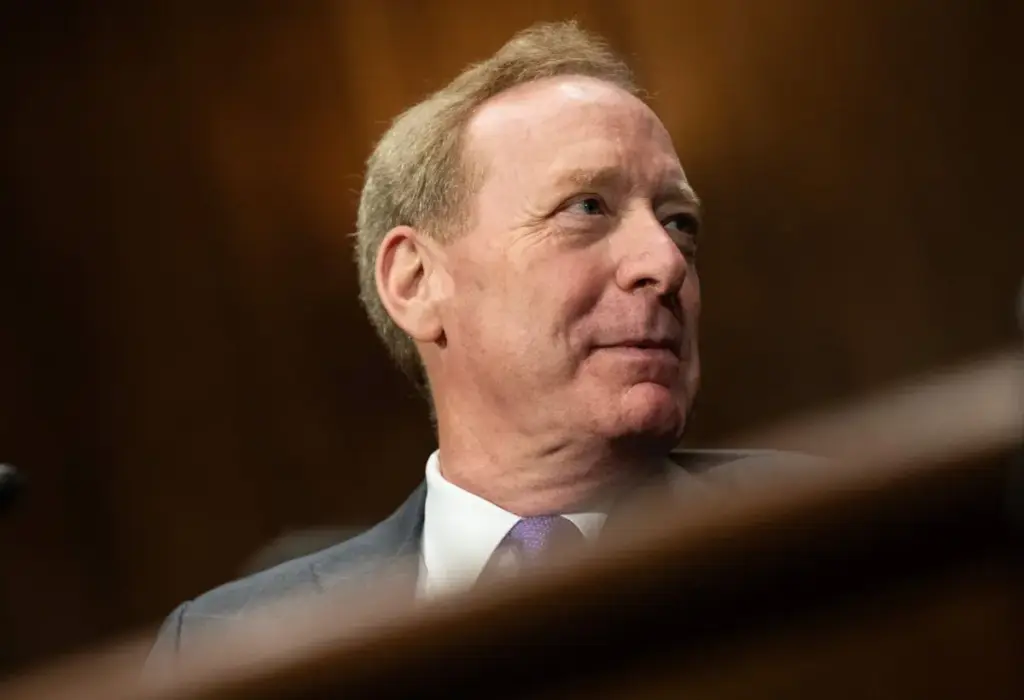
In a series of high-profile statements that signal a significant shift in how the technology industry views its own oversight, Microsoft’s top leadership has issued a call for a robust and comprehensive regulatory framework for artificial intelligence. Brad Smith, the vice chair and president of Microsoft, told the BBC that the current state of AI oversight is severely lacking, suggesting that the technology is significantly under-regulated compared to even the most mundane household items. In a candid assessment of the risks posed by the rapid advancement of generative models, Smith argued that the time has come for governments to impose greater legal obligations on organizations, particularly when their security is compromised by AI-driven threats or when the AI systems themselves cause harm.
During an appearance on the BBC’s Big Boss Interview podcast, Smith utilized a striking comparison to illustrate what he perceives as a dangerous gap in public policy. He pointed out that everyday consumer goods, which pose far less existential risk to society than advanced computation, are subject to a level of scrutiny that AI developers currently bypass. Smith noted that a standard washing machine is subject to more safety rules than the most sophisticated AI models being deployed today. He extended this metaphor to the food industry, observing that every carton of milk found in a grocery store is subject to rigorous safety rules, standardized inspections, and clear labeling requirements. The implication was clear: if society demands such high standards for physical goods, it is illogical to allow digital systems with the potential to reshape economies and security landscapes to operate in a relative vacuum of accountability.
According to Smith, AI must be understood as both a "tool and a weapon." This dual-use nature necessitates a proactive approach to safety that goes beyond voluntary corporate pledges. Among the specific measures he proposed was the implementation of "kill switches" for AI systems. These mechanisms would be designed to allow operators or regulators to shut down a system immediately if it begins to behave in an unpredictable or dangerous manner. Furthermore, Smith called for a formal legal requirement for AI companies to create detailed incident reports. Much like the aviation industry, where every near-miss or technical failure is documented to improve the safety of the entire sector, Smith believes AI firms should be legally mandated to disclose breaches and inform any victims of AI-related failures or security lapses.
A central theme of Smith’s argument was the necessity of independent oversight. He suggested that new AI technology should be evaluated by government bodies that operate independently of the companies developing the software. In a move that highlights the shifting dynamics of global tech diplomacy, Smith identified the United Kingdom as the country best positioned to lead this international effort. He specifically referenced the work of the UK’s AI Security Institute (AISI), an organization established to evaluate the risks of frontier AI models. Smith expressed a high degree of confidence in the UK’s technical and regulatory capabilities, stating that the government in London is currently in the best position to advance global AI safety standards and establish enforceable rules.
Smith’s praise for the UK was not merely a polite gesture but reflected a broader consensus within the professional technology sector. He noted that if experts in the field were asked to name a country that currently leads in the technical capability to monitor and regulate AI, many would point to the UK. This perception is bolstered by the UK’s attempt to carve out a middle ground in AI governance—avoiding the perceived over-regulation of the European Union while maintaining a more structured approach than the United States. Smith observed that in Washington D.C., the UK is viewed through a different lens than Brussels. This unique diplomatic position, he argued, is a strength that could allow the UK to act as a bridge between different global powers, bringing people together through a "soft but firm" approach to international safety standards.
This push for a new regulatory era was echoed by Microsoft Chief Executive Satya Nadella, who shared his thoughts in a detailed blog post over the weekend. Nadella’s comments focused on what he termed a "trust architecture" for the new era of intelligence. He argued that as AI becomes more integrated into the fabric of daily life and business operations, the responsibility for its actions cannot be outsourced. Nadella was clear in his assessment that a model provider’s assurances—the promises made by the companies that build the underlying AI—are not enough to relieve the users or the developers of their ultimate responsibility. He called for the development of systems built around several core principles: observability, model diversity, verifiability, and independent auditability.
Nadella’s vision for AI safety involves a high degree of transparency and containment. He argued that models should be tightly contained from their inception, ensuring they operate within predefined boundaries. Furthermore, he emphasized the need for quick disclosure of any incidents. By advocating for "independent auditability," Nadella is supporting a move away from the "black box" nature of current AI development, where only the developers truly understand how a model reaches its conclusions. In his view, the ability for external parties to verify the safety and integrity of a model is essential for maintaining public trust.
Interestingly, Nadella adopted the term "Super Intelligence" in his writing, a phrase that has gained traction in political circles, most notably with Donald Trump. While the terminology may align with that used by the former president, the underlying policy preferences remain distinct. Trump has frequently voiced a more libertarian view of the AI sector, arguing that companies should largely be left to police themselves. His primary concern has been that excessive regulation could "stifle" innovation, potentially causing the United States to lose its competitive edge against global rivals. This tension between the need for safety and the desire for rapid innovation remains one of the most significant debates in the tech industry.
The political complexities of AI regulation were further highlighted by recent events involving the Trump administration and several leading AI labs. Late last month, it was announced that a group of major players—including Anthropic, Google, Meta, OpenAI, Nvidia, and xAI—had signed a pledge to work with independent auditors on their systems. However, this agreement was described as "morally binding" rather than legally enforceable, a distinction that critics argue lacks the teeth necessary to ensure true accountability.
The volatility of the current regulatory environment was also evidenced by a recent controversy involving the UK’s AI Security Institute. Reports emerged that Trump had called on AI developers to cease sharing unreleased systems with the AISI, leading to a temporary standoff. This directive reportedly caused Anthropic to withhold access to its newest model, Claude Mythos 5.1, preventing UK officials from conducting safety testing. Such a move would represent a significant setback for the UK’s ambitions to be the world’s primary AI watchdog. However, reports now suggest that this ban has been reversed, allowing the collaborative testing to proceed.
Brad Smith remains optimistic that the UK’s leadership in this space will eventually be viewed positively in the United States, despite the occasional political friction. He suggested that by speaking calmly and firmly, the UK can play a pivotal role in harmonizing global standards. Microsoft, as a company, appears eager to support this transition, positioning itself as a proponent of responsible development even as it continues to invest billions into the technology.
The call for regulation from within the industry’s highest ranks suggests a growing realization that the potential consequences of AI failure are too great for any single company to manage alone. By advocating for legal requirements, independent audits, and international cooperation, Smith and Nadella are acknowledging that the "move fast and break things" era of software development may not be suitable for a technology as transformative as artificial intelligence. As the UK continues to develop its technical capabilities through the AISI, the global community will be watching to see if a balance can be struck between the safety requirements Smith compared to a carton of milk and the cutting-edge innovation that defines the modern tech landscape. The goal, as Smith concluded, is to bring the world together to ensure that AI remains a tool for progress rather than a weapon of disruption.
 Helpdesk & IT Service Management (ITSM)
Bridging the Gap Between AI Adoption and Business Value: The Evolving Reality of IT Service Management
For years, the mere adoption of Artificial Intelligence was considered the ultimate...
 Helpdesk & IT Service Management (ITSM)
Snowflake World Tour London: Moving Beyond AI Hype to the Era of the Agentic Enterprise
LONDON — The conversation surrounding artificial intelligence has reached a critical inflection...
 Helpdesk & IT Service Management (ITSM)
Beyond the IT Help Desk: The Strategic Integration of Enterprise Service Management
As modern organizations grapple with increasing operational complexity, the traditional boundaries of...







