
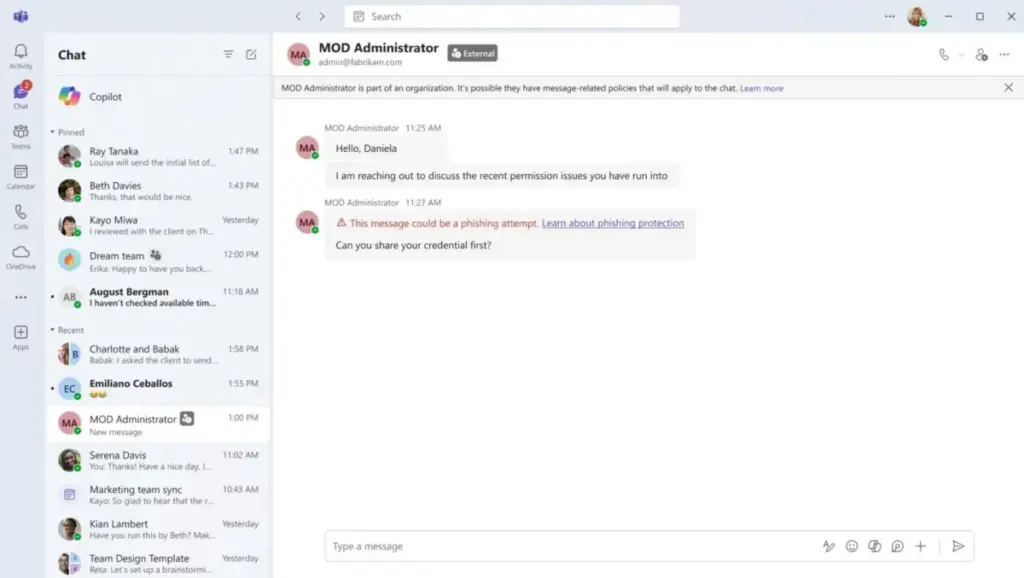
According to the company, no messages analyzed by the tool will be saved specifically for the purpose of the security check, nor will the content of these conversations be used to train Microsoft’s broader AI models. The tool is designed to function as a real-time filter rather than a data-collection mechanism. Microsoft further emphasized that the data will be used solely for security purposes and will not be repurposed for advertising or any other secondary uses.
This commitment to privacy is essential for maintaining the trust of enterprise clients, many of whom operate in highly regulated industries like finance, healthcare, and law. In these sectors, the unauthorized monitoring of communications could lead to significant legal and compliance issues. By keeping the analysis local to the security function and ensuring that data is not retained for model training, Microsoft aims to provide a "privacy-first" security solution.
Automated Implementation and Rollout Timeline
For IT administrators, the implementation of this new feature will be relatively seamless. Microsoft has confirmed that IT teams do not need to manually configure the tool or adjust complex settings to get it up and running. The feature will be automatically enabled as part of the standard Teams security updates, ensuring that even organizations with limited IT resources are protected by the new AI layer.
The rollout is scheduled to begin in early November 2026. Following the initial deployment and the background validation phase, the feature is expected to reach general availability during the first half of December 2026. This timeline suggests that Microsoft is aiming to have the system fully operational before the end of the year, providing a robust defense during a season when cyberattacks often spike due to holiday-related distractions and reduced staffing in many offices.
As Microsoft Teams continues to serve as the primary operating system for the modern workplace, the integration of context-aware AI security represents a necessary evolution in defense. By moving beyond the "what" of a message (links and files) and focusing on the "how" and "why" of the conversation, Microsoft is attempting to stay one step ahead of attackers who rely on the nuances of human psychology to bypass technical safeguards. For the millions of users who rely on Teams daily, this update promises a more secure environment where the AI works silently in the background to identify threats before they can do damage.
 Small Business IT & Cloud Computing
The Vanishing Secret: What Happens to Your Private Chatbot Data When an AI Company Goes Bankrupt?
For millions of users, the AI chatbot has become more than just...
 Small Business IT & Cloud Computing
Meta’s AI Vision Is the Best in the Industry—But Its History Makes It Impossible to Trust
We are currently standing on the precipice of a fundamental revolution in...
 Small Business IT & Cloud Computing
Meta Pauses Controversial Enterprise Terms of Service Following Widespread Customer Pushback
In a significant retreat that underscores the growing tension between artificial intelligence...







