
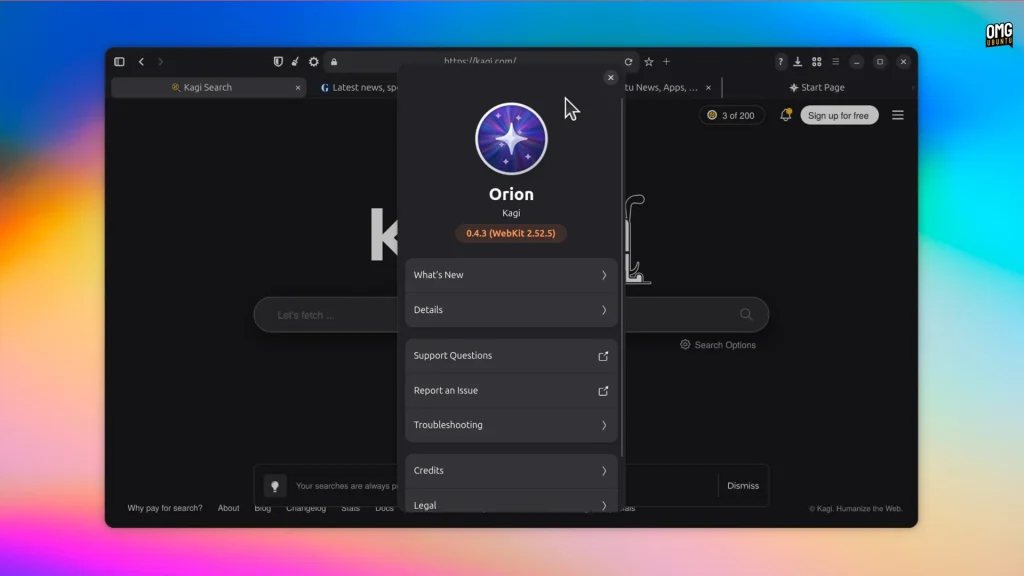
That modest, user-funded structure creates hard engineering limits. When allocating engineering hours, small companies must weigh the long-term cost of continuous cross-platform maintenance against the immediate needs of their core user base. Maintaining a desktop browser requires not only initial software architecture and user-interface design, but also continuous upstream engine updates, security patching, platform-specific bug remediation, and integration with dynamic desktop environments.
These challenges were amplified by Kagi’s refusal to take standard technological shortcuts. Most emerging browsers that enter the market today choose to build on top of Google’s open-source Chromium platform. Leveraging Chromium significantly simplifies cross-platform deployments because the engine already accounts for platform-specific graphics pipelines, audio stacks, memory allocators, and operating system integrations across Windows, macOS, and Linux distributions.
Kagi intentionally avoided that path. From the project’s inception, the company articulated a foundational belief that the web ecosystem needs more than one engine to stay healthy, competitive, and decentralized. Left unchecked, a monoculture around a single dominant browser engine risks centralizing control over the future of web standards in the hands of a single corporation.
By designing Orion around WebKit—the browser engine that originally powered Safari and shares roots with early open-source initiatives—Kagi sought to prove that a lean, fast, alternative engine could succeed beyond the confines of Apple’s walled garden. Yet translating a WebKit-centric architecture to desktop Linux using native GTK interfaces demanded substantial bespoke development, requiring Kagi to solve platform-level edge cases that Chromium-based competitors could largely bypass.
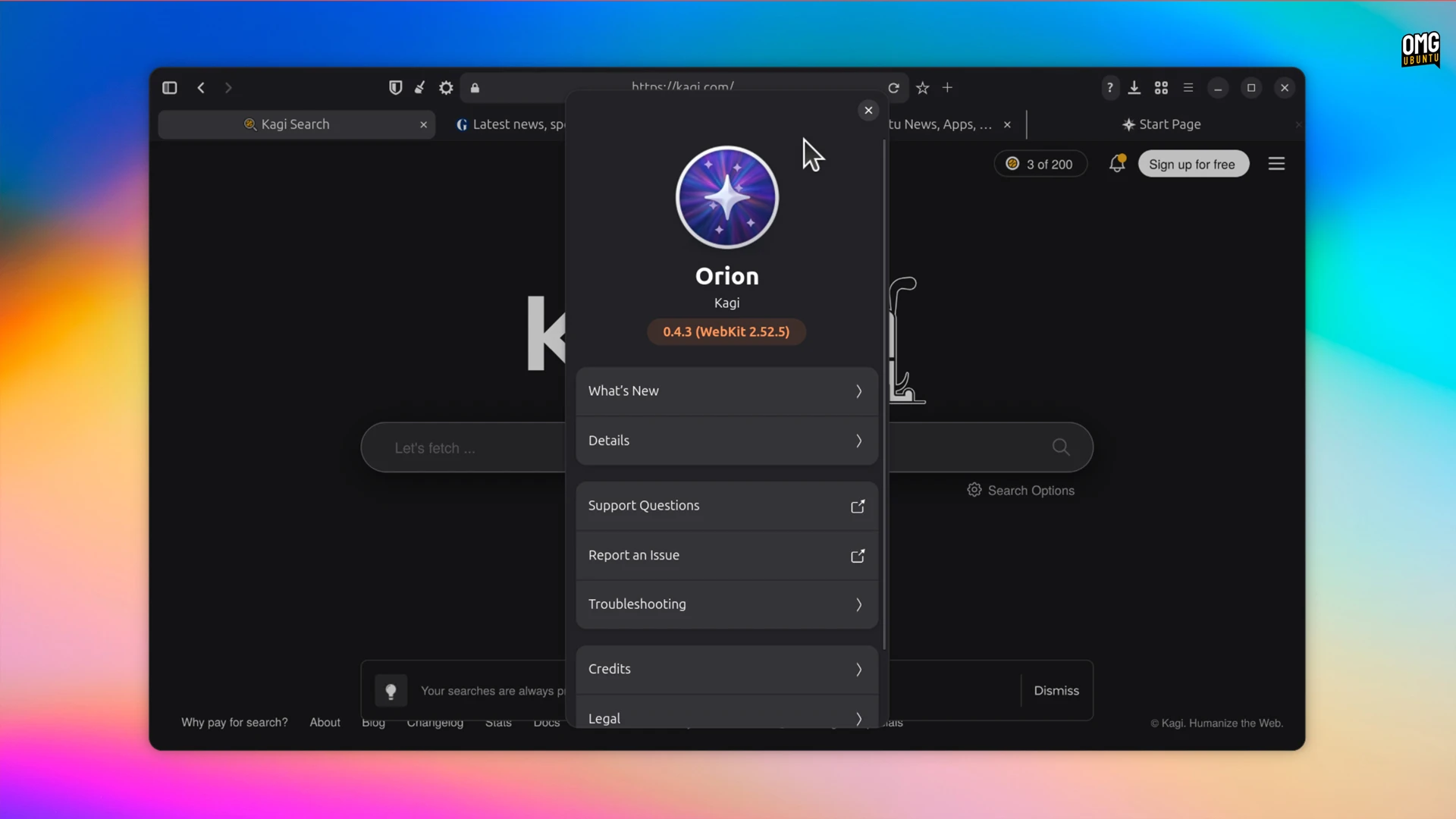
On macOS, Orion earned a reputation as a genuinely solid and capable daily driver, earning praise from power users for its performance, low memory footprint, and native design ethos. The initial promise of bringing those same lightweight, highly customizable WebKit experiences to the Linux desktop attracted considerable attention from enthusiasts who were eager to see a modern, non-Chromium alternative that respected native desktop design principles. Despite the engineering momentum demonstrated during the initial beta releases, sustaining that velocity across disparate desktop platforms ultimately exceeded the capacity of Kagi’s compact workforce.
Orion for Linux Is Finally Going Open Source
The transition away from active in-house development comes with a significant silver lining: Orion for Linux is finally going open source.
When Orion was first announced, the browser was proprietary software, a detail that dampened enthusiasm among portions of the Linux and broader open-source communities. In desktop Linux ecosystems, where software transparency, community auditing, and software freedom are fundamental priorities, closed-source web browsers frequently encounter skepticism. For developers and power users who were previously reluctant to invest their time in a proprietary product, the news that the codebase will be made open source represents a welcome, if bittersweet, turn of events.
Kagi’s overarching business model was explicitly designed to keep incentives aligned with end users. Because the company does not rely on advertising impressions, behavioral tracking, or data-broker relationships, it faced none of the perverse incentives that frequently mar modern browsing experiences. An independent Orion meant a browser free from artificial interface bloat, sponsored tiles, aggressive crypto-wallet integrations, or unwanted background promotions. The software could focus solely on navigation, speed, utility, and user control.
 Linux & Open Source Solutions
Canonical Releases Official Ubuntu Desktop Images for RISC-V Hardware Ahead of Ubuntu 26.10
Installing Ubuntu on RISC-V hardware is poised to become significantly more straightforward...
 Linux & Open Source Solutions
OpenShot Video Editor Arrives on the Canonical Snap Store, Bringing Version 4.0 to Ubuntu Users
In a major milestone for open-source desktop multimedia production, the popular Qt-based...
 Linux & Open Source Solutions
Ubuntu 26.10 Beta Rescheduled to October 1 Following Unforeseen Infrastructure Issues
Canonical has officially postponed the public beta release of its upcoming operating...







