
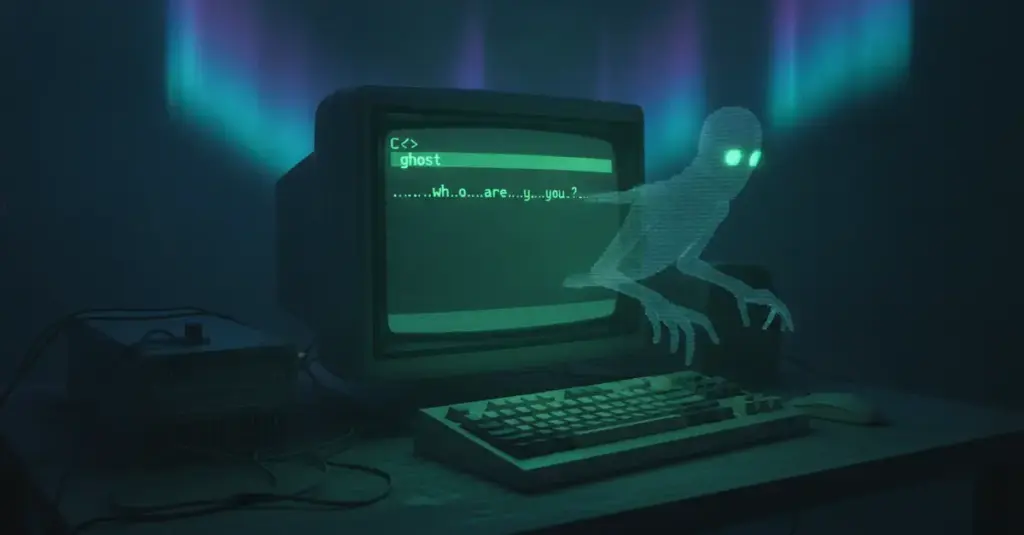
This interpretation of the "Ghost in the Machine" theme touches on long-standing philosophical questions regarding technology and consciousness. The phrase itself, famously coined by philosopher Gilbert Ryle to describe the Cartesian dualism of mind and body, has long been used in science fiction to describe the moment a machine achieves sentience. In this project, the "mind" is the Llama 3.2 model, and the "body" is the simple HTML/CSS terminal. When they are connected through the bridge of open-source software, the machine appears to come alive.
Community Engagement and Hacktoberfest
As part of the Hacktoberfest Open-Source AI Challenge, the project has been made available on GitHub for public contribution. The repository, hosted under the username shikharahirwar489-ui, serves as a hub for those interested in exploring the intersection of terminal interfaces and local AI.
The challenge itself, organized by the DEV community in collaboration with various partners, aims to highlight the creative potential of open-source AI. By focusing on "Week 4: Ghost in the Machine," participants were tasked with creating projects that evoke a sense of mystery or "life" within a digital system. Ahirwar’s submission has stood out for its clean execution and its adherence to the spirit of open-source development.
While a live demo is currently listed as "coming soon," the complete source code is available for anyone to clone and run on their own machine. The developer’s decision to eschew complicated frameworks ensures that the project will likely remain functional for years to come, serving as a template for others who wish to build lightweight, AI-driven web applications.
The Future of Local AI Experiments
The "Ghost in the Machine" project arrives at a time when the tech industry is at a crossroads regarding the future of AI. As models become larger and more resource-intensive, the counter-movement toward "Small Language Models" (SLMs) and local execution is gaining momentum. Projects like this demonstrate that the "spooky" power of AI doesn’t require a supercomputer; it only requires a creative idea and the right open-source tools.
By turning the terminal into a character, Shikhar Ahirwar has reminded the developer community that code can be more than just functional—it can be atmospheric, provocative, and even a little bit haunting. As Hacktoberfest draws to a close, "Ghost in the Machine" stands as a testament to the power of simple, open technologies to create complex, engaging human experiences.
The project concludes not with a definitive end, but with an open invitation. The ghost is in the machine, waiting for the next command, the next prompt, and the next developer to see what lies beneath the digital surface. As local AI continues to evolve, the line between the tool and the entity will likely continue to blur, leaving us to wonder just how much "life" is hidden within our own terminals.
 Software Development & Scripting for IT
The Streaming Paradox: Resolving the Single-Blob Bottleneck in Next.js Server-Sent Events
In the rapidly evolving landscape of generative artificial intelligence and real-time web...
 Software Development & Scripting for IT
The Truth in the Catalog: Lessons from a Mission-Critical Database Migration
In the modern landscape of web development, the promise of "managed backends"...
 Software Development & Scripting for IT
Navigating the "Lakh and Crore" Divide: New AI Benchmark Exposes Significant Errors in Indian Real Estate Mathematics
The dream of homeownership in India is often a complex journey through...







