
Google has concluded the final week of October with a significant suite of updates aimed at harmonizing its artificial intelligence efforts with its smart home ecosystem. In a detailed changelog released on October 29, the company outlined a series of critical refinements for Gemini for Home and the Google Home app, addressing long-standing user frustrations while introducing new technical capabilities for energy management and device organization. These updates arrive at a pivotal moment for the company as it continues to transition its home automation services from the traditional Google Assistant framework toward the more sophisticated, albeit still developing, Gemini platform.
The centerpiece of this update involves Gemini for Home, which remains in its early access phase. As an experimental precursor to a fully integrated AI home controller, Gemini has faced a variety of "teething" issues that Google is now systematically addressing. One of the most prominent fixes targets a peculiar behavior where smart displays and speakers would interrupt household silence with the message, "Sorry, I didn’t understand," despite no one having issued a voice command. This "ghost" triggering of the AI has been a point of contention in user forums, and Google’s latest patch specifically aims to suppress these phantom errors, ensuring that the AI remains dormant until explicitly summoned.
Beyond addressing spontaneous errors, Google is focusing on the fluidity of multi-room control—a cornerstone of the modern smart home experience. Users who utilize multiple speakers across different zones of their house have often reported friction when attempting to move media playback from one area to another. The update includes a specific fix to help Gemini better understand commands to switch music to a device in a different room, reducing the likelihood of the AI failing to recognize the target destination.
Similarly, Google is enhancing the reliability of YouTube TV commands. As the smart home becomes the primary interface for home entertainment, the ability to launch specific channels or programs via voice must be nearly flawless to compete with traditional remote controls. Google notes that these "more reliable" commands are rolling out to ensure that content plays as intended the first time a user asks, minimizing the need for repetitive or clarified prompts.
One of the more critical areas of improvement in this release involves volume control and alarm reliability. For any smart speaker, the alarm function is a high-stakes utility; a failure here can result in missed appointments or disrupted schedules. Google identified a bug where users would set an alarm or a timer, only for the system to inadvertently drop the volume to zero. This resulted in the alarm technically "firing" but remaining silent, rendering it useless. The October update addresses this "zero volume" glitch, ensuring that the audible alerts users rely on are actually heard.
Furthermore, the company is rectifying a confusing cross-device volume error. Previously, if a user asked to adjust the volume on a speaker in another room and the system could not immediately locate or connect to that distant device, it would default to changing the volume on the device the user was currently speaking to. This led to jarring volume spikes or drops in the wrong room. The new logic prevents this accidental override, ensuring that volume adjustments are only applied to the intended hardware.
While the Gemini-specific updates focus on the intelligence and responsiveness of the interface, the Google Home app itself is receiving structural upgrades, particularly concerning the Matter protocol. As the industry moves toward a universal standard for smart home connectivity, Google is leaning heavily into Matter’s capabilities. Android users will now see expanded energy data for supported Matter products. This is a significant step forward for users looking to monitor their household carbon footprint or manage utility costs.
According to the update, compatible smart plugs and energy monitors will soon be able to display both real-time power usage, measured in milliwatts (mW), and total energy consumed over time, measured in kilowatt-hours (kWh). This data will be accessible directly on the device tiles and within the controller screens of the Google Home app, providing a level of transparency that was previously often restricted to third-party manufacturer apps. To complement this data, Google is also introducing power-saving modes that users can toggle directly through the app interface, allowing for more proactive management of "vampire" electronics that draw power even when not in active use.
The visual and organizational aspects of the Google Home app are also being refined to accommodate the increasing complexity of modern smart homes. As users add more specialized hardware to their networks, a simple list of devices can become unwieldy. Google is addressing this by introducing improved icons and a more granular organization system for Matter devices on Android. The app will now categorize devices by specific types, such as garage doors, gates, windows, blinds, and even cabinets. This hierarchical approach is designed to make the interface more intuitive, allowing users to find specific hardware based on its function rather than just its assigned room name.
For those enrolled in Google Home Premium, the company is making it easier to manage subscription-based perks. A new dedicated section has been added to the app, accessible by tapping the user’s profile icon and selecting "Google Home Premium." This area serves as a centralized hub where subscribers can view their benefits and enable specific features that are locked behind the premium tier. This move suggests a push toward making the value proposition of the premium service more visible and accessible to the average user.
These latest changes are part of a much larger, ongoing trajectory for Google’s smart home vision. The road to a truly intelligent home has been long, and the integration of Gemini represents the latest chapter in that evolution. Earlier this year, Google made significant strides in improving the performance of its AI, claiming a 40% increase in response times for certain smart home interactions. That speed was a necessary foundation for the more complex contextual understanding the company is now trying to layer on top.
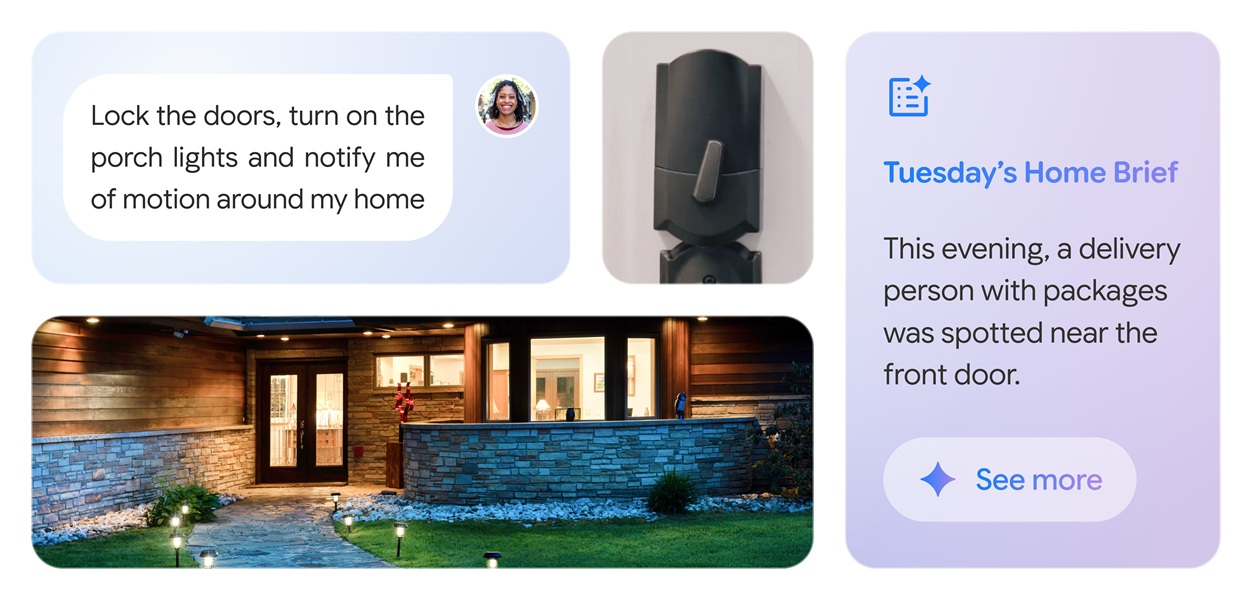
In April, Google highlighted Gemini’s ability to move away from rigid, exact commands. The goal has been to allow users to speak to their homes using "casual phrases and context," much as they would to another person. For instance, instead of saying, "Hey Google, set the living room lights to 20%," a user might eventually be able to say, "It’s a bit too bright in here," and have the AI understand the intent based on the time of day and current light levels. While the October update focuses more on "under-the-hood" stability and bug fixes, these are the essential prerequisites for that more ambitious vision of a conversational home.
The extensive updates for smart home cameras, also detailed in the late October patch, further emphasize Google’s commitment to security and monitoring. By refining how cameras interact with the broader Home ecosystem and ensuring that Gemini can accurately report on what those cameras see, Google is attempting to turn the smart home from a collection of connected gadgets into a cohesive, sentient environment.
As these updates roll out to the public, they serve as a reminder of the complexities inherent in the transition to AI-driven automation. While the "Sorry, I didn’t understand" errors and volume glitches may seem like minor inconveniences, they are the friction points that define the user experience. By systematically eliminating these bugs while simultaneously expanding the technical capabilities of the Matter standard and energy monitoring, Google is positioning the Home app not just as a remote control for lights, but as a comprehensive dashboard for the modern, efficient, and intelligent household.
Users should expect these updates to appear over the coming days as Google typically employs a phased rollout for its software patches. For those in the Public Preview or early access programs for Gemini, these fixes represent the direct result of user feedback and the ongoing refinement of the next generation of Google’s ambient computing strategy.
 Mobile Device Management (MDM) & Mobile OS
Samsung Announces US Launch for Galaxy Buds On: A Deep Dive into the Tech Giant’s First Open-Ear Clip-On Earbuds
In a strategic move that signals a significant shift in its wearable...
 Mobile Device Management (MDM) & Mobile OS
Next-Generation Google TV Streamer Reportedly in Development with Hands-Free Voice Controls and Presence Sensing
Google appears to be accelerating its ambitions for the living room, as...
 Mobile Device Management (MDM) & Mobile OS
Google Surprises Users with Early Release of Android 17 QPR2, Introducing Granular Customization and Enhanced Privacy
In a move that caught many in the tech industry off guard,...