
The move is particularly significant for TSMC’s diverse client base, which includes some of the most influential names in the technology sector. For these clients, the ability to claim a "Made in America" status for their most advanced products carries substantial weight, not only for marketing purposes but also for navigating increasingly complex regulatory environments. In recent years, there has been a growing emphasis on the security of the semiconductor "back-end"—the packaging and testing phase—which has traditionally been the final step of production performed overseas even if the wafers themselves were fabricated in the U.S. This partnership effectively closes that loop, allowing the final, finished product to emerge from a domestic supply chain.
GlobalFoundries’ role in this partnership leverages its extensive experience in high-volume CMOS manufacturing and its established infrastructure in the United States. The company has long positioned itself as a "trusted" foundry, a designation that carries specific meaning in the context of aerospace, defense, and critical infrastructure. By applying this "trusted" framework to the production of silicon interposers for TSMC, GlobalFoundries is enabling a hybrid model of manufacturing where the world’s most advanced logic chips, often produced by TSMC, can be integrated with components made by GlobalFoundries in a secure, domestic environment.
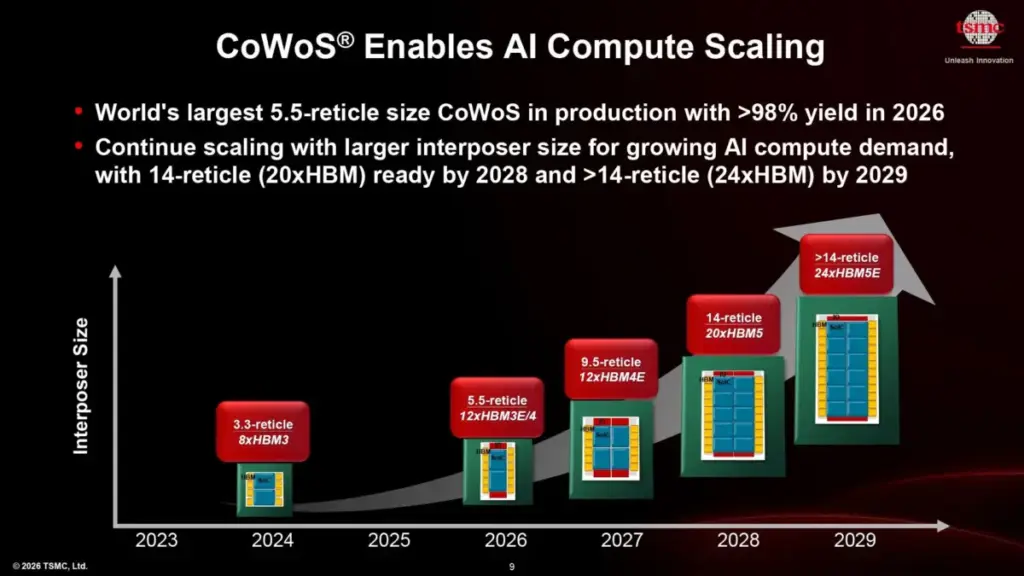
The technical implications of this deal are as significant as the economic ones. TSMC’s CoWoS technology has become the industry standard for high-performance AI accelerators. However, the production of the silicon interposers used in CoWoS is a specialized process that requires significant cleanroom space and precise manufacturing capabilities. By outsourcing a portion of this production to GlobalFoundries, TSMC can focus its own internal capacity on the most advanced nodes and the final assembly of the CoWoS modules, while relying on GlobalFoundries to provide the essential silicon foundations. This division of labor is a pragmatic response to the sheer volume of orders currently flooding the advanced packaging market, which has outpaced the industry’s ability to build new facilities.
Furthermore, the 2028 timeline for volume production indicates that this partnership is geared toward the next generation of computing architecture. By the time production reaches scale, the industry will likely be deep into the era of "Angstrom-level" logic and even more complex 3D integration techniques. The silicon interposers produced by GlobalFoundries will need to meet rigorous standards to ensure they can support the thermal and electrical demands of these future chips. The five-year duration of the contract provides GlobalFoundries with the stability and capital certainty needed to invest in the specific equipment and process refinements required to meet TSMC’s exacting standards for CoWoS integration.
 Hardware Reviews & PC Building
Privacy Concerns Surface for Meta’s Muse AI as Reports Suggest Unauthorized Access to Personal Messages
The rapid evolution of artificial intelligence has brought with it a wave...
 Hardware Reviews & PC Building
7-year-old Nvidia Shield TV Pro gets shocking 50% price hike driven by AI memory shortage — chipmaker axes…
The Shield TV Pro has long occupied a unique position in the...
 Hardware Reviews & PC Building
Used Hardware Purchase Leads to Unexpected Valorant Ban for German Gamer as Riot’s Vanguard Flags Secondhand CPU
The secondary market for PC components has long been a haven for...







