
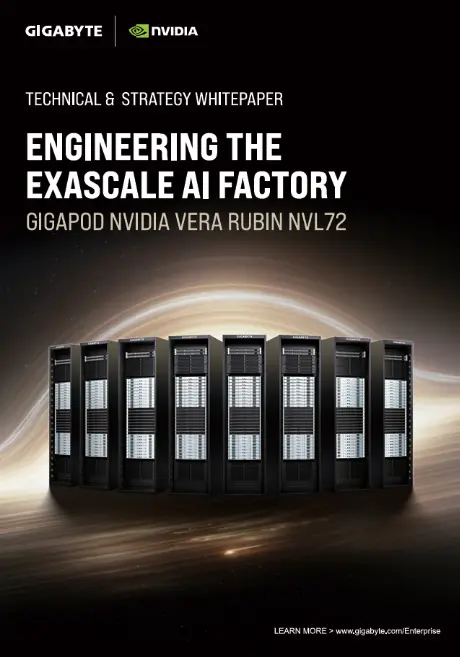
The landscape of enterprise artificial intelligence is currently navigating a critical inflection point, transitioning from the era of simple chatbots to a new paradigm defined by sophisticated, multi-modal models and complex agentic workflows. As these systems evolve, they are exposing the inherent limitations of traditional data center designs. Conventional rack architectures, which have long been built around individual 8-GPU servers, are increasingly hitting what industry experts describe as an "infrastructure wall." In this new era of computing, the performance of an AI cluster is no longer defined solely by its raw floating-point operations per second (FLOPS). Instead, the true bottlenecks have shifted toward memory domain coherent boundaries, interconnect latency, and the physical limits of thermal dissipation.
To address these escalating challenges, a new technical blueprint has emerged from a strategic co-engineering effort between GIGABYTE and NVIDIA. The introduction of the GIGAPOD NVIDIA Vera Rubin NVL72 represents a shift from component-based server design to a factory-integrated, turnkey rack-scale architecture. This solution is designed specifically to support the next generation of trillion-parameter agentic AI, providing the massive memory and interconnect speeds required to sustain long reasoning chains without the performance-degrading stalls associated with traditional hardware.
The transition toward agentic AI marks a fundamental change in how compute resources are utilized. Unlike standard request-and-response patterns, where a model generates a single output for a single input, agentic workflows involve models that act as autonomous or semi-autonomous entities. These agents must plan, reason, and execute multi-step tasks, often interacting with various data sources and other models in real-time. This process creates "long reasoning chains" that require constant access to massive amounts of data. When these models outgrow the memory capacity of a single server, they are forced to offload data to slower storage or system memory, leading to significant latency. The GIGAPOD architecture is engineered to eliminate these stalls by treating the entire rack as a single, unified compute entity.
At the heart of the GIGAPOD NVIDIA Vera Rubin NVL72 is a massive integration of processing power and high-bandwidth memory. The system unifies 72 NVIDIA Rubin GPUs and 36 NVIDIA Vera CPUs into a single, cohesive 20.7 TB HBM4 memory domain. This unification is made possible through the implementation of the 6th-Gen NVLink switch fabric, which provides an unprecedented 260 TB/s all-to-all interconnect. By allowing every GPU in the rack to communicate with every other GPU and CPU at such high speeds, the architecture effectively erases the boundaries between individual servers, creating a pool of resources that can handle the most demanding trillion-parameter models with ease.
Breaking the Infrastructure Wall
The "infrastructure wall" mentioned by industry leaders refers to the point where adding more individual servers no longer yields linear performance gains because the network between those servers becomes a bottleneck. In the context of agentic AI, the ability to maintain a unified rack-scale memory domain is essential. When a model’s parameters and its active "context window" can reside entirely within high-speed HBM4 memory across the entire rack, the system can maintain the continuity required for complex reasoning.
By eliminating memory-offloading stalls, the GIGAPOD ensures that the "time to first token" and the overall throughput of the model remain high, even as the complexity of the task increases. This is a departure from the previous generation of hardware, where large models had to be partitioned across multiple racks or nodes, introducing significant latency as data traveled across standard Ethernet or InfiniBand networks. While those networking technologies remain vital for cluster-scale communication, the NVLink fabric within the GIGAPOD handles the most intensive data exchanges at speeds that traditional networking cannot match.
Next-Gen Facility and Power Engineering
As AI models grow in complexity, the power and cooling requirements of the hardware supporting them have reached levels that traditional data centers were never designed to handle. The GIGAPOD NVIDIA Vera Rubin NVL72 is a powerhouse in terms of energy consumption, with a single rack supporting up to 240 kW of power. Managing this level of density requires a complete rethink of facility engineering.
To distribute power effectively at this scale, the GIGAPOD utilizes a 54V DC busbar system and 5,000A power distribution. This shift to higher voltage DC power distribution is a critical move for modern data centers, as it reduces conversion losses and allows for more efficient delivery of energy to the high-performance components within the rack. However, the sheer amount of power being consumed also results in immense heat generation, which has necessitated a move away from traditional air cooling.
The solution to this thermal challenge is found in high-density Direct Liquid Cooling (DLC). The GIGAPOD is designed to capture over 92% of the heat generated within the rack through liquid-to-liquid heat exchange. One of the most significant advantages of this system is its ability to operate stably using 45 degrees Celsius (113 degrees Fahrenheit) warm water. By utilizing warm water cooling, data center operators can eliminate the need for energy-intensive facility chillers, which are often the largest consumers of electricity in a data center after the servers themselves. This not only improves the Power Usage Effectiveness (PUE) of the facility but also makes the deployment of exascale AI more environmentally sustainable.
The integration of in-row Coolant Distribution Units (CDUs) further enhances the system’s reliability. These units manage the flow and temperature of the coolant throughout the rack, ensuring that every GPU and CPU operates within its optimal thermal range, even under maximum load. This level of thermal management is what allows the GIGAPOD to maintain such high density without risking hardware throttling or failure.
Turnkey Deployment Economics
One of the most significant barriers to adopting exascale AI infrastructure has historically been the complexity and time required for deployment. Integrating thousands of GPUs, complex liquid cooling loops, and high-speed interconnects can take months of on-site engineering and testing. GIGABYTE and NVIDIA have addressed this by offering the GIGAPOD as a turnkey solution.
The units are delivered as L11 and L12 pre-tested systems. L11 refers to the integration of the hardware into the rack, while L12 represents the highest level of rack-scale integration, including full functional testing of the compute, networking, and cooling systems before the unit ever leaves the factory. This factory-integrated approach compresses cluster integration timelines from months down to days. For enterprises racing to deploy AI capabilities, this reduction in time-to-market provides a significant competitive advantage.
Furthermore, the "turnkey" nature of the GIGAPOD reduces the operational risk for IT departments. Because the entire rack is co-engineered and validated as a single unit, enterprises can avoid the compatibility issues and performance tuning hurdles that often plague custom-built AI clusters. This allows data center teams to focus on scaling their AI workloads rather than troubleshooting the underlying hardware.
Scalable Unit ROI
The economic argument for the Vera Rubin NVL72 extends beyond just deployment speed. The architecture is designed to deliver a superior return on investment (ROI) by maximizing compute density and throughput. According to technical specifications, the Vera Rubin NVL72 delivers 25% higher NVFP4 inference throughput compared to previous-generation architectures. This improvement is particularly relevant for the next generation of AI models that utilize the NVFP4 precision format to balance accuracy and performance.
Perhaps more importantly for data center operators, the GIGAPOD achieves these performance gains while halving the compute rack footprint. In a world where data center real estate is at a premium and power availability is often the limiting factor for expansion, the ability to pack more performance into a smaller space is invaluable. By reducing the number of racks required to achieve a specific level of compute, enterprises can lower their total cost of ownership (TCO) across power, cooling, and floor space.
The GIGAPOD NVIDIA Vera Rubin NVL72 is not just an incremental upgrade; it is a foundational shift in how AI infrastructure is conceived. By unifying processing, memory, and interconnects into a single, liquid-cooled, rack-scale entity, GIGABYTE and NVIDIA have provided a roadmap for enterprises to navigate the complexities of trillion-parameter models.
For IT decision-makers and data center architects looking to map their roadmap to exascale AI readiness, the full technical and strategy whitepaper provides deep insights into the engineering behind this transition. As part of this initiative, a "Future Focus 2026" report is also being made available, offering a resource for insight on priorities and investment areas in AI, security, and the evolving needs of the modern enterprise. The era of agentic AI has arrived, and the infrastructure required to support it is now a reality.
 Helpdesk & IT Service Management (ITSM)
SolarWinds Service Desk September Update Introduces Advanced Process Integrations and Microsoft Teams Automation
As IT environments become increasingly complex and distributed, the demand for more...
 Helpdesk & IT Service Management (ITSM)
Nutanix Announces Major FY27 Expansion of Elevate Partner Program to Include Systems Integrators and Enhanced AI Support
In a significant strategic shift designed to capture the burgeoning enterprise AI...
 Helpdesk & IT Service Management (ITSM)
AI-Driven Security Audit Unearths Decade-Old Critical Vulnerability in NGINX Infrastructure
In a discovery that underscores the shifting landscape of global cybersecurity, researchers...







