

The long-anticipated transition of quantum computing from a theoretical pursuit of physics to a practical tool for global industry has officially begun. According to a recent report from analysts at McKinsey & Co., the sector reached a "commercial tipping point" this spring, marking a fundamental shift in how the technology is perceived by the global business community. No longer confined to the laboratory, quantum systems are increasingly being integrated into the strategic planning of companies across a diverse array of sectors, including life sciences, climate technology, travel, logistics, and financial services. These early adopters are already leveraging emerging quantum capabilities to optimize complex processes, test high-stakes scenarios, and run simulations that were previously beyond the reach of classical architectures.
The scale of this commercial embrace is perhaps most clearly reflected in the flow of capital. McKinsey’s data highlights that investors funneled a staggering $12.6 billion into quantum startups over the past year. This massive influx of funding suggests that the market has moved past the fundamental question of "can it be done?" and is now fixated on the timeline of "when will it happen?" This sentiment is echoed by some of the most influential figures in the information technology sector, who see the current era not as a sudden "flip-the-switch" moment, but as a deliberate and steady march toward maturity.
John Roese, the global chief technology officer and chief AI officer at Dell Technologies, is among those leading the charge in articulating this roadmap. In his view, the path forward is characterized by the incremental development of increasingly scalable, fault-tolerant systems. This progression relies on the constant refinement of error-corrected qubits, the advancement of system architectures, and the maturation of both software and specialized applications. As the quantum and traditional IT industries become increasingly "entangled," the focus is shifting toward the infrastructure required to make quantum power accessible and reliable for the modern enterprise.
The traditional titans of the datacenter—original design manufacturers such as Dell Technologies, Hewlett Packard Enterprise (HPE), Cisco Systems, and IBM—are already laying the groundwork for this future. Rather than viewing quantum as a replacement for classical computing, these companies are positioning it as a powerful co-processor within a hybrid framework. This has led to the emergence of the hybrid quantum-classical High-Performance Computing (HPC) datacenter, a model where the immense processing power of supercomputers is augmented by the unique capabilities of quantum processors.
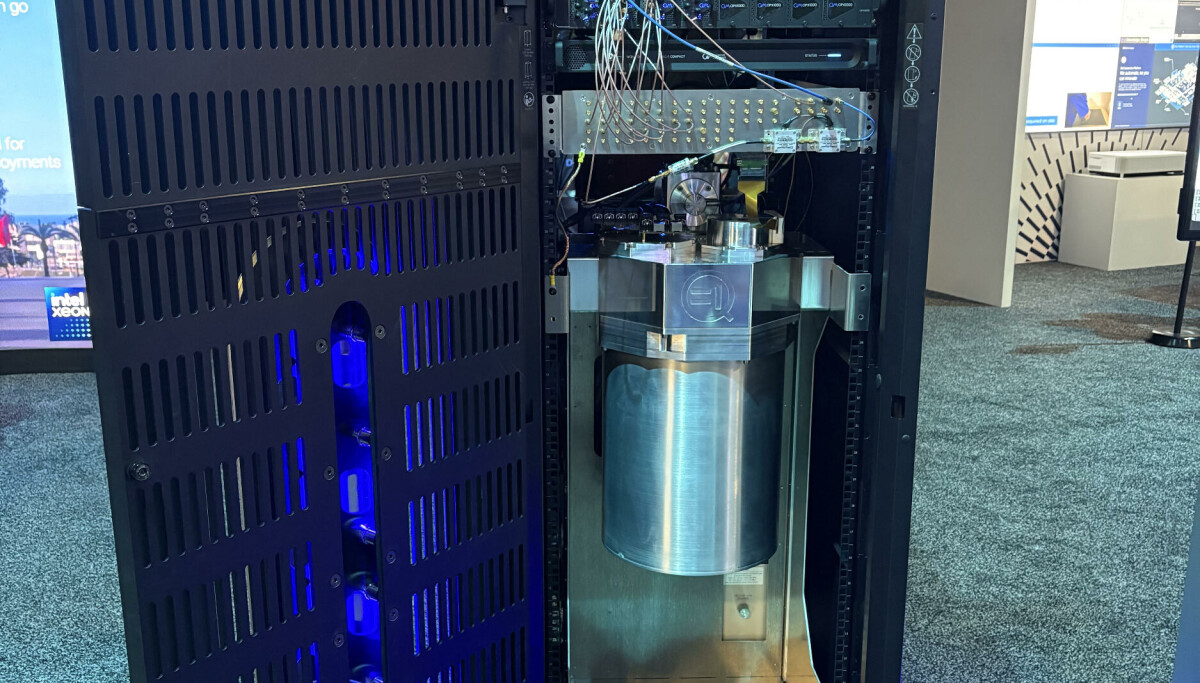
Cisco, for instance, is focusing its efforts on the connective tissue of these systems, developing a quantum-focused networking architecture designed to handle the unique demands of quantum data. Meanwhile, Dell and HPE are aggressively pursuing a strategy of partnership and integration. At the Dell Technologies World 2026 conference earlier this year, the industry caught a glimpse of this integration in action when the quantum firm Equal1 showcased its RacQ system. This display served as a tangible example of how quantum hardware is being designed to sit alongside traditional server racks, signaling a move toward physical and operational compatibility.
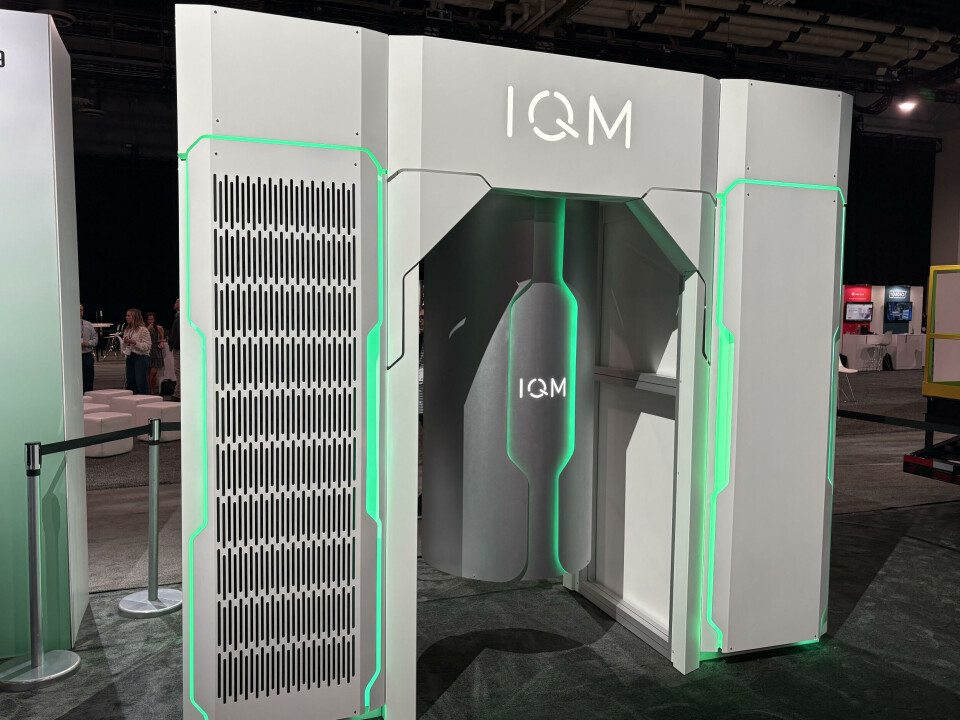
HPE has followed a similar trajectory, unveiling a series of high-profile partnerships with a diverse roster of quantum specialists, including IQM Quantum Computers, Quantinuum, QuEra, and Rigetti. By integrating systems like IQM’s Radiance quantum processor with its own legendary Cray supercomputers, HPE is building a unified platform that allows researchers and enterprises to toggle between classical and quantum resources seamlessly. This collaborative approach suggests that the "quantum winner" will not be a single company, but rather an ecosystem of hardware providers and integrators working in concert.
While the full potential of "advantageous" quantum computing may still be several years away, the timeline for practical application is shorter than many might expect. Roese suggests that the industry will begin to see real-world results in the near-term. He anticipates that by the end of this decade—specifically around 2028 or 2029—the industry will likely possess a sufficient number of error-corrected logical qubits to tackle the first "batch" of meaningful problems. These initial applications are expected to focus on molecular-level optimizations, a field where quantum systems have a natural advantage due to their ability to simulate the behavior of subatomic particles.
The implications of molecular optimization are profound, particularly for the industrial base and the foundational sciences. Roese points out that the performance of a battery or the durability of a new material is ultimately determined by how its molecules are assembled. This assembly involves understanding the precise distances between atoms, their binding power, and their orientation. Quantum systems are uniquely suited to model these "gluey" atomic connections in ways that classical computers cannot, allowing scientists to engineer materials with specific, desirable properties from the ground up.
A particularly compelling example of this is the global struggle against corrosion. Rust and material degradation cost the global economy an estimated $1 trillion every year. Roese explains that at a rudimentary level, corrosion occurs because molecules in materials like steel are not perfectly oriented. While stainless steel is corrosion-resistant, it is not because it is "not steel," but because the orientation of its atoms produces that specific effect. With the power of quantum simulation, researchers could analyze any material to understand why it corrodes at the atomic level and then reorganize its structure to create a version that is entirely corrosion-free.

While traditional supercomputers can attempt these calculations, the exponential compute power of quantum systems allows them to perform these tasks faster and at a much larger scale. This capability extends to drug discovery, where identifying the right molecular combinations can shave years off the development of life-saving medications, and to energy storage, where quantum-optimized battery chemistry could lead to significantly longer-lasting and more efficient power cells. For the general public, these breakthroughs will likely be "invisible," yet their impact on the global economy and daily life will be transformative.
As the industry enters the 2030s, the focus is expected to shift from the microscopic to the macroscopic. The second stage of quantum utility will involve optimizations on a massive scale, addressing challenges that currently plague the global supply chain and the transportation industry. Roese argues that the world’s supply chains are currently "suboptimal" simply because the computing power required to run large-scale, efficient optimization calculations does not yet exist.
Consider the "airline gate problem," a logistical nightmare involving hundreds of aircraft, thousands of passengers, and a limited number of gates, all cascading through a complex web of flight paths and crew schedules. Calculating the absolute best outcome for such a system involves a staggering number of permutations. While airlines currently use manual calculations and classical supercomputers to manage these operations, they are often settling for "good enough" rather than "perfect" because the optimal path would take too long to compute.
The same challenge applies to logistics giants like FedEx, UPS, and DHL. These companies famously use route optimization formulas—such as the policy of minimizing left turns—to save time and fuel. However, Roese notes that such strategies are relatively rudimentary. A quantum system could theoretically analyze every possible permutation of every street and every potential variable to find the "happy path" that provides a substantial improvement over current logistics. This capability becomes even more critical when one considers that delivery trucks are just one layer of a system that includes the sourcing and movement of global commodities.
Looking further toward 2030, the need for quantum-level coordination will only intensify as the world becomes populated by an "exponential" number of autonomous agents. Roese predicts a future where trillions of autonomous AI entities—both physical, like self-driving vehicles, and logical, like digital assistants—will be operating simultaneously. While these agents are predictable individually, they become highly unpredictable when they interact as part of a massive, complex system.
"The problem is I’d have too many moving parts and I can’t model it; I can’t simulate it properly," Roese observes. In this scenario, a quantum system could serve as the central vehicle that directs and orchestrates these autonomous entities, ensuring they work together as a cohesive and efficient system rather than a chaotic one.
Despite the ambitious nature of these goals, significant engineering hurdles remain. The industry is currently focused on reducing the ratio of physical qubits needed to create a single, stable "logical" qubit. Startups like Qarakal Quantum and Infleqtion are pioneering new architectures aimed at reducing the noise and energy costs associated with quantum systems. These innovations are essential for creating designs that can fit comfortably alongside classical HPC systems in a standard datacenter environment.
The transition of quantum computing from a physics problem to an engineering one marks a point of no return. While the "million-qubit" systems required for national-scale optimizations may still be on the horizon, the groundwork being laid today by firms like Dell, HPE, and their quantum partners ensures that the technology is ready for its commercial debut. As these systems move from simulating molecules to orchestrating global logistics, the "steady march" of quantum progress is poised to reshape the industrial landscape of the 21st century.
 Enterprise Tech & Infrastructure
Upscale AI Challenges Nvidia’s Dominance with SkyHammer Scale-Up Fabric
For decades, the architecture of high-performance computing has been defined by a...
 Enterprise Tech & Infrastructure
Upscale AI Challenges Nvidia’s Scale-Up Dominance with SkyHammer Fabric and $2 Billion Valuation
For decades, the architecture of high-performance computing was defined by a fiercely...
 Enterprise Tech & Infrastructure
Understanding the Architecture of Modern Storage: Decoding the Relationship Between Flash Technology and Solid-State Drives
In the rapidly evolving landscape of data storage, the terminology used to...






