

The same challenge applies to logistics giants like FedEx, UPS, and DHL. These companies famously use route optimization formulas—such as the policy of minimizing left turns—to save time and fuel. However, Roese notes that such strategies are relatively rudimentary. A quantum system could theoretically analyze every possible permutation of every street and every potential variable to find the "happy path" that provides a substantial improvement over current logistics. This capability becomes even more critical when one considers that delivery trucks are just one layer of a system that includes the sourcing and movement of global commodities.
Looking further toward 2030, the need for quantum-level coordination will only intensify as the world becomes populated by an "exponential" number of autonomous agents. Roese predicts a future where trillions of autonomous AI entities—both physical, like self-driving vehicles, and logical, like digital assistants—will be operating simultaneously. While these agents are predictable individually, they become highly unpredictable when they interact as part of a massive, complex system.
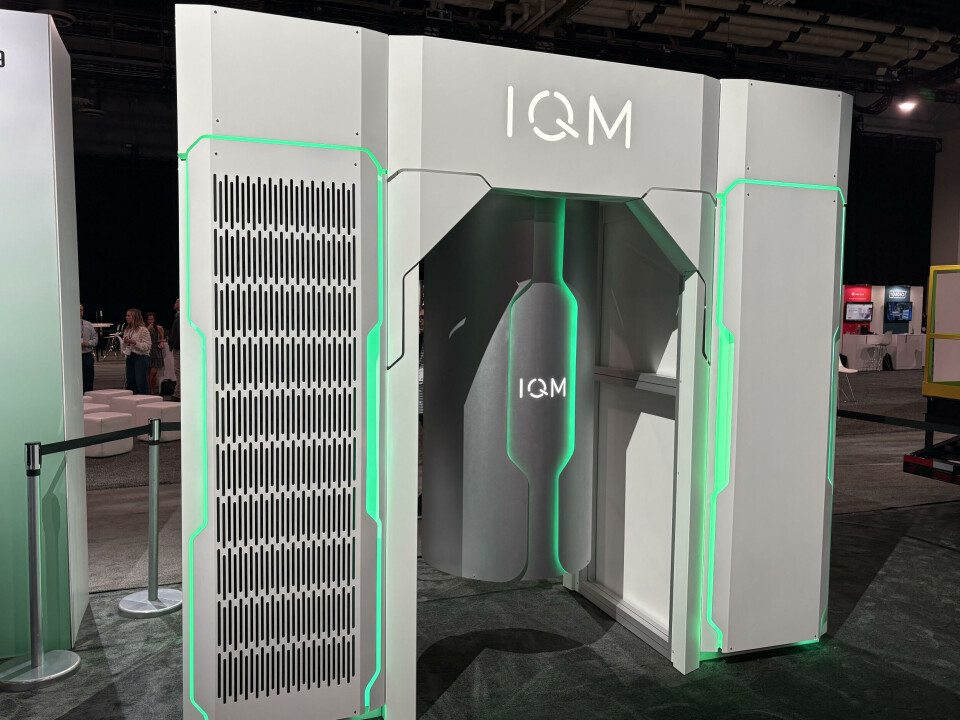
"The problem is I’d have too many moving parts and I can’t model it; I can’t simulate it properly," Roese observes. In this scenario, a quantum system could serve as the central vehicle that directs and orchestrates these autonomous entities, ensuring they work together as a cohesive and efficient system rather than a chaotic one.
Despite the ambitious nature of these goals, significant engineering hurdles remain. The industry is currently focused on reducing the ratio of physical qubits needed to create a single, stable "logical" qubit. Startups like Qarakal Quantum and Infleqtion are pioneering new architectures aimed at reducing the noise and energy costs associated with quantum systems. These innovations are essential for creating designs that can fit comfortably alongside classical HPC systems in a standard datacenter environment.
The transition of quantum computing from a physics problem to an engineering one marks a point of no return. While the "million-qubit" systems required for national-scale optimizations may still be on the horizon, the groundwork being laid today by firms like Dell, HPE, and their quantum partners ensures that the technology is ready for its commercial debut. As these systems move from simulating molecules to orchestrating global logistics, the "steady march" of quantum progress is poised to reshape the industrial landscape of the 21st century.
 Enterprise Tech & Infrastructure
Navigating the Hidden Complexities of Amazon S3 Cost Management for the Modern Enterprise
The promise of cloud storage has always been centered on its elasticity...
 Enterprise Tech & Infrastructure
Upscale AI Unveils SkyHammer Architecture to Challenge Nvidia’s Scale-Up Networking Monopoly
In the history of the semiconductor industry, the desire for a "universal...
 Enterprise Tech & Infrastructure
The Long Road to Open Silicon: How OpenTitan and the Rise of Secure Roots of Trust are Reshaping the Semiconductor Industry
The 2018 Hot Chips conference served as a pivotal moment for the...







