
The landscape of personal computing is one of constant, ruthless evolution. Over the past three decades, the Windows operating system has served as the primary stage for this transformation, acting as the foundation upon which thousands of software applications have risen to dominance, only to eventually fade into the background of digital history. As hardware capabilities expanded and high-speed internet transitioned from a luxury to a utility, the tools we once considered indispensable have been quietly replaced by cloud-based services, integrated system features, and mobile-first platforms.
For many who came of age during the late 1990s and early 2000s, the experience of using a PC was defined not just by the operating system itself, but by a specific suite of third-party applications. These programs were more than just utilities; they were the gateways to digital culture, social interaction, and creative expression. From the rhythmic clicking of an instant messenger to the ritual of burning a custom music mix onto a physical disc, these applications shaped the daily habits of a generation.
Today, while the remnants of these programs may still exist in some forgotten corner of a hard drive or as legacy downloads, their cultural ubiquity has vanished. Examining these iconic Windows apps offers more than just a nostalgic trip down memory lane; it provides a window into how far computing has come and how our relationship with technology has fundamentally shifted.
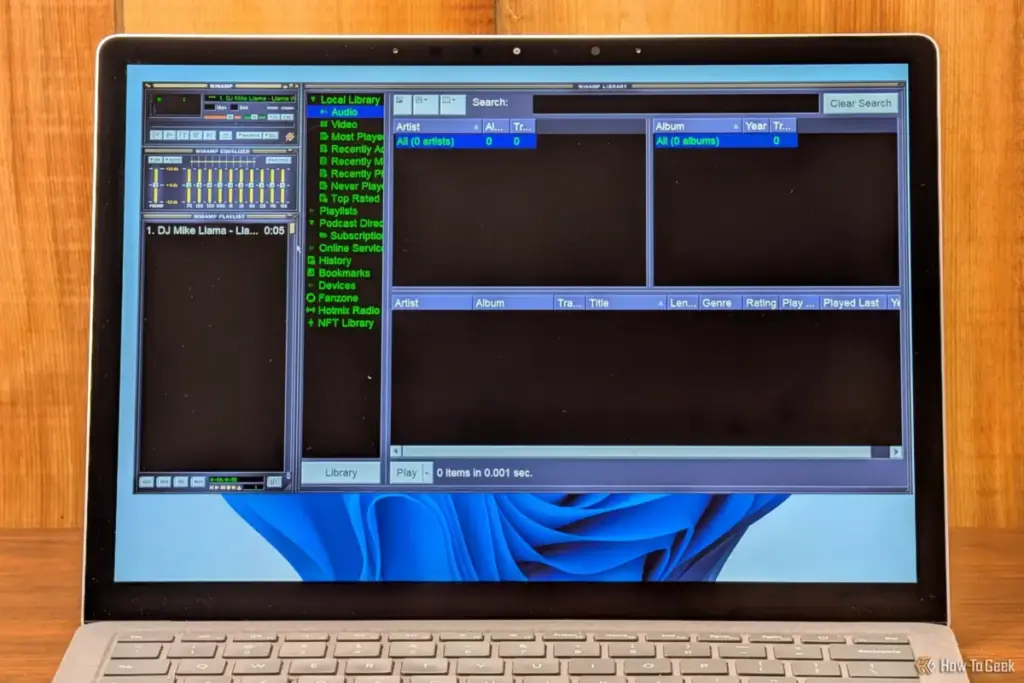
Winamp: The Ultra-Customizable Music Player That Defined the MP3 Era
In the late 1990s, the digital music revolution was in its infancy. The MP3 format had begun to circulate, but the software provided by Microsoft to handle these files—Windows Media Player—was often viewed with frustration. It was notorious for being a resource-heavy application that struggled on the modest hardware of the time. Opening the default media player often meant a significant delay, and running it alongside other programs frequently led to system instability or stuttering audio.
Into this vacuum stepped Winamp, released in 1997 by Nullsoft. It was a revelation for PC enthusiasts. Winamp was remarkably lightweight, designed to deliver high-quality audio playback without taxing the CPU. This efficiency allowed users to listen to their music collections while simultaneously browsing the early web or working on documents—a feat that was not always guaranteed with its competitors.
A Little Player With a Lot of Personality
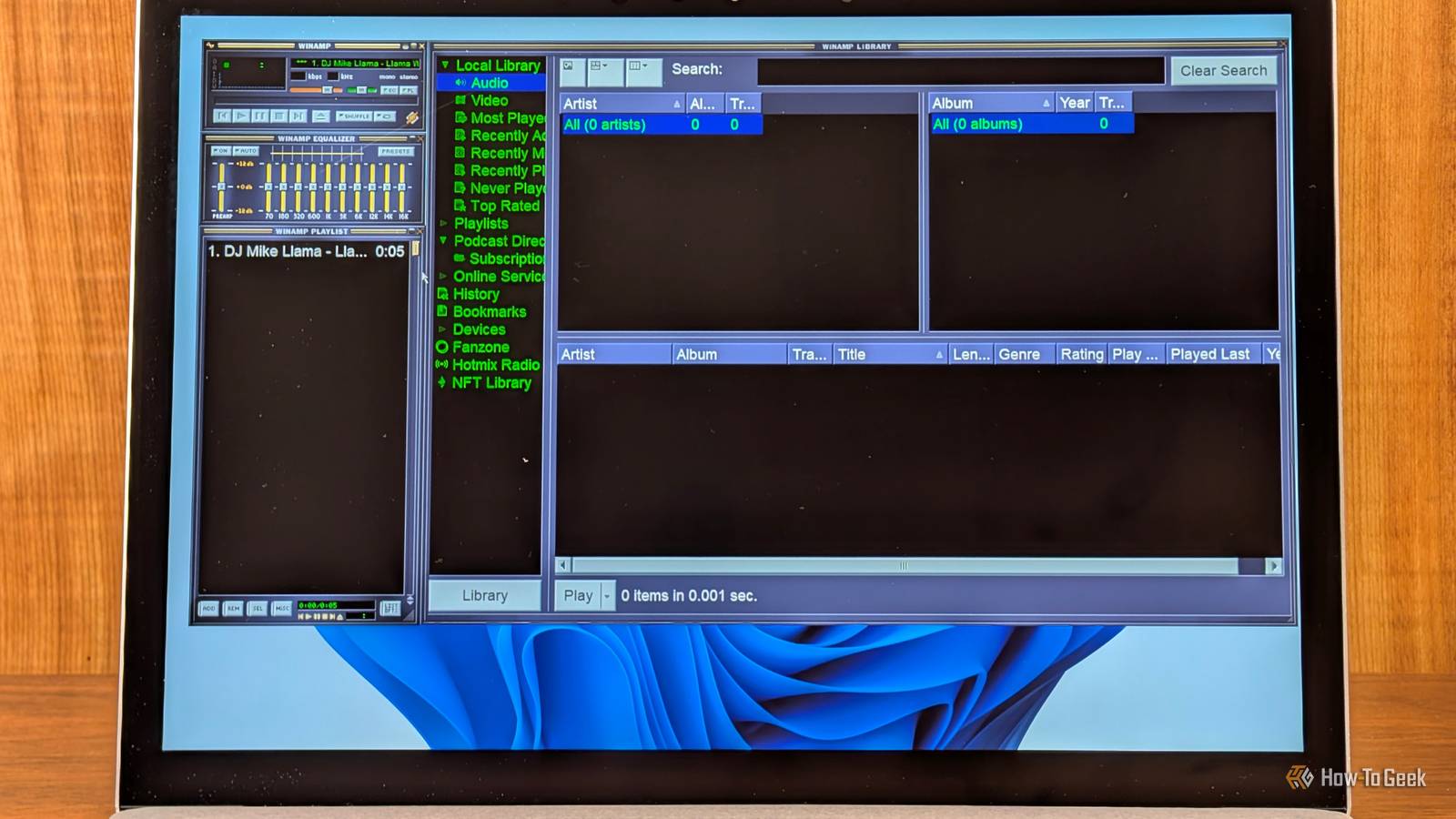
What truly set Winamp apart, however, was its personality. It was famous for its "it really whips the llama’s ass" startup slogan and its incredibly deep level of customization. The 10-band equalizer allowed users to fine-tune their audio experience with a precision that felt professional, and the "MilkDrop" visualizers turned music into a psychedelic light show that became a staple of college dorm rooms.
Perhaps its most enduring legacy was the "skinning" community. Winamp was one of the first major applications to encourage users to completely overhaul its visual interface. Thousands of custom skins were created, ranging from sleek, futuristic metallic designs to interfaces that mimicked car stereos or sci-fi control panels. It turned the music player into a piece of digital art, reflecting the user’s personal style.
As the industry shifted toward streaming services like Spotify and hardware became powerful enough to handle any media task with ease, the need for a dedicated, lightweight MP3 player diminished. While Winamp has seen various revival attempts and still maintains a loyal following, its era as the king of the Windows desktop has long since passed, superseded by the convenience of the cloud.
MSN Messenger: Where a Generation Learned to Chat Online
Before the era of the "always-on" social media feed, there was the ritual of "logging on." For millions of teenagers and young adults in the early 2000s, the school day didn’t truly end until they sat down at the family PC and waited for the two little green figures of MSN Messenger to spin and sign them in.
Launched in 1999 as a competitor to AOL Instant Messenger (AIM) and ICQ, MSN Messenger (later rebranded as Windows Live Messenger) quickly became the dominant communication tool for a global audience. It was the platform where a generation learned the nuances of digital etiquette, the shorthand of "LOL" and "BRB," and the art of the passive-aggressive "custom status."
Back When "Logging On" Was Still a Thing
MSN Messenger was surprisingly feature-rich for its time. It moved beyond simple text-based chat to include "Nudges"—a feature that would shake the recipient’s chat window to grab their attention—and "Winks," which were full-screen animations that often felt like a precursor to modern stickers and emojis. It also integrated with Windows Media Player to show your contacts exactly what song you were listening to, providing a constant stream of social signaling.

The app represented a specific moment in time when the internet was a destination rather than a constant presence. You "went" to the computer to talk to your friends. However, the rise of the smartphone changed the fundamental nature of communication. When Facebook Chat and later WhatsApp made messaging instantaneous and mobile, the desktop-bound nature of MSN Messenger began to feel like a relic.
Microsoft’s acquisition of Skype in 2011 signaled the end of the road. In 2013, the company began migrating its messenger user base to Skype, eventually retiring the MSN brand entirely. While we are more connected now than ever, the specific, concentrated social energy of the MSN Messenger era remains a unique chapter in digital history.
Windows Movie Maker: A First Taste of Video Editing
Today, high-quality video editing software is more accessible than ever. Tools like DaVinci Resolve offer professional-grade features for free, and mobile apps allow users to cut together complex videos in the palm of their hand. But in the early 2000s, video editing was a daunting, resource-intensive task reserved for professionals with expensive hardware.
Windows Movie Maker changed that. First introduced with Windows Me in 2000 and significantly improved in Windows XP, it brought the "drag-and-drop" philosophy to filmmaking. For many, it was their first introduction to the concept of a timeline, transitions, and title cards.
Everyone’s an Editor
The impact of Windows Movie Maker on early internet culture cannot be overstated. It was the primary tool for the first wave of YouTube creators. The "blue background with white text" intro and the "Star Wipe" transition became the aesthetic hallmarks of a thousand amateur tutorials and fan tributes. It was simple enough for a middle-school student to use for a class project but robust enough to help people tell stories using the footage from their early digital cameras.
Microsoft eventually bundled Movie Maker into the "Windows Essentials" suite, but as the 2010s progressed, the company’s focus shifted. The software began to feel dated as high-definition video became the standard. Support for the suite officially ended in 2017, and while Microsoft eventually introduced Clipchamp as a spiritual successor, the original Movie Maker remains the nostalgic starting point for an entire generation of digital creators.
Nero Burning ROM: Defining the Era of Optical Media
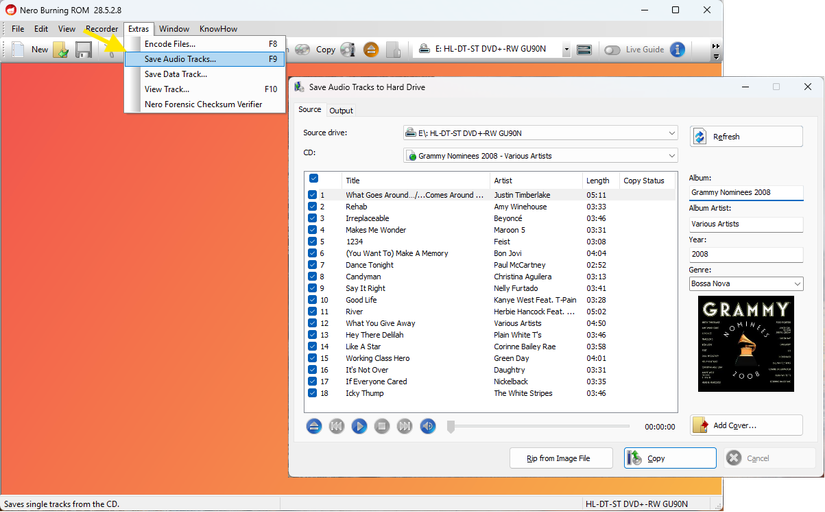
There was a time when the most common way to move a large file from one computer to another was to "burn" it onto a disc. Before high-speed cloud uploads and cheap, high-capacity USB flash drives, the CD-R and DVD-R were the kings of data storage. To manage this process, Windows users turned to Nero Burning ROM.
The name itself was a clever historical pun (referencing Emperor Nero and the Great Fire of Rome), but the software was all business. It provided a reliable, comprehensive interface for creating data discs, audio CDs, and bootable recovery media.
Before USBs and Cloud Storage, We Had This
In the early 2000s, Nero was often the most important piece of software on a new PC. It was frequently bundled with hardware, as every new CD-RW or DVD-RW drive required a robust software suite to function. For music lovers, Nero was the tool used to create the "mixtape" of the digital age—carefully curated CDs for car stereos that didn’t yet have auxiliary inputs or Bluetooth.
As the cost-per-gigabyte of flash memory plummeted and streaming services eliminated the need for physical music collections, the optical drive itself began to disappear from laptops and desktop towers. Today, many modern PCs don’t even include a disc drive, rendering Nero Burning ROM a niche tool for physical media enthusiasts and archivists rather than a household name.
RealPlayer: Streaming Video Before the Giants
Before Netflix, before YouTube, and before high-speed broadband was a standard utility, there was RealPlayer. Developed by RealNetworks and released in 1995, it was one of the first applications to bring the concept of "streaming" to the masses.
At a time when a single three-minute video could take an hour to download over a dial-up connection, RealPlayer’s ability to play content while it was still buffering was nothing short of a miracle. It utilized proprietary formats (.ra for audio and .rm for video) that were highly compressed, allowing them to squeeze through the narrow bandwidth of the late 90s.
Always Buffering
Despite its innovation, RealPlayer is often remembered with a mix of affection and frustration. The "buffering" wheel became a symbol of the patience required to be an early internet user. As the software evolved, it also became increasingly bloated, frequently prompting users to upgrade to "Pro" versions or installing unwanted browser toolbars—a trend that eventually soured its reputation.
The decline of RealPlayer was accelerated by the rise of Adobe Flash and the eventual dominance of HTML5, which allowed video to be played natively in web browsers without the need for a dedicated external player. While the application technically still exists today, its role as a pioneer of the streaming age has been overshadowed by the giants that followed in its footsteps.
A Legacy of Innovation
While many of these applications have faded into obscurity, their influence is still felt in the software we use today. The skinning of Winamp paved the way for modern UI customization; the social features of MSN Messenger laid the groundwork for today’s massive communication platforms; and the simplicity of Movie Maker democratized video production for the masses.
These digital ghosts serve as a reminder of a transitional period in human history—a time when we were first learning how to live, work, and play in a digital world. They were the tools that helped us navigate the early frontier of the internet, and though they may be gone, the memories of the spinning green icons and the "clack" of a burning CD remain an integral part of the Windows legacy.
 Tech Tutorials & How-To Guides
The Intelligent Workshop: How DIY Enthusiasts Are Using ESP32 Microcontrollers to Revolutionize Traditional Power Tools
For decades, the evolution of power tools followed a predictable trajectory: they...
 Tech Tutorials & How-To Guides
Thrills and Psychological Chills: Netflix Bolsters October Lineup With ‘Unabomber’ and Genre Classics
As the calendar turns to the first full week of October, the...
 Tech Tutorials & How-To Guides
The USB-C Power Revolution: How Modern Portable Batteries are Redefining Device Mobility
For decades, the Universal Serial Bus, or USB, was viewed primarily through...







