

Looking toward the end of the decade, Hyperion Research forecasts a market that will continue to expand, albeit at a more measured pace than the initial generative AI explosion. The market for on-premises HPC and AI-Sci servers is expected to triple in the decade leading up to 2030. While large-scale supercomputers will continue to command the bulk of the spending, divisional, departmental, and workgroup systems are expected to maintain their relative share of the market. By 2030, the broader ecosystem—which includes not just the servers, but also storage, middleware, applications, services, and cloud capacity—is projected to exceed $100 billion.
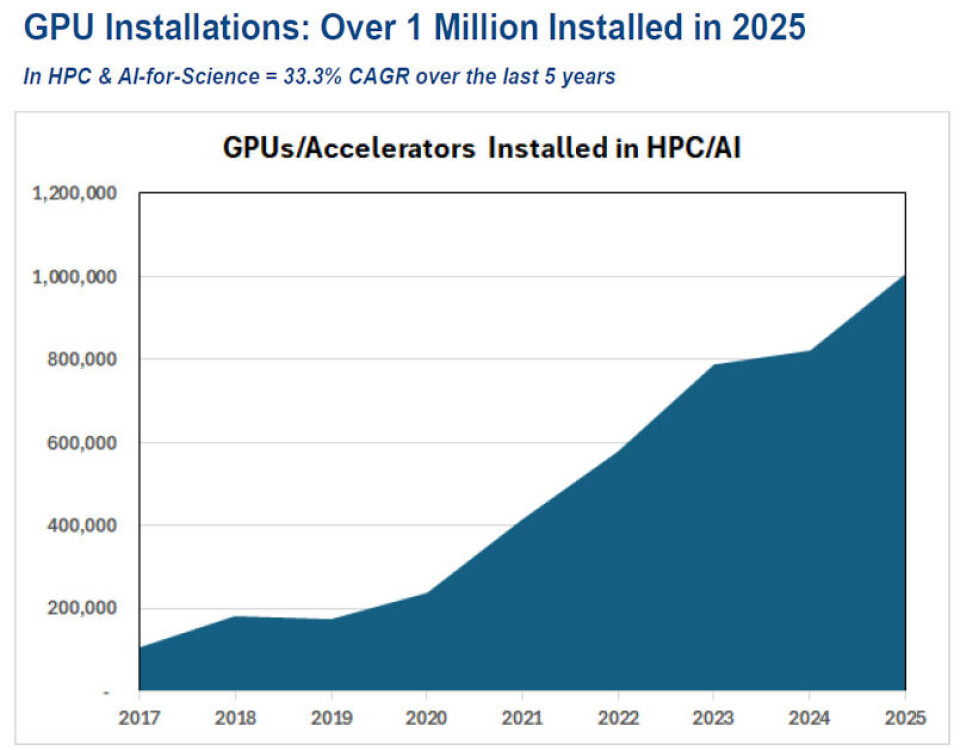
The role of the cloud in this ecosystem is also evolving. While on-premises hardware remains the backbone of many national laboratories and large research institutions, the rental of cloud-based clusters is growing rapidly. Spending on cloud capacity for HPC and AI-Sci applications is forecast to grow nearly fivefold between 2022 and 2030, reaching approximately $30 billion. Currently, North America leads this trend, with higher cloud adoption rates than Europe or the Asia-Pacific region, despite the economic might of those areas.
When combining on-premises acquisitions with cloud rental spending, the total infrastructure investment for scientific computing is expected to hit $135 billion by 2030, up from roughly $40 billion in 2022. This 3.4-fold increase reflects a world where researchers are increasingly "hybrid," using on-premises systems for steady-state workloads while bursting to the cloud for additional capacity or specialized hardware. The debate over whether the cloud or on-premises is more cost-effective remains a point of contention, but the data suggests that the answer for most organizations is a pragmatic mix of both.
The sheer power available to researchers today is perhaps best illustrated by the "baby supercomputers" now appearing on individual desks. A modern workstation, such as a DGX Spark, packs more computational power than the room-sized behemoths of decades past. If such a machine could be transported back to the late 1970s, it would represent a leap in capability that would have been unimaginable even to pioneers like Seymour Cray. We are living in an era where the tools of discovery are becoming more powerful and more accessible, even as the market dynamics that produce them become increasingly complex. As we look toward 2030, the fusion of traditional high-performance computing and artificial intelligence promises to accelerate scientific discovery at a rate that matches the growth of the hardware itself.
 Enterprise Tech & Infrastructure
Navigating the Financial Realities of Enterprise Cloud Storage: A Comprehensive Analysis of Amazon S3 Cost Management
In the rapidly evolving landscape of enterprise cloud infrastructure, the management of...
 Enterprise Tech & Infrastructure
The Architecture of Modern Storage: Navigating the Technical Nuances of Flash Memory and Solid-State Drives
In the rapidly evolving landscape of data storage, the terminology used to...
 Enterprise Tech & Infrastructure
The Long Road to Open Silicon: How OpenTitan and the Rise of Secure Roots of Trust are Reshaping the Semiconductor Industry
The 2018 Hot Chips conference served as a pivotal moment for the...







