
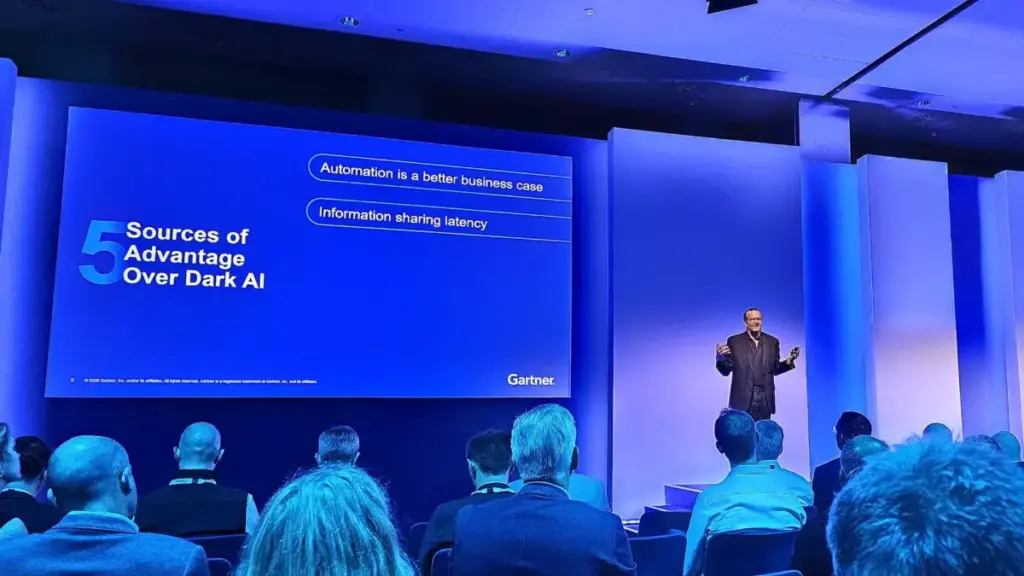
The solution, according to McMullen, is to pivot from innovation to automation. While AI is undeniably making attackers faster, there is evidence that it is also making them more fragile. Threat actors are becoming increasingly reliant on AI-assisted kill chains and automated attack pathways. This reliance creates a paradox: as they become more dependent on these systems, their manual skills may atrophy, and their operations become more predictable.
For cybersecurity professionals, automation is not a new concept—it is the core of the profession. Unlike many technology investments that lose value over time, McMullen argued that investments in cybersecurity automation often appreciate. A dollar spent on a robust, automated response system today covers a larger attack surface tomorrow and protects a growing revenue stream. By scaling defensive operations through AI, organizations can finally match the "digital speed" of their adversaries, turning a reactive struggle into a scalable business advantage.
Exploiting Information and Weaponization Latency
One of the most significant advantages held by defenders is the structured way in which the security community shares information. CSOs and CISOs generally operate within a culture of transparency, contributing to the Common Vulnerabilities and Exposures (CVE) list and the Common Attack Pattern (CAP) list. In contrast, threat actors operate in a transactional environment where information is a commodity to be sold, not shared for the common good.
McMullen noted that defenders almost always discover vulnerabilities before threat actors do, simply because of the sheer scale of the global research community. By banding together across industry lines and casting aside traditional competition, companies can use this "information latency" to their advantage. When a community of practice shares insights rapidly, the window of opportunity for a threat actor to use a new exploit narrows significantly.
Furthermore, there is a "weaponization latency" that favors the defender. Even if an attacker uses AI to distill a new exploit, the defensive side typically has access to more sophisticated AI models first. Whether the defensive lead is measured in months or minutes, it remains an advantage. McMullen emphasized that the primary hurdle for CIOs is not the sophistication of the AI, but the basics of patching and vulnerability management. AI is already simplifying these tasks through software reverse engineering and the creation of "digital twins."
By using AI to create digital twins of their operational technology (OT) and hybrid cloud environments, companies can comprehensively test patches in a simulated space before deployment. This allows for a level of continuous integration and continuous delivery (CI/CD) that was previously impossible in complex, legacy-heavy environments.
The Advantage of Terrain and Economic Realities
The concept of "knowing the terrain" is a classic military principle that applies directly to the digital battlefield. While tools like Mythos are terrifyingly efficient at finding vulnerabilities, they still require access to source code or specific environmental data to be truly effective. Most cyberattacks currently target the open-source world because it is visible and accessible.
 Helpdesk & IT Service Management (ITSM)
Decoding the Architecture of SAP HANA: A Deep Dive Into the Engine of Modern Enterprise Data
In the rapidly evolving landscape of enterprise resource planning and data management,...
 Helpdesk & IT Service Management (ITSM)
The AI Capability Paradox: Why Senior Leaders are Surging Ahead While Junior Staff Struggle to Keep Pace
The rapid integration of artificial intelligence into the modern workplace has created...
 Helpdesk & IT Service Management (ITSM)
Anthropic and Akamai Ink Landmark $11.6 Billion Compute Partnership to Fuel Long-Term AI Infrastructure Growth
In a move that underscores the staggering capital requirements of the generative...







