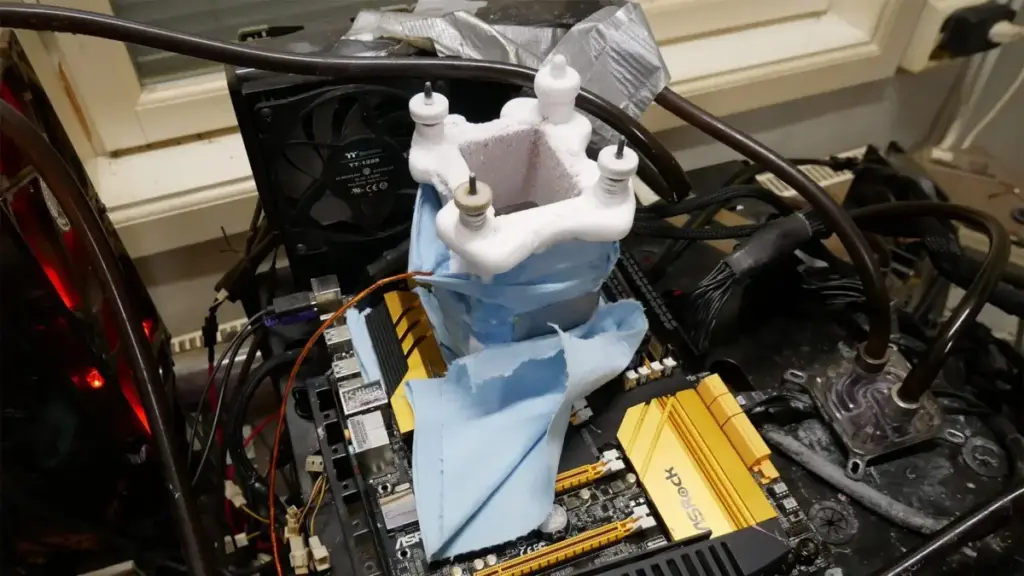
The benchmark chosen for this record, Cinebench R11.5, is itself a piece of computing history. Based on Maxon’s Cinema 4D software, R11.5 was for years the primary metric by which CPU rendering performance was measured. While it has since been superseded by versions like R15, R20, R23, and the most recent Cinebench 2024, the "legacy" benchmarks remain highly competitive on HWBot. These platforms allow overclockers to compete on a level playing field with specific hardware generations, ensuring that a chip from 2013 isn’t being unfairly compared to a 2024 flagship. Luumi’s score of 10.8 cb is a testament to the raw IPC (instructions per clock) improvements Intel made with Haswell, as well as the sheer clock speed Luumi was able to maintain across all four cores during the multi-threaded test.
Achieving such a score on a 4-core, 4-thread part is particularly impressive because there is no Hyper-Threading to fall back on. In multi-threaded benchmarks, Hyper-Threading usually provides a significant boost by allowing each core to handle two tasks simultaneously. Without it, the i5-4670K must rely entirely on the strength of its physical cores. Every fraction of a point in the final score represents hundreds of megahertz in clock speed and hours of stability testing. To edge out a 12-year-old record by even a small margin requires finding a "golden" chip—one that was manufactured with fewer defects and can handle higher voltages and lower temperatures than the average unit.
The supporting hardware for Luumi’s run was equally period-appropriate. The system utilized a modest amount of DDR3 memory, the standard of the time before the industry transitioned to DDR4 and eventually DDR5. Overclocking memory on these older platforms is often as much of an art as overclocking the CPU itself. Tightening timings and increasing the memory frequency can provide the necessary bandwidth to ensure the CPU isn’t "starved" for data during the benchmark run, which can be the difference between a world record and a second-place finish.
The broader context of this achievement highlights a growing trend in the hardware community: the "retro" or "legacy" overclocking movement. As modern CPUs become increasingly locked down or reach their limits out of the box thanks to sophisticated factory boosting algorithms, many enthusiasts are looking back to the "Golden Age" of overclocking. The period between 2010 and 2015 is often cited as a favorite, as it featured chips like the Sandy Bridge i7-2600K and the Haswell i5-4670K, which offered massive overclocking headroom for those willing to take the risk. Luumi’s success serves as a reminder that these components, while no longer suitable for modern AAA gaming or high-end video production, still possess an inherent value as tools for competition and technical exploration.
 Hardware Reviews & PC Building
Save $250 on this award-winning Elegoo resin 3D printer with an integrated heater and 16K resolution — 39%…
The Saturn 4 Ultra is currently positioned as a flagship offering within...
 Hardware Reviews & PC Building
Russian Military Targets Ukrainian Data Centers in Widening Campaign Against Digital Infrastructure
The Russian military has initiated a series of targeted strikes against critical...
 Hardware Reviews & PC Building
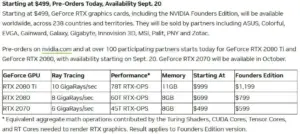
The PC gaming ray tracing obsession began with the first RTX 20 graphics cards released on this day in 2018 — the…
The debut of the GeForce 20 series was spearheaded by the release...