

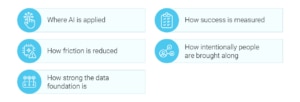
For IT leaders, the metric "we use AI" has become effectively meaningless. Success is no longer defined by the presence of the tool, but by its ability to reduce friction and improve outcomes. The report identifies five key operating disciplines that determine whether AI becomes an operational asset: the fitness of the technology to the specific workflow, the quality of the underlying data, the ability of the team to manage the tool, the governance surrounding its use, and the ability to point to a measurable business result.
The Productivity Paradox: Why Time Saved Does Not Equal Free Capacity
One of the most surprising findings in the 2026 report is that AI-driven efficiency is not necessarily leading to a lighter workload for IT staff. While AI is undeniably saving time on individual tasks—such as summarizing ticket histories, drafting responses to users, and categorizing incoming requests—it is not always reducing the total volume of work.
In fact, 52% of respondents reported that their overall workload has actually increased since adopting AI, while another 19% said it has remained the same. This suggests a "productivity paradox" where ticket-level efficiency does not automatically translate into organizational capacity. When a technician saves 15 minutes on a ticket through AI summarization, that time is often immediately consumed by a higher volume of incoming requests or by the increased complexity of the issues that AI cannot solve.
Furthermore, faster triage and automated knowledge creation can empower a service desk to support a larger business or pursue more proactive projects. While this makes the service desk more productive in a technical sense, the staff often feels just as busy, if not busier, than before. Without outcome-based measurement, it is nearly impossible for leadership to distinguish between a service desk that is drowning in demand and one that is successfully absorbing more work thanks to AI.
The Rising Cost of the "AI Maintenance Tax"
Perhaps the most significant warning for IT leaders is the emergence of what the report calls the "AI Maintenance Tax." The data dispels the myth that AI is a "set it and forget it" solution. Instead, the work of managing AI begins the moment the tool goes live.
Nearly 83% of respondents reported spending at least three hours per week on AI maintenance, with 44% spending six or more hours. Even more telling is that 44% of IT professionals now spend more time maintaining AI tools than they do actually using the output generated by those tools. This maintenance involves a variety of labor-intensive tasks, including reviewing and validating AI-generated content, training and fine-tuning models, addressing data-quality gaps, and monitoring the tools for "hallucinations" or errors.
The report emphasizes that AI must be treated as an ongoing operational service rather than a one-time implementation. Without a dedicated operating model that assigns ownership and tracks maintenance time, the manual effort previously spent on resolving tickets is simply shifted toward checking and correcting the AI. For many organizations, the "efficiency" gained by AI is being partially offset by the "tax" required to keep the system accurate and safe.
 Helpdesk & IT Service Management (ITSM)
The Evolution of Service Delivery: Understanding the Strategic Shift Toward Enterprise Service Management
In the modern corporate landscape, the efficiency of an organization is often...
 Helpdesk & IT Service Management (ITSM)
Beyond the IT Help Desk: The Strategic Integration of Enterprise Service Management
As modern organizations grapple with increasing operational complexity, the traditional boundaries of...
 Helpdesk & IT Service Management (ITSM)
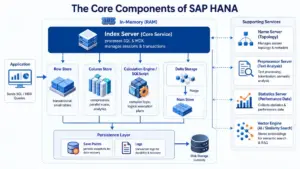
Decoding SAP HANA Architecture: How In-Memory Processing Redefines Enterprise Data Management
In the rapidly evolving landscape of enterprise technology, the ability to process...







