
For those who have spent the last decade—or in some cases, several decades—fine-tuning their living spaces with automated lighting, networked thermostats, and voice-activated security systems, it is easy to lose sight of a fundamental truth: the smart home remains an intimidating frontier for the average consumer. Within the "tech bubble," enthusiasts often forget that what they consider a minor configuration hurdle is, for many, an insurmountable barrier to entry. The recent unveiling of the Apple Home Collection, developed in strategic partnership with industry stalwarts LG and Schneider Electric, has been met with a degree of skepticism from the tech-savvy community. Critics point to the premium pricing and the lack of revolutionary new product categories as reasons to dismiss the initiative. However, such a perspective may overlook the very problem Apple is attempting to solve: the "friction" of the smart home experience.
The evolution of home automation has been a long and often arduous journey. In the early days, creating a "smart" environment was a hobby reserved for those with a penchant for soldering irons and a working knowledge of programming. Technologies like X10, an industry standard for communication among electronic devices, laid the groundwork but required a level of technical proficiency that excluded the general public. These systems were often temperamental, relying on power-line wiring that was prone to interference and required significant manual troubleshooting.
As the industry moved into the smartphone era, the promise of the smart home began to shift. The introduction of wireless protocols and mobile applications meant that, for the first time, a user could control their lights or security cameras from a device in their pocket. This was undoubtedly a major step forward in accessibility, yet it introduced a new set of complications. Early adopters found themselves managing a fragmented ecosystem of "walled gardens." Every manufacturer required its own proprietary companion app, its own account registration, and its own unique setup process. For a user to simply turn on a light and check a security camera, they might have to navigate three different interfaces, none of which communicated with the others.
Apple’s initial foray into solving this fragmentation was HomeKit. Launched with the vision of a unified ecosystem, HomeKit promised that any device bearing its label would be compatible with Apple’s Home app, allowing for centralized control and the convenience of Siri voice commands. It was a noble goal, and for many, it significantly improved the user experience. However, the reality of HomeKit often fell short of its frictionless promise. Even with the HomeKit certification, many devices still required initial configuration through a third-party manufacturer’s app before they would appear in the Apple Home environment. For the average person, the process of bridging these devices, managing firmware updates, and ensuring stable network connectivity often felt less like enjoying a modern convenience and more like acting as an unpaid network engineer.
The commercial landscape reflected these challenges. While Apple focused on a tightly controlled, high-security ecosystem, competitors like Amazon Alexa and Google Home gained significant market share by prioritizing broad compatibility and lower price points. While these ecosystems were more successful in terms of sheer volume, they did not necessarily solve the underlying complexity of the setup process. They simply made the entry point cheaper.
The arrival of the Matter and Thread standards was widely hailed as the "holy grail" of smart home technology. By creating a universal language for devices to communicate across different platforms, Matter aimed to ensure that a lightbulb would work just as well with an iPhone as it would with an Android device or a smart speaker. Thread, a low-power mesh networking protocol, promised to improve the reliability and speed of these connections. While these standards have undoubtedly helped bridge the gap between competing ecosystems and simplified the backend for manufacturers, they have not yet fully addressed the "human element" of the setup. Even a Matter-enabled device often requires the user to navigate menus, scan codes, and troubleshoot discovery issues—steps that remain a deterrent for the "normie" consumer who simply wants their purchase to work out of the box.
This brings us to the Apple Home Collection. To a seasoned tech enthusiast, the collection might seem underwhelming. It features familiar devices—doorbells, switches, and cameras—that are already available from numerous other brands at lower prices. The skepticism from the "geek" community is understandable; if one is comfortable navigating network settings and managing multiple apps, paying a premium for an Apple-branded LG doorbell or a Schneider switch seems unnecessary.
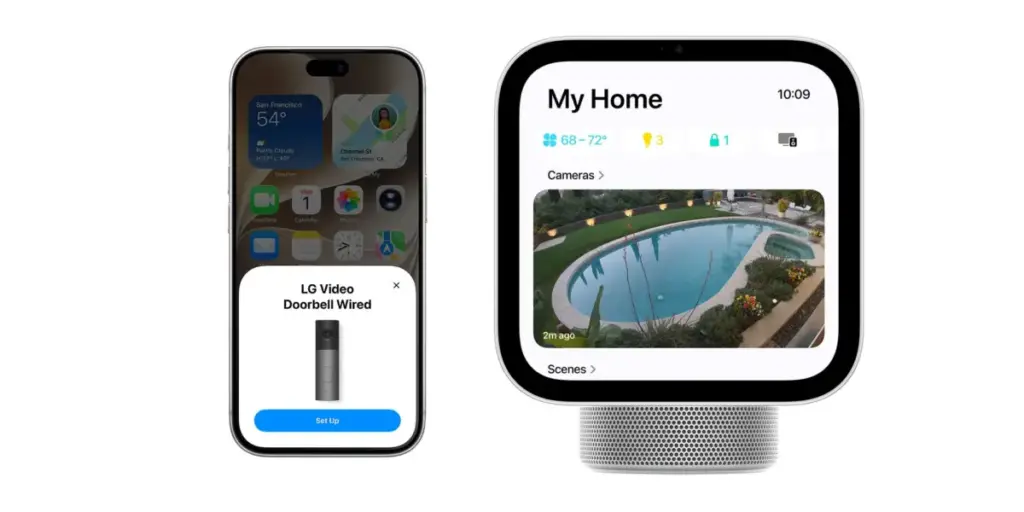
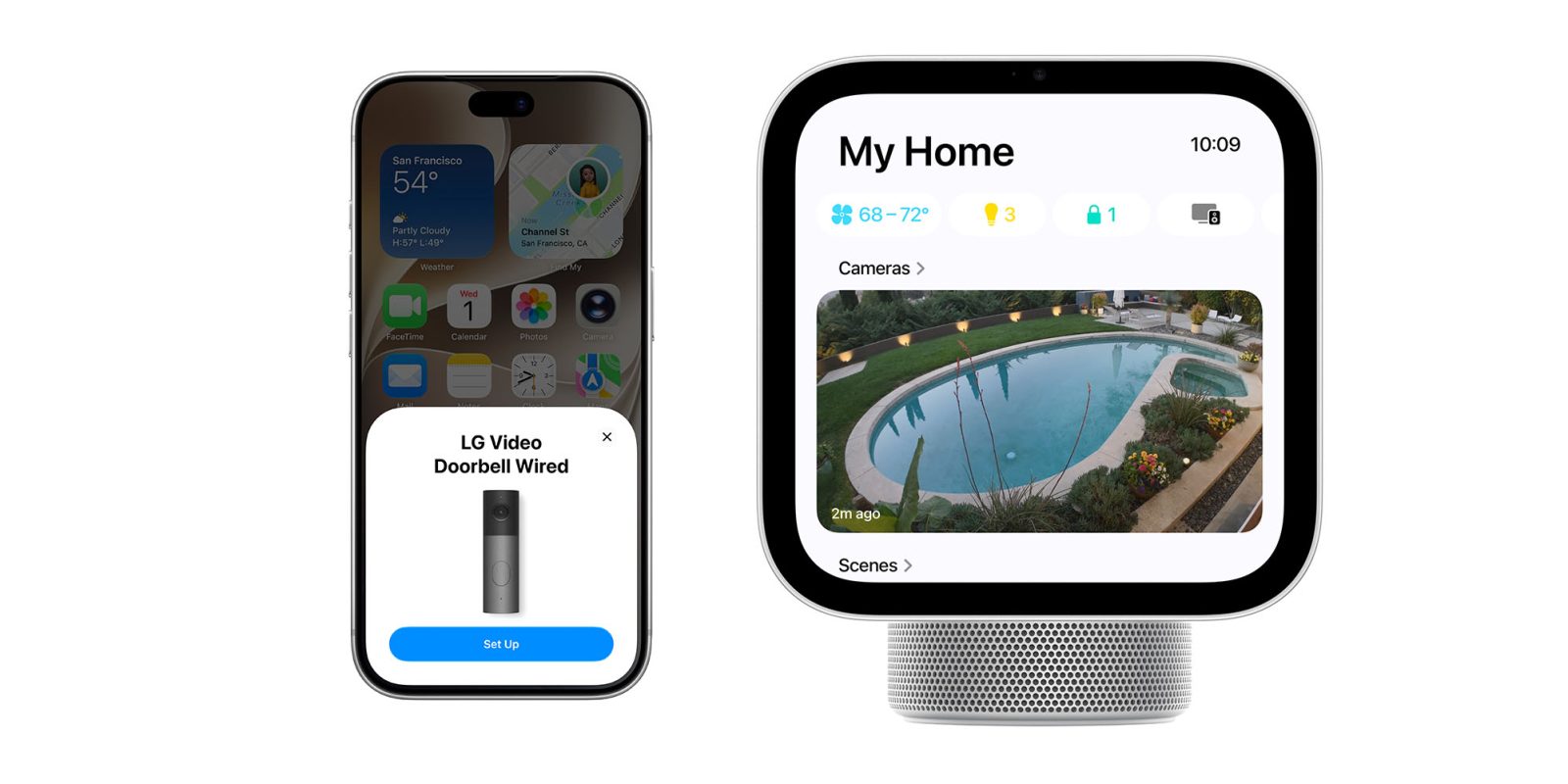
However, the value proposition of the Apple Home Collection is not found in the hardware’s specifications, but in the radical simplification of the user experience. Apple appears to be applying the same philosophy to the smart home that it applied to wireless audio with the AirPods. Before AirPods, pairing Bluetooth headphones was often a clunky process involving hidden menus and "pairing modes." Apple replaced that friction with a seamless, proximity-based setup: open the case near an iPhone, and the device is instantly recognized and configured.
Early hands-on reports suggest that the Apple Home Collection brings this exact level of "magic" to home automation. Ajay Kumar, reporting for CNET, described a demonstration where an Apple representative paired and registered a new smart home device almost instantly. The process was so seamless that it occurred during a casual conversation, without the representative needing to focus intently on the screen or navigate complex setup trees. This "HomeView" experience, where the device is recognized as soon as it is brought near the iPhone or a HomePod, represents a fundamental shift in how people interact with home technology.

For a technology enthusiast, a five-minute setup process is a minor task. For a "normal" consumer, those five minutes—if they involve frustration, error messages, or the need to download additional software—are a reason to return the product to the store. By eliminating the "onboarding tax," Apple is targeting the vast majority of the population that likes the idea of a smart home but has been rightfully put off by the perceived complexity.
We should not underestimate the psychological impact of this frictionless entry. There is a significant portion of the market that views the current smart home landscape as a "project" rather than a "product." They see the wires, the hubs, and the troubleshooting forums and decide that the convenience of voice-controlled lights isn’t worth the headache of installation. When the setup process becomes as intuitive as pairing a set of headphones, the smart home transitions from a hobby for enthusiasts into a standard utility for the general public.
The partnership with LG and Schneider Electric is also a critical component of this strategy. Rather than attempting to manufacture every possible home accessory itself, Apple is leveraging the industrial expertise of established leaders in home appliances and electrical infrastructure. This ensures that the hardware is robust and reliable, while Apple provides the "connective tissue"—the software and the user interface—that makes the hardware accessible.
As we look toward the future of mass-market adoption, the Apple Home Collection may be remembered as the moment the smart home finally "grew up." It is a move away from the "feature wars" of the past and toward a focus on human-centric design. While the tech-savvy may continue to build their own custom systems using a variety of disparate parts and protocols, the Apple Home Collection offers a clear, high-quality path for everyone else.
The success of this initiative will likely depend on whether consumers perceive the "simplicity premium" as being worth the cost. History suggests that, for the mass market, the answer is often yes. Just as users were willing to pay more for the ease of the iPhone or the convenience of the iPad, there is a substantial market for a smart home that "just works." If Apple can truly deliver a setup process that requires no more technical knowledge than opening a box and holding a phone, they may finally break the "tech bubble" and bring the vision of a truly connected home to the mainstream. For those who have been waiting on the sidelines, the point of entry has finally arrived.
 Smart Home & IoT Solutions
Apple’s Smart Home Expansion Revealed: New ‘Proximity Control’ Feature Set to Debut with LG-Partnered Accessories
As Apple prepares for its highly anticipated "Welcome Home" special event scheduled...
 Smart Home & IoT Solutions
Apple Poised for Major Smart Home Overhaul as Apple Intelligence Breaks Siri Development Bottleneck
For several years, Apple’s presence in the smart home market has felt...
 Smart Home & IoT Solutions
Apple Poised for Major Smart Home Overhaul as Apple Intelligence Breathes New Life into Stagnant Product Line
For several years, Apple’s presence in the smart home market has felt...







