
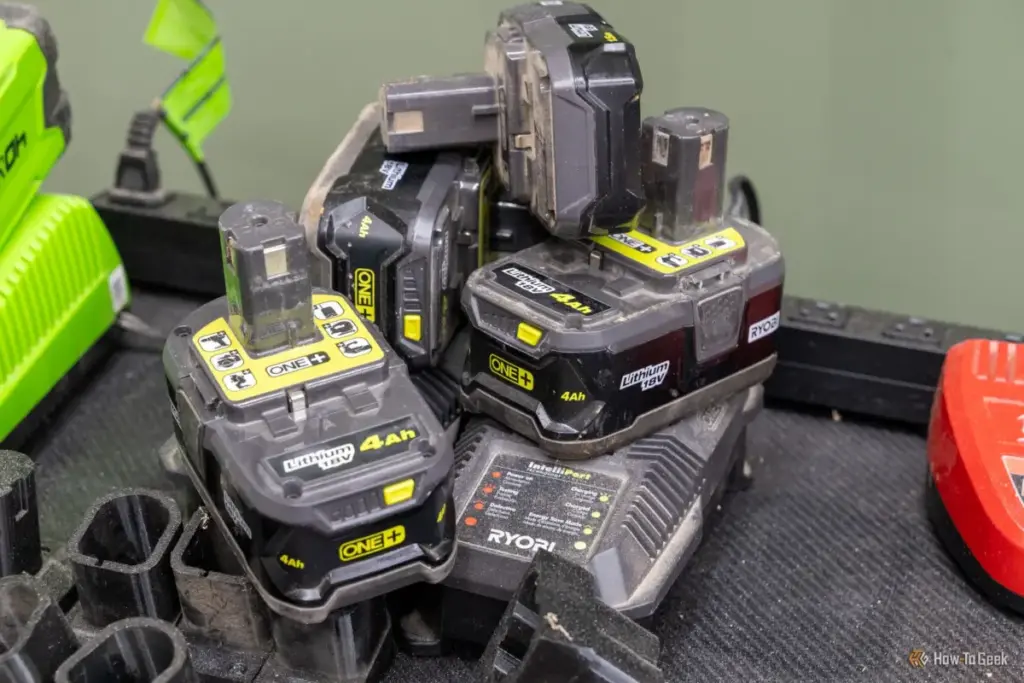

There’s no way back once it’s tripped
Despite the validity of safety concerns, the "permanent" nature of these faults remains a point of contention. The prevailing theory in the user community is that a lockout is triggered when one cell bank drops as little as 0.15V below the others during a charge cycle. While this variance is a legitimate cause for concern, it is a problem that, in many other electronic contexts, could be corrected through a slow "balance charge" or a professional servicing.
The frustration for many users lies in the fact that there is no official "middle ground." Ryobi does not offer a service to re-balance or reset batteries that have tripped these software locks. Once the firmware decides the battery is unfit, the hardware becomes functionally useless to anyone without advanced hacking tools. This effectively turns a sophisticated piece of technology into e-waste, regardless of whether the majority of the internal components are still in perfect working order.
This "all-or-nothing" approach to battery health is a central theme in the broader Right to Repair movement. Critics argue that by making these lockouts permanent and providing no path for professional recalibration, manufacturers are contributing to the growing problem of electronic waste. A battery pack contains valuable materials—lithium, cobalt, nickel, and copper—that are energy-intensive to mine and process. Scrapping an entire 40V or 18V pack because of a software flag at a specific memory address is seen by many as an environmentally irresponsible practice.
A blinking battery isn’t always a dead one
The current state of tool battery technology leaves consumers in a difficult position. On one hand, the safety protocols built into Ryobi batteries undoubtedly prevent accidents by stopping the use of compromised cells. On the other hand, the lack of transparency regarding these error codes and the absence of a factory-authorized reset process for out-of-warranty batteries feels like a missed opportunity for sustainability.
For the time being, the four flashing lights remain a signal for caution rather than immediate despair. Before heading to the store, users should exhaust the "soft" fixes: cooling the pack, cleaning the terminals, and testing different chargers. For those with batteries still under the three-year warranty typically offered by Ryobi, the best course of action is always an official replacement.
As the industry moves forward, there is a growing hope among enthusiasts that tool manufacturers will adopt more repairable designs. Whether through more transparent BMS communication or the introduction of official battery "refurbishment" programs, there is ample room for improvement. Until then, the "brain" inside the neon-green casing will continue to have the final say on when a battery’s work is truly done.
 Tech Tutorials & How-To Guides
The USB-C Power Revolution: How Modern Portable Batteries are Redefining Device Mobility
For decades, the Universal Serial Bus, or USB, was viewed primarily through...
 Tech Tutorials & How-To Guides
The Hidden Cost of DLSS: Why NVIDIA’s Software Lead No Longer Justifies the GeForce Price Premium
For over a decade, NVIDIA has cultivated a nearly impenetrable software ecosystem...
 Tech Tutorials & How-To Guides
Amazon Unveils Comprehensive 2026 Kindle Overhaul Featuring First Color Scribe and Thinner Designs
Amazon has officially announced a sweeping transformation of its entire Kindle ecosystem,...







