
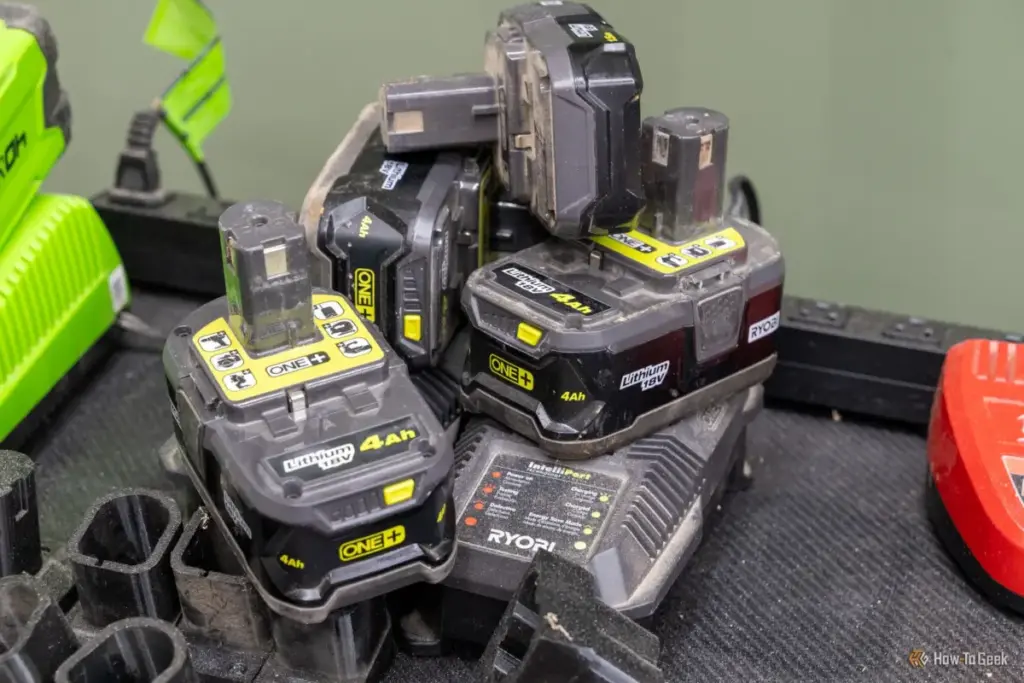
For many homeowners and DIY enthusiasts, the Ryobi brand represents a gateway into a world of versatile, affordable power tools. The iconic neon-green aesthetic is a staple in garages across the country, supported by a battery platform that has remained remarkably consistent for decades. However, even the most loyal users eventually encounter a frustrating phenomenon: the dreaded four flashing lights on the battery’s onboard fuel gauge. In the community of tool users, this signal has long been interpreted as a definitive death knell, a sign that the battery has reached the end of its functional life and must be replaced.
Yet, as technical experts and dedicated hobbyists have discovered, those four flashing LEDs do not always signal a hardware failure. Instead, they often represent a software-driven lockout—a digital "halt" command issued by the battery’s internal brain. Understanding why this happens, what it means for the longevity of the hardware, and how users might potentially bypass these restrictions reveals a complex intersection of safety engineering, corporate liability, and the growing global conversation surrounding the right to repair.
Four flashing lights doesn’t mean what you think
To understand why a Ryobi battery might suddenly stop functioning, one must first look past the plastic casing and the lithium-ion cells themselves. Modern power tool batteries are not merely containers for electricity; they are sophisticated electronic devices equipped with a Battery Management System (BMS). This logic board acts as the battery’s brain, constantly monitoring the health, temperature, and voltage of the individual cells packed inside.
It’s the battery’s brain talking, not the cells
When a user sees four flashing lights, they are witnessing the BMS reporting a fault state. While Ryobi has not provided exhaustive public documentation detailing every possible error code, extensive community testing and teardowns have provided a clear picture of what triggers this specific visual warning. In most cases, the four flashing LEDs indicate a cell imbalance or a protection mode lockout.
A lithium-ion battery pack consists of several individual cells wired together. For the battery to operate safely and efficiently, these cells must maintain a similar voltage level. If the BMS detects that one group of cells has dropped significantly lower than the others—or if the overall voltage has dipped below a critical threshold—it triggers a protection mode. This is essentially a "lockout" state where the battery refuses to accept a charge or provide power to a tool.
The crucial distinction here is that a lockout does not necessarily mean the lithium-ion cells are "dead" or incapable of holding a charge. The cells may still be chemically sound, but because the BMS has detected a discrepancy, it has effectively "retired" the battery to prevent potential safety hazards, such as overheating or fire during a charging cycle. Other external factors can also trigger temporary faults, such as extreme operating temperatures or even simple debris on the metal contacts that prevents a clean connection between the battery and the charger.
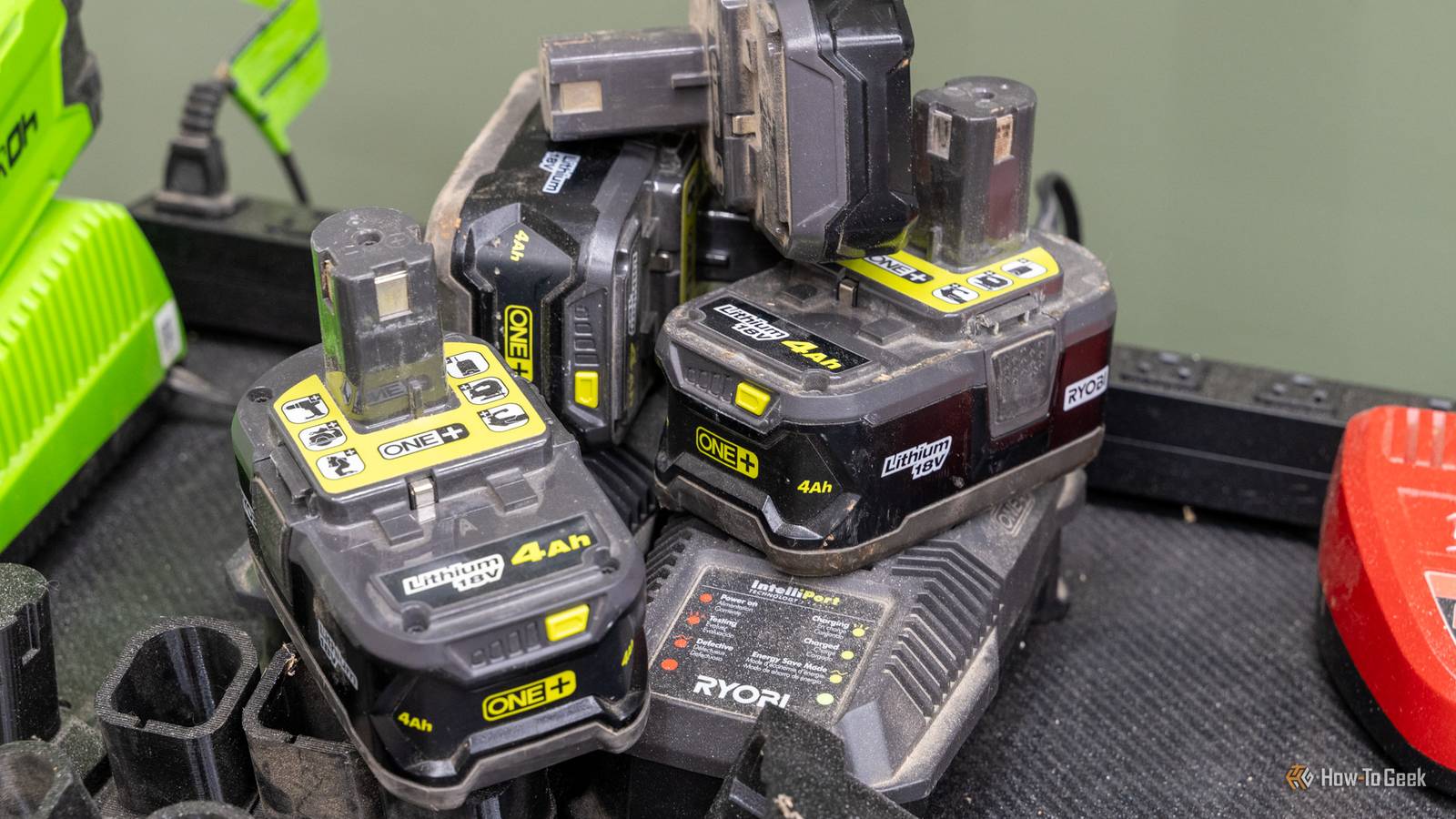
Some of these packs are just locked out
For the average consumer, the immediate reaction to a non-functional battery is to seek a replacement. However, depending on the nature of the fault, there are several tiers of intervention that can be attempted before resigning the hardware to the recycling bin. The simplest remedies involve addressing the environment and the physical interface of the battery.
And a few of them can never be unlocked by you
The first line of defense is often the most overlooked: environmental stabilization. If a battery has been pushed to its limit in a high-demand tool like a circular saw or a lawnmower, it may simply be too hot for the BMS to allow a charge. In these instances, allowing the battery to rest in a climate-controlled area for several hours can sometimes clear the fault. Similarly, cleaning the terminal contacts with isopropyl alcohol can ensure that the charger is receiving an accurate voltage reading from the pack. If these steps fail, and a different charger produces the same result, the issue likely resides deep within the battery’s internal logic.
For those willing to venture into "battery surgery," a more advanced option exists: the J1 jumper reset. This process involves opening the battery casing to access the BMS board and manually resetting the logic controller. This is often referred to as a "soft lockout" fix. By bridging specific points on the board—typically labeled as J1—users can sometimes trick the BMS into clearing its error log and attempting to balance the cells again.
However, this path is fraught with risks. Opening a battery pack almost certainly voids any remaining manufacturer warranty and requires a steady hand. Lithium-ion cells carry significant energy; a single slip of a screwdriver that punctures a cell or shorts a circuit could lead to a thermal runaway event. Furthermore, while a J1 reset might fix a temporary glitch, it does not address the underlying cause of a cell imbalance, meaning the error may soon return.
Even more challenging is the "permanent lockout." In recent years, technical communities on platforms like Reddit have identified a deeper level of software restriction in certain Ryobi battery models. In these cases, a simple hardware reset is insufficient because the fault has been written into the battery’s firmware at a specific memory address.
One notable discovery by a community member involved bypassing this permanent lockout on a PBP005 board by dumping the battery’s firmware and manually editing the memory. By resetting the value at memory address 0x7E90 back to zero and reflashing the firmware onto the controller, the user was able to revive a battery that the official charger had deemed "dead." This level of repair requires specialized equipment, including a Tag-Connect cable and a SEGGER J-Link debugger, placing it well beyond the reach of the typical homeowner. It highlights a growing trend in the industry: the transition from mechanical failures that can be repaired to software "kill switches" that require computer engineering skills to circumvent.
I get why Ryobi does it, but a permanent kill switch feels like overkill
The implementation of these permanent lockouts raises significant questions about the balance between consumer safety and product longevity. From a corporate perspective, Ryobi’s parent company, Techtronic Industries (TTI), has a clear incentive to prioritize safety. Lithium-ion technology is inherently volatile if mismanaged. If a BMS allows a severely imbalanced or damaged pack to charge, the risk of a fire is real. By implementing a strict, non-reversible lockout, the manufacturer protects itself from liability and ensures that consumers are not using potentially dangerous equipment.

There’s no way back once it’s tripped
Despite the validity of safety concerns, the "permanent" nature of these faults remains a point of contention. The prevailing theory in the user community is that a lockout is triggered when one cell bank drops as little as 0.15V below the others during a charge cycle. While this variance is a legitimate cause for concern, it is a problem that, in many other electronic contexts, could be corrected through a slow "balance charge" or a professional servicing.
The frustration for many users lies in the fact that there is no official "middle ground." Ryobi does not offer a service to re-balance or reset batteries that have tripped these software locks. Once the firmware decides the battery is unfit, the hardware becomes functionally useless to anyone without advanced hacking tools. This effectively turns a sophisticated piece of technology into e-waste, regardless of whether the majority of the internal components are still in perfect working order.
This "all-or-nothing" approach to battery health is a central theme in the broader Right to Repair movement. Critics argue that by making these lockouts permanent and providing no path for professional recalibration, manufacturers are contributing to the growing problem of electronic waste. A battery pack contains valuable materials—lithium, cobalt, nickel, and copper—that are energy-intensive to mine and process. Scrapping an entire 40V or 18V pack because of a software flag at a specific memory address is seen by many as an environmentally irresponsible practice.
A blinking battery isn’t always a dead one
The current state of tool battery technology leaves consumers in a difficult position. On one hand, the safety protocols built into Ryobi batteries undoubtedly prevent accidents by stopping the use of compromised cells. On the other hand, the lack of transparency regarding these error codes and the absence of a factory-authorized reset process for out-of-warranty batteries feels like a missed opportunity for sustainability.
For the time being, the four flashing lights remain a signal for caution rather than immediate despair. Before heading to the store, users should exhaust the "soft" fixes: cooling the pack, cleaning the terminals, and testing different chargers. For those with batteries still under the three-year warranty typically offered by Ryobi, the best course of action is always an official replacement.
As the industry moves forward, there is a growing hope among enthusiasts that tool manufacturers will adopt more repairable designs. Whether through more transparent BMS communication or the introduction of official battery "refurbishment" programs, there is ample room for improvement. Until then, the "brain" inside the neon-green casing will continue to have the final say on when a battery’s work is truly done.
 Tech Tutorials & How-To Guides
Paramount+ Thriller Spotlight: From Gritty Action Franchises to Luc Besson’s Reimagined Dracula
As the calendar turns deeper into October, the shift in atmosphere is...
 Tech Tutorials & How-To Guides
The USB-C Power Revolution: How Modern Portable Batteries are Redefining Device Mobility
For decades, the Universal Serial Bus, or USB, was viewed primarily through...
 Tech Tutorials & How-To Guides
Optimizing the Modern Workspace: Quntis Monitor Light Bar Sees Significant Price Drop on Amazon
In an era where the boundary between professional obligations and personal time...







