
As Apple continues to integrate its sophisticated "Apple Intelligence" across its ecosystem, the company is also refining the business model that supports these advanced features. Recent discoveries within the developer previews of Apple’s upcoming software releases indicate a shift in how the company intends to monetize its smart home offerings. Specifically, users looking to leverage the latest AI-driven enhancements for home security cameras within the Apple Home app will be required to maintain a high-tier iCloud+ subscription.
The news, which surfaced in the fine print of the macOS 27 beta 3 release notes, confirms that the most advanced home security features—powered by Apple’s new AI suite—will not be available to all users. Instead, they will be tethered to the 2TB iCloud+ storage plan, a requirement that applies regardless of whether the user is accessing the Home app via macOS, iOS, or iPadOS. This move signals a significant transition for HomeKit Secure Video, moving it from a standard feature of the Apple ecosystem into a premium service tier.
Intelligent Home app notifications
The primary draw of these new AI features is a complete overhaul of how users interact with their security footage and notifications. For years, one of the most common complaints regarding smart home security has been "notification fatigue." In the current iteration of the Home app, a single event—such as a family member returning home—can trigger a cascade of individual alerts. A user might receive a notification when motion is detected in the driveway, another when the garage door opens, a third when it closes, and several more as the person moves toward and through the front door.
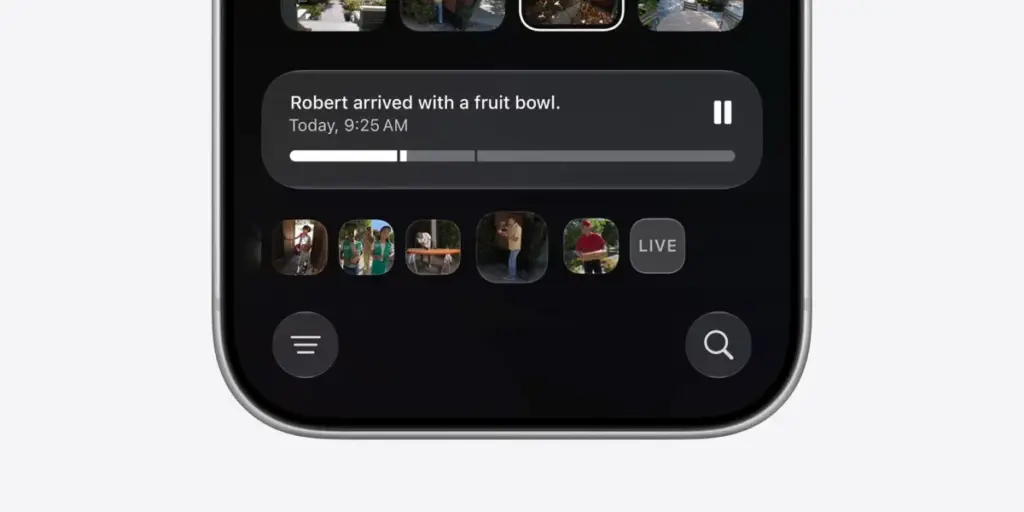
With the advent of Apple Intelligence in iOS 27 and its counterparts, Apple aims to solve this by replacing the fragmented sequence of alerts with a single, intelligent summary. Instead of six separate pings, the system analyzes the context of the motion and hardware triggers to provide one cohesive notification: "Robert arrived home." This level of contextual awareness represents a major leap forward in utility, reducing digital noise while keeping homeowners informed of the "big picture" rather than the minute-by-minute mechanical updates.
However, the intelligence does not stop at notifications. Apple is also introducing a significant technical upgrade to HomeKit Secure Video, moving the resolution standard from 1080p to 4K. This increase in clarity is paired with AI-driven video analysis that allows the system to "understand" the content of the footage.
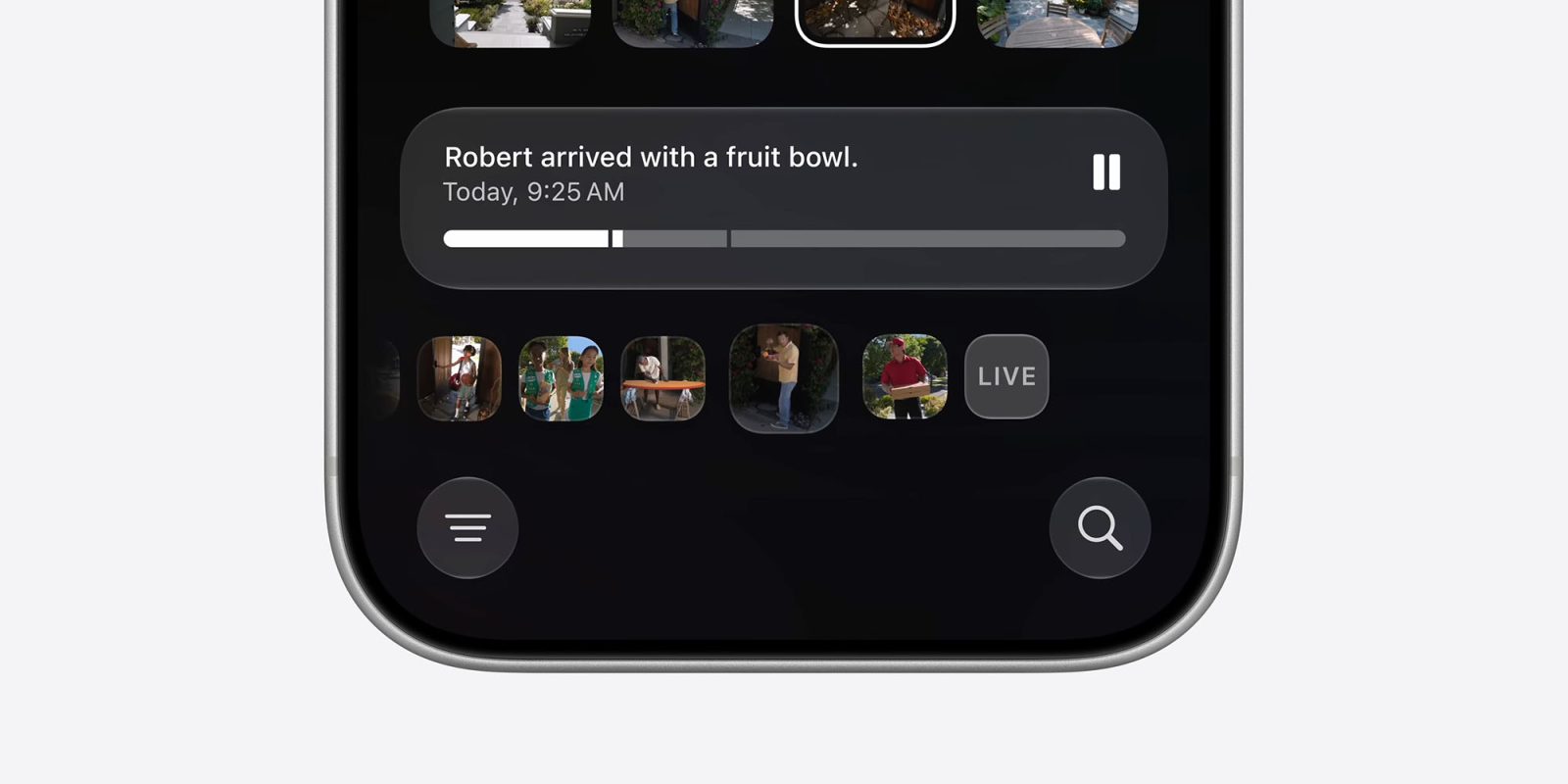
According to Apple’s technical documentation, the system will now generate written video descriptions. This allows users to understand the events of a recorded clip at a glance without needing to scrub through the video manually. Furthermore, the Home app will introduce a powerful search capability, allowing users to query their history for specific events, such as "when was the package delivered?" or "show me clips of the dog in the backyard." To streamline the user experience further, a new "Search" page will highlight "noteworthy" clips—moments the AI deems important, such as a delivery or a friend dropping off an item—so they are immediately visible upon opening the app.
But the new features won’t be free
While the technological advancements have been met with general acclaim since their announcement at the Worldwide Developers Conference (WWDC), the prerequisite for their use has introduced a note of contention. The requirement was first highlighted by industry analysts who noted a specific entry in the developer release notes for macOS 27 beta 3.
The documentation explicitly states that enabling Apple Intelligence features within the Home app necessitates a 2TB iCloud+ subscription. This plan currently retails for $9.99 per month. While Apple has long integrated its services with its hardware, this specific requirement places a significant monthly cost on features that many users expected to be handled by on-device processing, a hallmark of Apple’s privacy-focused AI marketing.
For many users, this requirement represents a substantial jump in price. While Apple offers lower-tier iCloud+ plans—such as the 50GB plan for $0.99 and the 200GB plan for $2.99—these will not suffice for the new AI capabilities. Even users who currently pay for the 200GB plan to support multiple HomeKit Secure Video cameras will find themselves forced to more than triple their monthly investment if they wish to access the AI summaries, 4K resolution, and searchable video descriptions.
Perhaps unsurprising, but disappointing
The decision to gate these features behind the 2TB plan is, in some ways, a logical extension of Apple’s existing storage architecture. HomeKit Secure Video has always been linked to paid iCloud tiers. Currently, a single camera requires a paid plan, while the 200GB plan supports up to five cameras. Those with an "unlimited" number of cameras are already required to subscribe to the 2TB tier.
From a technical perspective, the move to 4K video likely demands the higher bandwidth and storage capacity that the 2TB plan provides. Processing and storing metadata for AI-generated descriptions and searchable indexes also adds a layer of backend complexity that Apple appears keen to offset with subscription revenue. For "power users" who already have six or more cameras and are thus already on the $9.99 per month plan, the addition of these AI features will feel like a free upgrade.

However, the move has drawn criticism for how it affects the broader consumer base. By making the 2TB plan a hard requirement for AI features, Apple is essentially imposing a "smart home tax" on users with even a single camera who want the best possible experience. This trend of "subscriptionization" is becoming increasingly common across the tech industry, where hardware features are increasingly locked behind recurring monthly fees.
The smart home market, in particular, is rife with these models. Competitors like Ring, Nest, and Arlo have long required monthly subscriptions to access cloud storage and advanced detection features. One of the original selling points of the Apple HomeKit ecosystem was the ability to bypass these third-party subscriptions, offering a unified, privacy-centric alternative. By introducing its own high-tier requirement, Apple is moving closer to the very business models it once stood in contrast to.
Critics argue that for a company that prides itself on the "Apple Silicon" advantage—emphasizing the power of the Neural Engine in iPhones and Macs to handle AI tasks locally—the requirement for a high-capacity cloud subscription feels contradictory. If the AI processing for video descriptions and summaries is handled on a local HomePod or Apple TV acting as a home hub, the justification for a 2TB cloud requirement becomes harder to defend for users who do not necessarily need the extra storage space.
Ultimately, the decision places Apple users at a crossroads. They must decide if the convenience of consolidated notifications, the clarity of 4K video, and the ease of AI-powered video searching are worth a $120 annual commitment. As the software moves toward its final release, the conversation surrounding the cost of intelligence in the smart home is likely to intensify, highlighting the growing tension between innovative features and the recurring costs required to sustain them.
 Smart Home & IoT Solutions
Schlage Set to Launch Sense Pro Smart Deadbolt Featuring Ultra Wideband and Apple Home Integration
In an era where the smart home is rapidly evolving from a...
 Smart Home & IoT Solutions
The Frictionless Frontier: How the Apple Home Collection Aims to Bridge the Gap Between Tech Enthusiasts and the Mass Market
For those who consider themselves part of the global community of technology...
 Smart Home & IoT Solutions
Apple Poised to Enter Smart Home Display Market with Design Inspired by Iconic iMac G4
In a move that signals a significant shift in its hardware strategy,...







