
In a preemptive move designed to protect store personnel, customers, and physical infrastructure, Apple has temporarily closed seven of its primary retail locations across France on Saturday, October 24, 2026. The shuttering comes as municipal authorities and emergency services prepare for another scheduled wave of broad civil demonstrations throughout the country, taking place exactly one week after violent civil disruptions resulted in the breach and looting of two provincial Apple outlets. The preemptive measures, initially identified through operational updates published on Apple’s localized web directories and reported by French technology publication MacGeneration, highlight the lingering security challenges faced by prominent commercial operators during periods of heightened urban unrest.
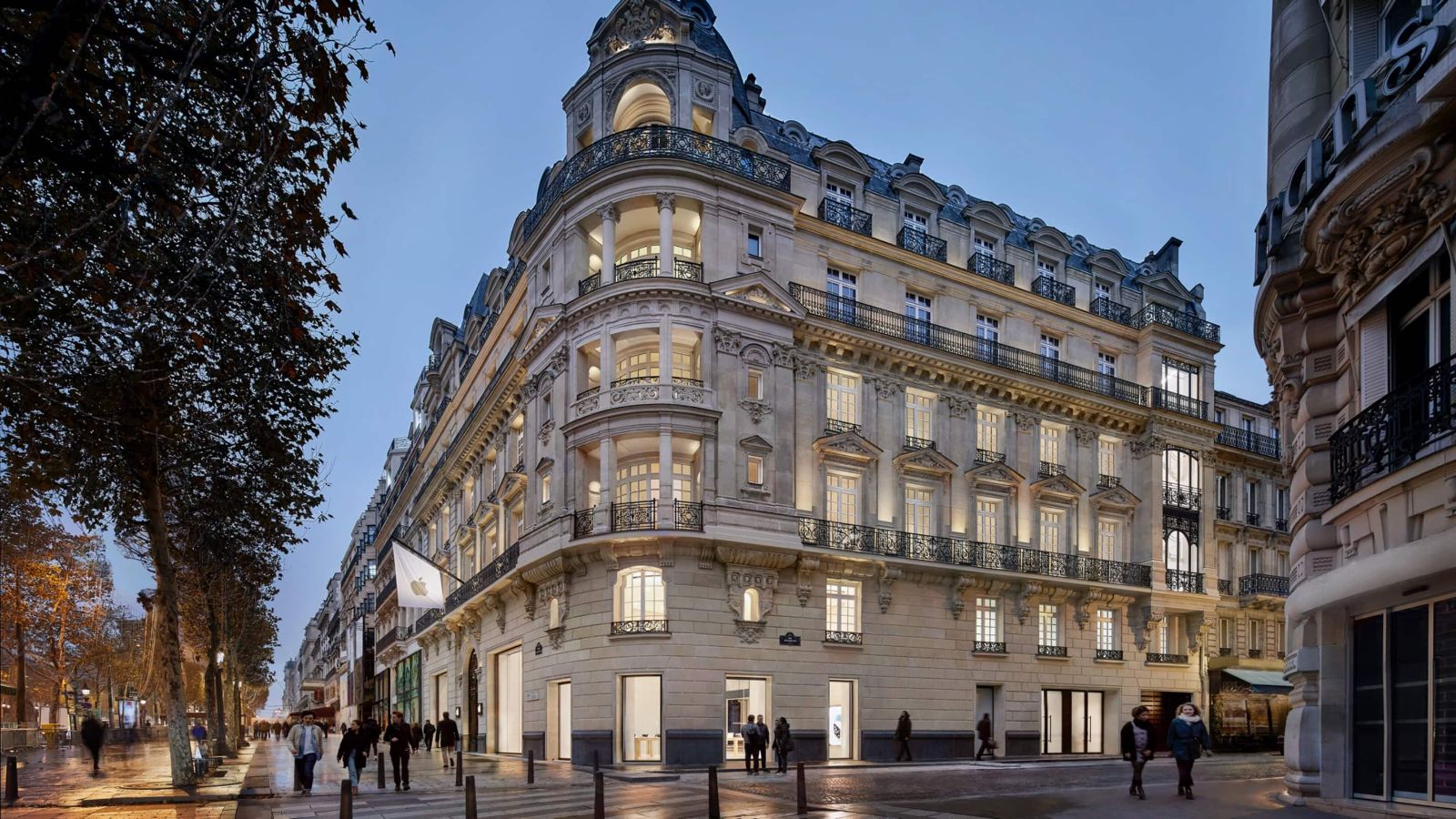
The temporary closures impact all three of Apple’s flagship destinations within the capital city of Paris, including the prominent showcase store on the Avenue des Champs-Élysées, the historic retail venue situated near the Palais Garnier at Opéra, and the left-bank location at Marché Saint-Germain. Beyond the Parisian metropolitan area, Apple extended the precautionary shutdowns to four major regional business hubs: the high-street retail locations at Bordeaux Sainte-Catherine, Lille, Strasbourg, and Aix-en-Provence. Collectively, these seven locations represent a critical portion of Apple’s physical retail footprint and customer service network in France.
A central factor governing Apple’s decision to close these specific locations lies in their architectural design and structural orientation within their respective cities. Each of the seven affected stores features direct, street-facing entrances situated along major municipal boulevards, busy pedestrian thoroughfares, or central civic plazas. This street-level accessibility, defined by extensive glass facades and direct exposure to public walkways, renders these locations particularly vulnerable to sudden crowd movements, public volatility, and violent forced entry. In contrast, Apple stores located inside fully enclosed, multi-level shopping centers across France are operating under normal weekend business schedules, benefiting from the layered building security, controlled entryways, and private safety management provided by enclosed commercial malls.
The operational decision to close street-level facilities directly follows the events of Saturday, October 17, when a nationwide day of action drew massive crowds across multiple French urban centers. According to reporting from the Associated Press, the primary demonstrations were organized to protest the escalating national cost of living and deterioration in public school resources and working conditions. While the vast majority of the hundreds of thousands of citizens who took to the streets participated peacefully in authorized marches, civil disturbance broke out in several metropolitan areas as night fell, leading to clashes with law enforcement and widespread property damage directed at commercial businesses.
During those evening disruptions, opportunistic groups targeted retail corridors in multiple cities, leading to forced breaches at Apple’s stores in Lille and Bordeaux Sainte-Catherine. Both locations sustained physical damage to exterior barriers and entryways, while high-value inventory and floor display models were stolen from the sales floors. The events underscored the speed with which peaceful civic gatherings could be co-opted by violent groups, prompting Apple’s operational leadership to reevaluate security protocols for street-facing properties ahead of the subsequent weekend of planned protests.
Following the thefts in Lille and Bordeaux, details surfaced regarding the specialized technological countermeasures Apple utilizes to defend its retail hardware against theft. Reports published by French technology outlet iPhoneAddict, supported by video evidence circulated on social media platforms including a clip shared on X by news outlet Le Signal, showed that devices taken during the break-ins were swiftly rendered inoperable.
As part of Apple’s retail security architecture, display devices and store inventory automatically enter an locked security mode once disconnected from the authorized store network without undergoing standard checkout procedures. When powered on outside the retail environment, stolen iPhones display a persistent, high-contrast warning across the screen. The hardcoded alert informs the user that the device has been remotely disabled, is undergoing active location tracking by security protocols and local law enforcement, and directs the holder to immediately return the unit to the specific retail origin from which it was removed.
This automated security infrastructure effectively strips stolen merchandise of its commercial value on secondary or black markets, preventing illicit monetization of looted inventory. However, while remote device bricking deters systematic product theft, it offers no physical defense against property destruction, shattered storefront glass, or potential physical harm to store employees present during an intrusion. That reality served as the primary catalyst for executive decisions to mandate complete physical closures of vulnerable locations prior to the commencement of Saturday’s public demonstrations.
The physical disruption to Apple’s French retail network arrives at a complex operational moment for the company globally. The shutdowns coincide with major international product rollouts, including the market debut of the newly launched iPhone Duo, which officially became available on Friday, October 23. In the days preceding the release, Apple retail managers across the region were instructed to advise retail staff to warn incoming customers against visiting physical stores without an advance pre-order. Store teams were directed to explicitly communicate that walk-in stock for the iPhone Duo would be virtually non-existent on launch day, aiming to reduce store congestion and manage public expectations during a period of constrained inventory.
At the same time, Apple retail environments internationally have been undergoing structural and visual updates. Flagship stores globally recently received confidential, sealed packages bearing "Do Not Open Until October 8" instructions to prepare for new smart home product displays and updated visual merchandising layouts. High-profile retail locations worldwide, such as Apple’s iconic Fifth Avenue store in New York City, installed massive, wrapped promotional displays on public plazas to celebrate the late-October hardware releases. In France, however, retail management has been forced to shift focus from visual merchandising and promotional launches to asset protection, staff scheduling adjustments, and risk mitigation.
The temporary closures also reflect varying regional security assessments, as detailed in the operational hours published on Apple’s website. The three Parisian stores—Champs-Élysées, Opéra, and Marché Saint-Germain—along with the street-facing locations in Bordeaux Sainte-Catherine and Aix-en-Provence, are currently scheduled to resume operations on Sunday, October 25, under reduced afternoon trading hours from noon until 6:00 p.m. local time, pending real-time safety evaluations.
In contrast, recovery operations and risk assessments remain more prolonged for the locations directly affected by recent events or situated in areas facing continued volatility. Apple’s online schedule indicates that both the Lille store—which suffered severe looting on October 17—and the Strasbourg location will remain completely closed through Sunday. Both provincial stores are slated to remain shuttered for the entire weekend before tentatively planning a return to standard business hours on Monday morning, allowing local management additional time to complete facility repairs, audit store inventory, and coordinate with municipal security authorities.
As civic organizations and labor unions maintain calls for continued public advocacy regarding economic conditions, corporate entities operating in major French urban centers continue to adjust their operations dynamically. Apple’s decision to temporarily shutter seven of its flagship and street-level stores demonstrates the intricate balancing act required of global brands operating high-profile physical storefronts during periods of sustained civic agitation, weighing financial activity against the imperative of personnel safety and physical infrastructure security.
 macOS & Apple IT Support
Apple Temporarily Slashes Beats 360 Cushion Kits to $10 in One-Day Halloween Sale
Apple has unexpectedly slashed the price of official replacement cushion kits for...
 macOS & Apple IT Support
Apple Preparing Major Smart Home Push With New AI-Powered Display Hub and homeOS Platform
Apple is readying a major expansion of its smart home strategy centered...
 macOS & Apple IT Support
Production Begins on Season 2 of Vince Gilligan’s Apple TV+ Sci-Fi Drama ‘Pluribus’ in Albuquerque
ALBUQUERQUE, N.M. — Principal photography on the second season of the acclaimed...