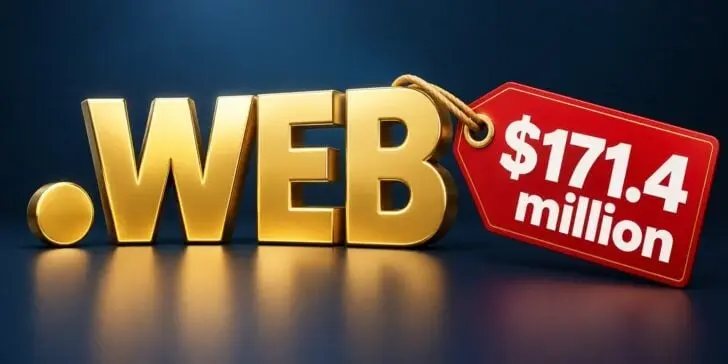
In a recent regulatory disclosure that sheds new light on one of the most expensive and litigious acquisitions in the history of the domain name industry, Verisign (NASDAQ: VRSN) has finally revealed the full financial weight of its pursuit of the .web top-level domain (TLD). According to a filing with the Securities and Exchange Commission (SEC), the Virginia-based registry giant has invested a total of $171.4 million to secure the rights to .web, a figure that highlights the company’s massive bet on a suffix it hopes will become a premier digital real estate asset alongside its cornerstone .com and .net registries.
The disclosure comes at a pivotal moment for Verisign. After nearly a decade of regulatory hurdles, legal challenges, and industry-wide speculation, the company is moving toward a commercial launch. On a recent investor conference call, Verisign leadership confirmed that the rollout is scheduled to begin in mid-December with a 30-day "Sunrise" period, followed by a unique limited registration phase. For investors and industry analysts, the looming launch represents the culmination of a high-stakes gamble, raising critical questions about whether the market for generic TLDs still holds the same promise it did when the .web journey began more than ten years ago.
Breaking Down the $171.4 Million Price Tag
The financial narrative of .web has been a subject of intense scrutiny since 2016, though the total cost remained partially obscured until now. The bulk of the expenditure stems from a 2016 ICANN (Internet Corporation for Assigned Names and Numbers) auction, where a company called Nu Dot Co won the rights to .web with a staggering bid of $135 million. It was later revealed that Nu Dot Co was acting as a proxy for Verisign, a move that sparked significant controversy and legal pushback from competing bidders who felt the auction process had been compromised by the undisclosed partnership.
In its third-quarter 10-Q filing in 2016, Verisign reported paying $145 million for the domain asset. This indicated that the company had paid Nu Dot Co a $10 million premium over the auction price to facilitate the acquisition. However, the latest SEC filing clarifies that the final tally is significantly higher. Verisign noted it ultimately paid $145.2 million for the asset itself, but it also disclosed an additional $26.2 million in "other acquisition costs."
While the filing described these costs as "individually not material," the aggregate sum is substantial. Industry observers suggest this $26.2 million likely covers a decade of accumulated expenses. Given the protracted legal warfare surrounding the domain, a significant portion of this capital was likely directed toward legal fees or perhaps capitalized deferred costs. There is also speculation that some of these funds may have been utilized in settlements, potentially involving Altanovo (formerly Afilias), a competitor that spent years fighting the .web award through ICANN’s Independent Review Process (IRP) and other legal avenues.
A Decade of Delays and Legal Friction
The road to the .web launch has been anything but smooth. The domain was part of ICANN’s 2012 New gTLD Program, which was designed to expand the internet’s naming system beyond traditional extensions like .com and .org. However, .web was immediately identified as one of the most desirable "generic" terms available, leading to a "contention set" involving several major industry players.
The 2016 auction victory by Nu Dot Co was supposed to be the finish line, but it instead triggered a marathon of litigation. Competitors argued that Verisign’s use of a proxy violated the spirit of the auction rules and sought to have the results overturned. These challenges moved through various levels of ICANN’s internal dispute resolution mechanisms and eventually into the courts. The delay has been so significant that the internet landscape of today looks vastly different from the one that existed when the bids were first placed.
 Web Hosting & Domain Management
GoDaddy domains now automatically verified with Afternic
For years, the process of listing a domain for sale on a...
 Web Hosting & Domain Management
Taylor Swift Secures Digital Frontier with Application for Proprietary .taylorswift Top-Level Domain
The landscape of the internet is poised for a significant transformation as...
 Web Hosting & Domain Management
Danish Green Energy Firm Found Guilty of Reverse Domain Name Hijacking After Failed Attempts to Purchase windspace.com
A Danish green energy developer, WindSpace A/S, has been issued a rare...