
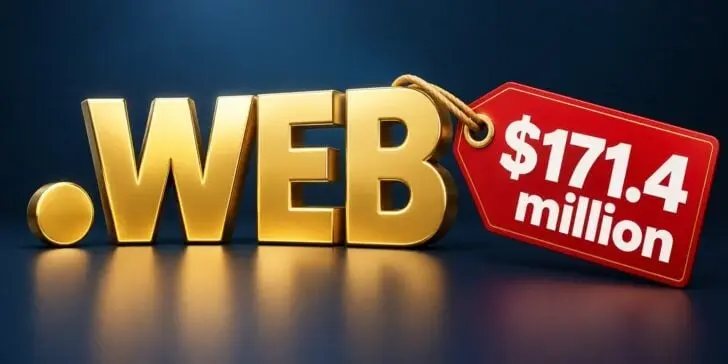
By the time Verisign finally secured the clear path to launch, it had spent eight years in a holding pattern after the auction. The $171.4 million investment reflects not just the value of the name, but the immense "cost of carry" and the legal friction required to maintain its claim over the extension.
The Strategy for Launch: Sunrise and Beyond
With the legal clouds finally parting, Verisign has outlined a specific roadmap for the .web rollout. The process will begin in mid-December with a standard 30-day Sunrise period. During this phase, trademark holders who have registered their marks with the Trademark Clearinghouse (TMCH) will have the first opportunity to secure their corresponding .web domains. This is a mandatory step for all new TLD launches, designed to prevent cybersquatting and protect intellectual property.
The more intriguing phase, however, is the "limited registration period" that will follow the Sunrise. During this window, Verisign plans to allow registrants of existing .com domains to acquire the matching .web version. This strategy is clearly aimed at leveraging Verisign’s existing dominance in the .com market. By offering a direct path for .com owners to "complete their set," Verisign is betting on the defensive and brand-expansion instincts of current domain holders.

The success of this period will be the primary indicator of Verisign’s return on investment (ROI). If a significant percentage of the hundreds of millions of .com registrants feel compelled to buy the .web equivalent, the registry could see a massive initial windfall. This approach mirrors the launch of the .xxx TLD years ago, where registrars aggressively marketed the extension to businesses as a "defensive" must-have to prevent their brand names from being used in adult content. While the context for .web is professional rather than defensive against adult content, the marketing mechanics are similar: creating a sense of necessity for brand protection.
The Registrar Variable and Pricing Pressures
For the .web launch to be a financial success, Verisign will need the active cooperation of major registrars like GoDaddy, Namecheap, and others. These companies act as the storefronts for the domain industry, and their willingness to "push" .web during the registration flow is vital. Registrars are often eager to support such launches because they represent high-margin revenue opportunities, especially during limited-release periods where prices are often higher than standard annual renewals.
However, a major piece of the puzzle remains missing: the price. Verisign has not yet publicly announced the wholesale pricing for the domain match period. This decision involves a delicate balancing act. If Verisign sets the price too high, they risk alienating small business owners and individual registrants who may feel that one generic extension is enough. If they set it too low, they may fail to recoup their $171.4 million investment in a reasonable timeframe.
The company is likely engaged in extensive data modeling to find the "sweet spot" that maximizes volume without sacrificing the premium perception of the .web extension. Given the high acquisition cost, there is significant pressure to ensure the initial registration surge is substantial.
 Web Hosting & Domain Management
Danish Green Energy Firm Found Guilty of Reverse Domain Name Hijacking After Failed Attempts to Purchase windspace.com
A Danish green energy developer, WindSpace A/S, has been issued a rare...
 Web Hosting & Domain Management
Escrow.com Reports Rising Transaction Volume Amid Seasonal Domain Market Slowdown
Freelancer Limited (ASX: FLN; OTCQX: FRLCY), the parent company of the world’s...
 Web Hosting & Domain Management
GoDaddy domains now automatically verified with Afternic
For years, the process of listing a domain for sale on a...







