
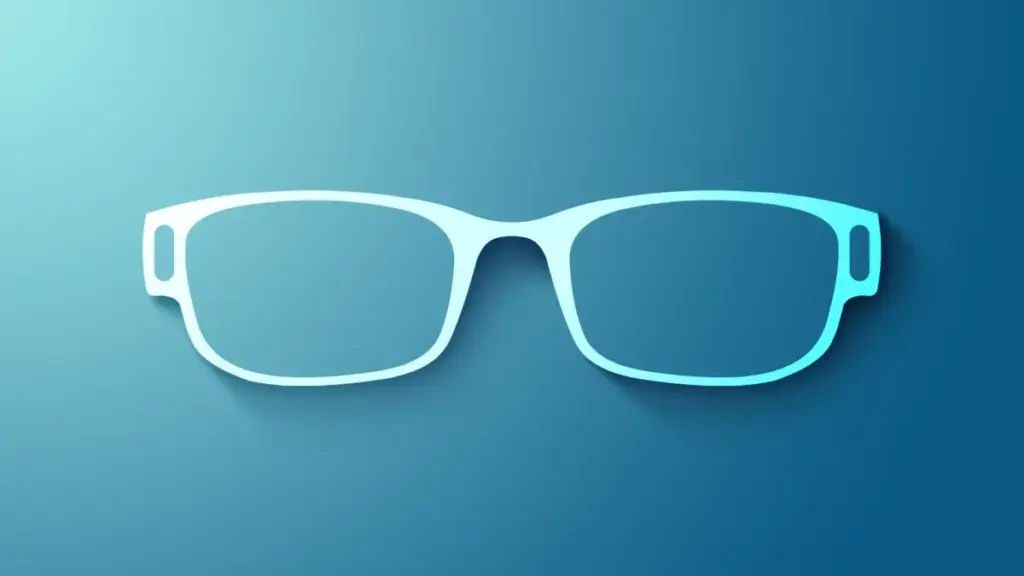
Apple envisions a broad range of everyday practical applications for the glasses’ visual recognition capabilities. Planned use cases include identifying historic buildings and urban landmarks, scanning the contents of an open refrigerator to suggest recipes and meal options, delivering contextual turn-by-turn walking directions, and translating printed foreign signs or spoken conversations on the fly. Beyond visual AI tasks, the glasses will handle core daily assistant features, including making phone calls, dictating and reading text messages, relaying iPhone notifications, managing calendars, setting standard and visual location-based reminders, adjusting media playback, and controlling HomeKit-connected smart home accessories.
To power these visual and contextual experiences, Apple is relying on custom silicon and a lightweight software architecture. Internal prototypes run a stripped-down, optimized version of visionOS 28. The core computational tasks on the glasses themselves are driven by a processor derived from older Apple Watch chipsets, alongside specialized custom components designed specifically to manage wireless connectivity and rapidly process image data streaming directly from the frame’s optical sensors.
Because the lightweight frame cannot accommodate a high-performance system-on-chip or a large battery, the glasses will function primarily as a companion peripheral rather than a fully independent computing platform. The device will rely on a paired recent iPhone model to offload the heavy computational processing and memory requirements needed for advanced AI execution. Android devices will not be supported. However, built-in Wi-Fi connectivity will enable certain lightweight system features outside of third-party apps to function even when the paired iPhone is not immediately nearby. For example, audio playback could theoretically continue over an active Wi-Fi network, though the glasses are not engineered to operate as a completely standalone product.
Apple’s software strategy for the glasses hinges on leveraging its massive existing App Store ecosystem rather than forcing developers to construct entirely new applications for a standalone platform. Developers will not need to build dedicated visionOS apps for the glasses; instead, their software will execute on the paired iPhone, with the phone and glasses working in tandem to fulfill user requests. To enable seamless interaction, Apple is requiring developers to integrate deep Siri controls into their existing iPhone apps, allowing the voice assistant to trigger specific in-app capabilities. Apple envisions users seamlessly performing real-world tasks through the glasses using voice commands, such as booking restaurant reservations, requesting ride-shares, ordering coffee from local cafes, completing retail purchases, and buying movie tickets.
The foundational software work required to support these Siri-driven app integrations is already underway. Apple began introducing updated intent-based Siri controls in the first beta of iOS 27.3, laying the groundwork for more precise programmatic control over individual app features. While Apple originally demonstrated early iterations of deep app control concepts back in 2024, the entire architecture has since been completely rebuilt using newer, more capable artificial intelligence foundation models. According to current roadmaps, Apple plans to roll out support for its own first-party system apps in December, with third-party developer tools and APIs releasing in 2027. By establishing these developer integrations well ahead of the hardware launch, Apple aims to launch the smart glasses with a robust ecosystem of compatible services, viewing its deep library of iOS apps as a decisive competitive advantage over rival smart glasses makers.
 macOS & Apple IT Support
Apple TV and HomePod Mini Face Extended Shipping Delays as Code Leaks and Software Betas Signal Incoming 2026 Models
Customers looking to purchase an Apple TV or a HomePod mini through...
 macOS & Apple IT Support
Apple Retail Staff Advised to Warn Walk-In Customers Against Launch-Day Visits as iPhone Duo Supply Shortages Deepen
Apple retail employees have been instructed to proactively warn customers against visiting...
 macOS & Apple IT Support
Apple Reportedly Developing Premium HomeView Smart Home Hub Featuring 9-Inch Swiveling Display and Robotic Arm for 2027 or 2028 Launch
Apple is planning to expand its smart home hardware lineup with a...







