

Apple’s accelerated push into proactive AI comes at a time when major competitors across the technology sector are aggressively deploying autonomous, agent-based applications. In September 2026, Meta introduced its autonomous "Muse" agent, an application that quickly scaled the App Store installation charts due to its ability to manage user tasks autonomously. Shortly thereafter, OpenAI launched its "Dots" agent platform, while Anthropic introduced "Claude Duet," a system designed to assist with multi-step computer tasks and developer workflows. Meanwhile, Google rebranded and updated its "Gemini Spark" technology into a revamped platform named "Tasks," adding enhanced capabilities designed to streamline automated workflows for users.
What distinguishes this emerging class of proactive AI agents from traditional virtual assistants is their capacity for autonomous initiation and context-aware execution. While traditional voice assistants rely entirely on explicit user prompts to perform discrete actions, proactive agents are designed to anticipate user needs, initiate tasks without waiting for step-by-step instructions, and navigate complex software environments independently. Current public iterations of Siri lack these proactive, multi-application capabilities, creating a functional gap that Apple is now working directly to close through its agentic AI engineering efforts.
By combining foundational language models with system-level control, UI recognition, and developer tools, Apple appears to be working toward a unified automation framework that spans its hardware ecosystem. If successfully integrated across macOS, iOS, and iPadOS, a proactive agent could allow users to delegate intricate, multi-application workflows—such as gathering research across multiple websites, organizing data into documents, writing code scripts, and testing APIs—to an automated assistant operating within Apple’s privacy architecture.
The newly revealed job listings demonstrate that Apple is actively expanding its research and applied engineering teams to build general-purpose computer-use agents. As the company recruits senior engineering leadership to bridge the gap between Siri, UI frameworks, and foundation models, the development path points toward a future operating system environment where proactive AI agents play a central role in day-to-day computer interaction.
 macOS & Apple IT Support
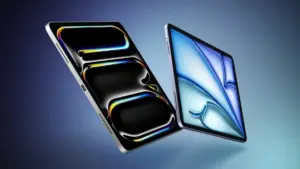
Apple Hardware Rush: Touchscreen Macs Debut, iOS 27.3 Beta Drops, and Supply Challenges Mount
Apple is navigating one of its most intensive product launch cycles of...
 macOS & Apple IT Support
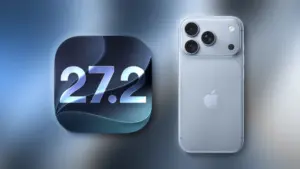
Apple Adds Selfie-Based Age Verification to iOS 27.2 and iPadOS 27.2 to Verify Adult Status Without Government IDs
Apple has introduced a selfie-based age verification system in its iOS 27.2...
 macOS & Apple IT Support
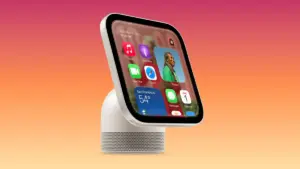
Early Apple HomeView Software Release Teases Interface Features, Architecture, and Development Delays
Apple has officially released HomeView Software 27.2, providing an unexpected early look...







