The rapid pace of software evolution has long presented a unique challenge for the burgeoning field of artificial intelligence, particularly for Large Language Models that serve as daily companions for software engineers. As Microsoft officially rolls out .NET 11, the developer community faces a familiar hurdle: the "knowledge cutoff" inherent in even the most advanced AI models. While these models are capable of generating complex code and architectural suggestions, their training data is static, often trailing months or even years behind the latest stable releases of major frameworks. This disconnect often leads to AI agents suggesting deprecated methods, missing out on performance optimizations, or failing to implement the most recent syntax improvements. To address this specific friction point, a new open-source project titled Playbook has been released, offering a specialized Model Context Protocol (MCP) designed to synchronize AI behavior with the cutting-edge standards of .NET 11.
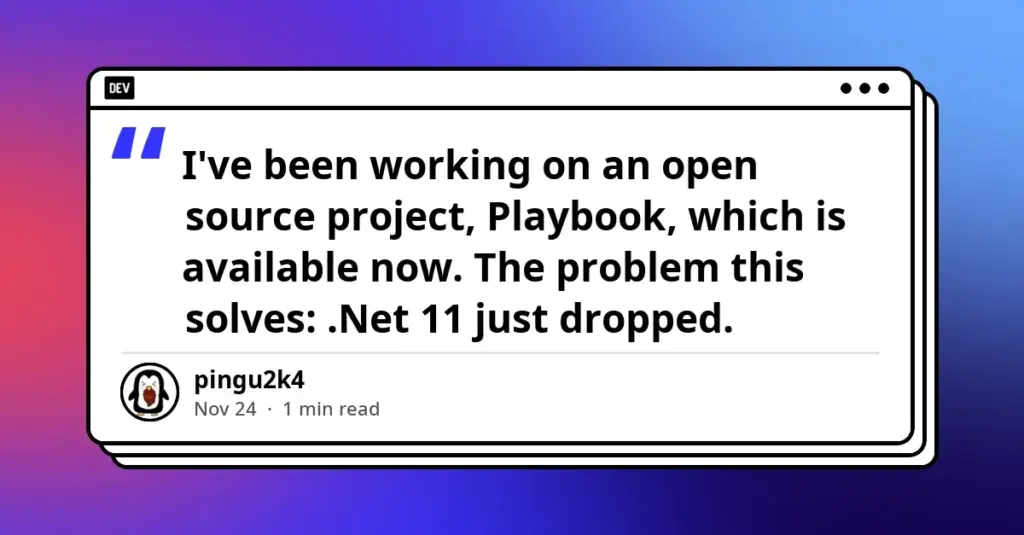
The developer behind the project, known as pingu2k4, recently announced the launch of Playbook as a direct solution to the lag between framework releases and AI model updates. The core of the problem lies in the timing of model training cycles. By the time a major framework like .NET 11 reaches general availability, the foundational training of current flagship models—such as those powering Claude, GPT-4, or various specialized coding assistants—has already concluded. While some models may have been exposed to early Release Candidate (RC) documentation during their training phases, it is highly unlikely that any current AI possesses a comprehensive, nuanced understanding of the finalized .NET 11 ecosystem. This often results in a "hallucination" of sorts, where the AI attempts to apply .NET 8 or .NET 9 logic to a .NET 11 environment, missing out on the specific advancements Microsoft has introduced to streamline development.
Playbook functions as an MCP, a standardized framework that allows AI agents to interact with external data sources and tools in a structured manner. By acting as a bridge, Playbook provides AI agents with an extensive library of information that covers 491 specific coding recipes. These recipes are meticulously organized across 24 distinct categories, ensuring that the agent has access to granular, verified implementation details rather than relying on outdated internal training data. Among these categories, the project places a significant emphasis on Blazor, with 70 recipes specifically tagged for the web framework. This focus is particularly relevant given the rapid evolution of Blazor’s rendering modes and component models, which have undergone substantial changes in recent iterations of the .NET ecosystem.
The technical implementation of Playbook allows an AI agent to search through these recipes dynamically to understand how specific tasks should be performed within the user’s current target framework. One of the most significant features of this MCP is its contextual awareness. When a developer is working within a specific environment, the agent can specify which framework it is interested in. In response, the MCP filters the available data to return only the information relevant to the current goals and working environment of the developer. This prevents the "information overload" that can occur when an AI attempts to synthesize too many conflicting versions of a library, ensuring that the code generated is not only functional but also adheres to the latest best practices and architectural standards.
 Software Development & Scripting for IT
The Truth in the Catalog: Lessons from a Mission-Critical Database Migration
In the modern landscape of web development, the promise of "managed backends"...
 Software Development & Scripting for IT
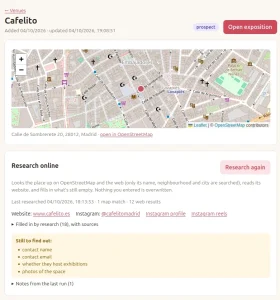
Bridging the Gap Between Canvas and Cafe: Developer Builds Local AI Suite to Help Madrid Artist Manage Exhibitions
In the bustling cultural landscape of Madrid, where neighborhood cafes and local...
 Software Development & Scripting for IT
Understanding the Architecture of Cross-Origin Resource Sharing in Modern Full-Stack Development
In the contemporary landscape of web development, the integration of a React...