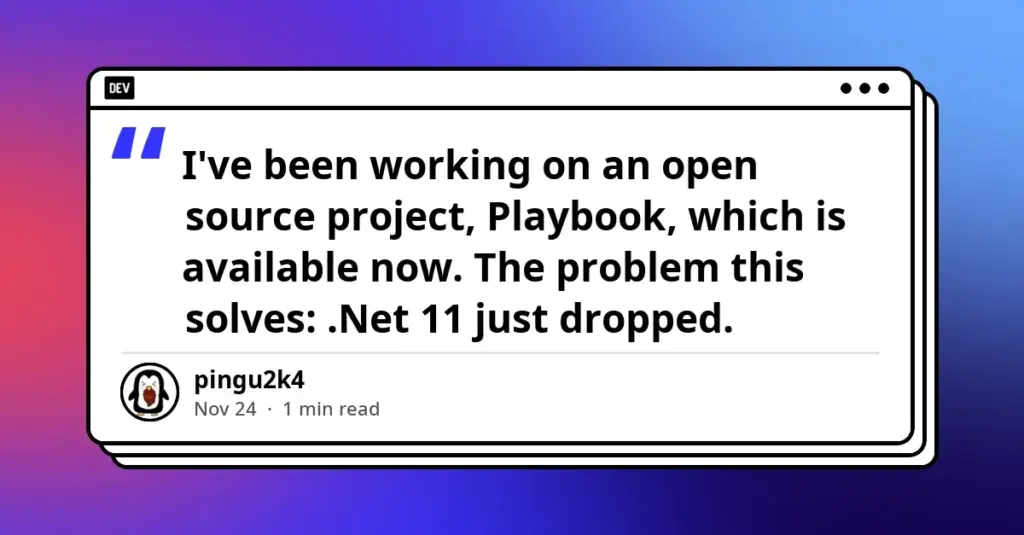
The impact of this contextual grounding is not merely theoretical. According to the project’s creator, initial testing has demonstrated a quantifiable improvement in the quality of AI-generated code. When tasked with creating a .NET 11 application, models utilizing the Playbook MCP showed a "noticeable improvement" in following the new standards and methodologies introduced in the latest version of the framework compared to those operating without the tool. This suggests that providing a high-quality, curated context window can effectively bypass the limitations of a model’s original training data, allowing developers to leverage the full power of .NET 11 immediately upon its release.

Beyond the technical accuracy of the code, the user experience of Playbook is designed for seamless integration into existing workflows. One of the primary barriers to adopting new AI tools is often the need to learn complex prompting strategies or to constantly remind the agent which tools it should be using. Playbook aims to eliminate this friction. Once the MCP is installed, it functions as a background capability for the AI agent. The developer does not need to change their prompting style or explicitly instruct the agent to consult the Playbook database. Instead, the agent is designed to autonomously recognize when its internal knowledge may be insufficient or when a more specific .NET 11 recipe is available, opting to use the MCP at the correct moments to ensure the highest quality output.
This project arrives at a time when the software industry is increasingly looking for ways to make AI more reliable and context-aware. The Model Context Protocol itself is gaining traction as a vital standard for connecting LLMs to the real-world data they need to be effective in professional settings. By applying this protocol specifically to the .NET ecosystem, Playbook addresses a major pain point for enterprise developers who rely on Microsoft’s stack. The transition to new versions of .NET is often a complex process involving the adoption of new APIs and the phasing out of older patterns. Having an AI assistant that is fully "aware" of these transitions can significantly reduce the cognitive load on developers and minimize the introduction of legacy patterns into new codebases.
The breadth of the Playbook library—nearly 500 recipes—indicates a significant effort to map out the common challenges and patterns faced by .NET developers. By categorizing these into 24 areas, the project covers a wide swathe of the framework, from core logic and data access to the intricacies of front-end development with Blazor. This structured approach to "recipes" mirrors how many developers actually learn and implement new features: by looking for verified, idiomatic examples of how to solve specific problems. By feeding these idiomatic examples directly into the AI’s reasoning process, Playbook ensures that the "creative" side of the AI is tempered by the "authoritative" side of the latest documentation and community standards.
 Software Development & Scripting for IT
The Connectivity Gap: Why Your Smart Lock Fails and the Technical Realities of the Three-Hop System
In the rapidly evolving landscape of the modern smart home, few devices...
 Software Development & Scripting for IT
Bridging the Command Line and the Desktop: How Multimeter is Transforming macOS Productivity Through Script-Based Monitoring
In the modern digital workspace, the ability to monitor real-time data without...
 Software Development & Scripting for IT
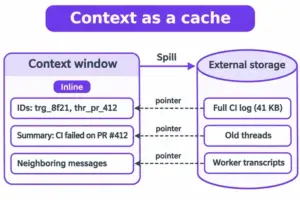
Chain of Recall: A New Architectural Blueprint for Long-Running AI Agent Memory
As artificial intelligence shifts from simple chat interfaces to "super-agents" capable of...