
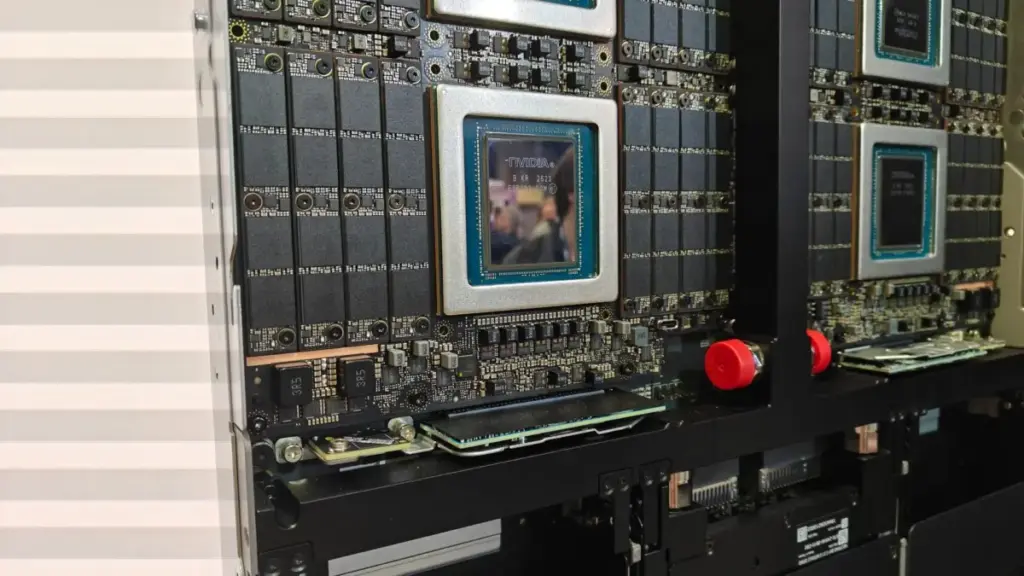
The landscape of high-performance computing and artificial intelligence is currently defined by a high-stakes race to provide the silicon backbone for the next generation of digital intelligence. At the heart of this competition is a fundamental disagreement between industry titans over whether hardware can be intentionally designed for software trends that have only recently entered the public consciousness. During the SC26 supercomputing conference, a significant debate emerged regarding Nvidia’s upcoming "Vera" CPU and its branding as a processor built specifically for the "agentic AI" era. The controversy centers on the timeline of silicon development versus the meteoric rise of autonomous AI agents, leading some competitors to question the authenticity of Nvidia’s claims.
The criticism, which has gained traction within the semiconductor industry, posits that the development cycles for complex data center CPUs are simply too long to have accounted for the specific requirements of agentic AI years ago. Silicon development typically spans four to five years from the initial architectural definition to mass production. Given that "agentic AI"—AI systems capable of reasoning, using tools, and performing multi-step tasks autonomously—only became a dominant industry focus in the last year or two, skeptics argue that any "agentic" capabilities in current or upcoming chips are a result of fortunate timing rather than clairvoyant engineering.
Leading this skepticism is AMD, whose executive leadership has publicly rebuked the idea that any company could have "magically" known four years ago that agentic workloads would become the industry’s North Star. AMD’s Vice President and Chief Zen Architect have suggested that while modern CPUs are undoubtedly powerful, labeling them as purpose-built for agents that didn’t exist during the design phase is more of a marketing triumph than an architectural reality. This critique also extends to Arm and its recent messaging surrounding "AGI CPUs," suggesting a broader industry trend of retrofitting current hardware designs with the latest AI buzzwords.
Ian Finder, the head of Nvidia’s data center CPU business, addressed these criticisms directly during a conversation at SC26. Finder did not shy away from the inherent contradictions of the silicon timeline, but he offered a nuanced defense of Nvidia’s approach. He admitted that the company does not possess a "magic crystal ball" capable of predicting specific software movements like the "agentic moment" with perfect clarity. To suggest otherwise, he noted, would be "absurd." However, Finder argued that what Nvidia does possess is a deep-seated "design intuition" that allows them to anticipate the general trajectory of compute requirements long before they are codified into specific software categories.
This "design intuition" is, according to Finder, the secret sauce that allows Nvidia to align its hardware cycles with the rapidly shifting needs of the AI market. It is not about knowing that a specific framework like AutoGPT or LangChain would exist in 2024; rather, it is about recognizing the fundamental bottlenecks in compute and data movement that would inevitably arise as models evolved from simple pattern recognition to complex reasoning and orchestration. By focusing on these foundational challenges during the Vera CPU’s inception four years ago, Nvidia claims to have built a processor that is naturally suited for the demands of agentic AI, even if the term itself wasn’t yet in their internal documentation.
 Hardware Reviews & PC Building
Acer Predator Helios Neo 16S AI Review: Balancing Next-Gen Power with the Constraints of Portability
The landscape of high-end gaming laptops is currently undergoing a significant transformation....
 Hardware Reviews & PC Building
Russian Military Targets Ukrainian Data Centers in Widening Campaign Against Digital Infrastructure
The Russian military has initiated a series of targeted strikes against critical...
 Hardware Reviews & PC Building
Big Tech is cashing in on AI while the rest of corporate America sees no financial returns — report outlines how…
The disparity highlights a growing tension in the financial markets. On one...







