
The landscape of digital brand protection is witnessing a significant period of escalation, as evidenced by a sharp increase in the number of legal battles over internet real estate. According to a newly published analysis of the third quarter of this year, the volume of decisions rendered under the Uniform Domain-Name Dispute-Resolution Policy (UDRP) has climbed by 16 percent compared to the same period last year. This surge highlights a growing friction between trademark owners and those who register domain names that potentially infringe upon established corporate identities.
The comprehensive data comes from the latest quarterly roundup by GigaLaw, authored by Doug Isenberg. Isenberg, a prominent figure in the field who serves as both a UDRP panelist and counsel, provides a unique vantage point on the shifting tides of domain name arbitration. His report, which focuses specifically on the final decisions handed down by arbitration panels rather than the initial filings, serves as a primary barometer for the health and activity levels of the global domain dispute ecosystem.
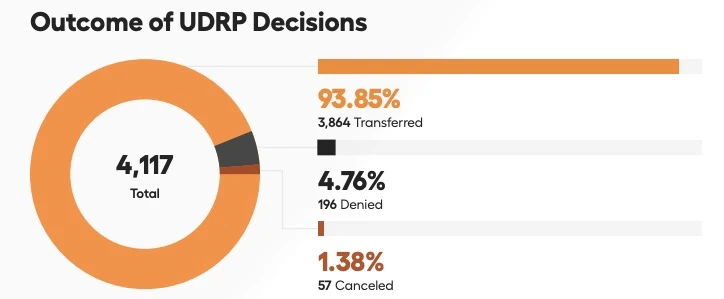
During the third quarter, the number of formal UDRP decisions reached 2,527, marking a substantial jump from the previous year. Perhaps more telling of the scale of these disputes is the total number of individual domain names involved in those cases. The report indicates that the number of disputed domain names rose nearly 12 percent year-over-year, totaling 4,117. This disparity between the number of decisions and the number of domain names underscores a common trend in the industry: "bulk" filings, where a single trademark owner initiates a single legal proceeding against a respondent who has registered multiple infringing URLs.
This growth represents an acceleration in activity compared to earlier in the year. In the second quarter, the industry saw a 12 percent increase in decisions, a figure that was already considered robust. The jump to 16 percent in the third quarter suggests that the momentum of brand enforcement is building. Isenberg notes that if this current trajectory continues through the final months of the year, the World Intellectual Property Organization (WIPO) is on pace to set an all-time record for the number of annual cases handled.
The UDRP was established by the Internet Corporation for Assigned Names and Numbers (ICANN) as a streamlined, cost-effective alternative to traditional litigation for resolving disputes over domain names. For a complainant to succeed, they must generally prove three things: that the domain name is identical or confusingly similar to a trademark in which they have rights; that the current registrant has no rights or legitimate interests in the name; and that the domain was registered and is being used in bad faith.
The Q3 data suggests that brand owners are increasingly successful in meeting this three-pronged burden of proof. The GigaLaw report reveals that approximately 95 percent of the domain names involved in decisions last quarter were either transferred to the complainant or canceled entirely. Specifically, 3,864 domain names were ordered to be transferred, while 57 were canceled. In contrast, only 5 percent of cases—amounting to 196 domain names—resulted in a denial, where the panelist ruled in favor of the current registrant.
 Web Hosting & Domain Management
The AI-Driven Acceleration of the Domain Aftermarket: Why 2026 is Seeing Record-Breaking Development Speeds
The secondary market for domain names has long been characterized by a...
 Web Hosting & Domain Management
Taylor Swift Secures Digital Frontier with Application for Proprietary .taylorswift Top-Level Domain
The landscape of the internet is poised for a significant transformation as...
 Web Hosting & Domain Management
AI-Driven Development and Defensive Strategies Shape Recent Surge in End-User Domain Sales
The landscape of the domain name secondary market is undergoing a significant...







