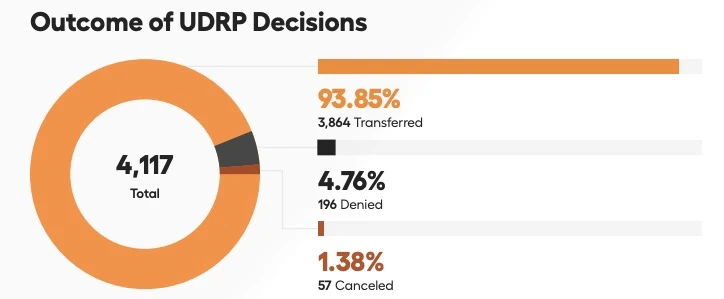
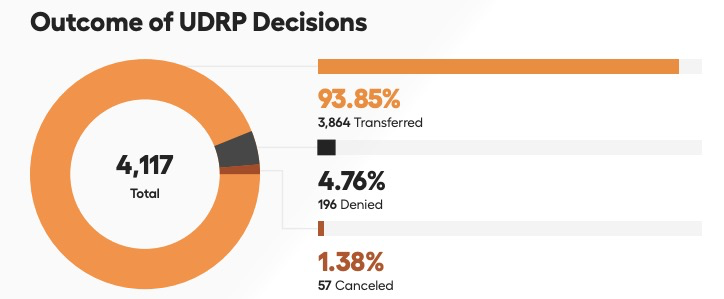
This high success rate for complainants is a testament to the focused nature of the UDRP process, which is designed to target clear-cut cases of cybersquatting. However, the sheer volume of successful transfers also points to the persistent challenge that global brands face from bad-faith registrants who seek to capitalize on the reputation of others, whether through phishing, the sale of counterfeit goods, or "typosquatting."
The distribution of these cases among the various authorized dispute resolution providers shows a clear hierarchy in the industry. The World Intellectual Property Organization (WIPO), based in Geneva, remains the dominant force in the field, leading the way with 1,400 decisions in the third quarter. WIPO’s prominence is often attributed to its long history with the policy and its global reach. Following WIPO is the Forum (formerly the National Arbitration Forum), which handled 809 decisions. The Czech Arbitration Court (CAC) also maintained a significant presence with 238 decisions. Meanwhile, the Asia Domain Name Dispute Resolution Centre (ADNDRC) and the Canadian International Internet Dispute Resolution Centre (CIIDRC) each handled fewer than 100 cases, representing a smaller but specialized portion of the market.
While the vast majority of cases favor the trademark owner, the system includes safeguards to prevent abuse by large corporations. One such safeguard is a finding of Reverse Domain Name Hijacking (RDNH). This occurs when a panel determines that a complainant has brought a case in bad faith, essentially attempting to use the UDRP to "bully" a legitimate domain owner out of their property.
The findings of RDNH remained steady in the third quarter, matching the frequency seen in the second quarter. In total, 18 domain names were involved in RDNH findings, representing a mere 0.44 percent of all decided names. While rare, these findings are critical for maintaining the integrity of the UDRP system. WIPO accounted for 12 of these findings, the Forum for three, ADNDRC for two, and CIIDRC for one. Interestingly, the Czech Arbitration Court reported no findings of RDNH during this period. These statistics suggest that while the system is heavily utilized by brand owners, the panels remain vigilant against those who might overreach their trademark rights.
An analysis of the top-level domains (TLDs) involved in these disputes provides a window into where the most intense brand-protection battles are being fought. Unsurprisingly, .com remains the primary battlefield. It accounted for 2,786 of the domain names in the third quarter decisions, a reflection of its continued status as the most valuable and recognizable real estate on the web.
However, the report also highlights the activity within the "new" generic top-level domains (gTLDs) and country-code top-level domains (ccTLDs). The .shop extension followed .com with 265 disputed names. The prominence of .shop is particularly noteworthy, as it suggests a significant amount of enforcement activity related to e-commerce and retail fraud. Following .shop were .net with 128 names and .org with 126.
 Web Hosting & Domain Management
AI-Driven Development and Defensive Strategies Shape Recent Surge in End-User Domain Sales
The landscape of the domain name secondary market is undergoing a significant...
 Web Hosting & Domain Management
October Domain Industry Report: New TLD Applications and Major Registry Shifts Drive Market Momentum
The domain name industry reached a significant inflection point in October 2026,...
 Web Hosting & Domain Management
Qatar Tightens Control Over .QA Domains with Strict New Residency and Usage Restrictions
The landscape of the Qatari digital space is set for a significant...