
The landscape of digital brand protection is witnessing a significant period of escalation, as evidenced by a sharp increase in the number of legal battles over internet real estate. According to a newly published analysis of the third quarter of this year, the volume of decisions rendered under the Uniform Domain-Name Dispute-Resolution Policy (UDRP) has climbed by 16 percent compared to the same period last year. This surge highlights a growing friction between trademark owners and those who register domain names that potentially infringe upon established corporate identities.
The comprehensive data comes from the latest quarterly roundup by GigaLaw, authored by Doug Isenberg. Isenberg, a prominent figure in the field who serves as both a UDRP panelist and counsel, provides a unique vantage point on the shifting tides of domain name arbitration. His report, which focuses specifically on the final decisions handed down by arbitration panels rather than the initial filings, serves as a primary barometer for the health and activity levels of the global domain dispute ecosystem.
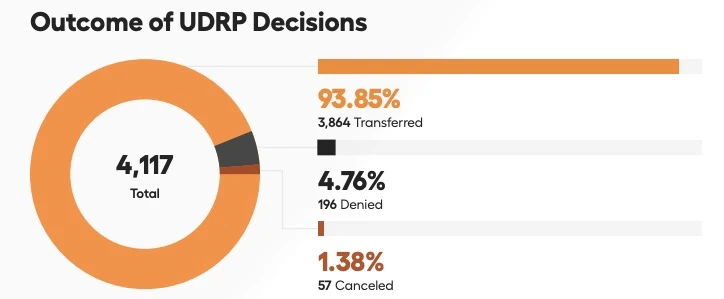
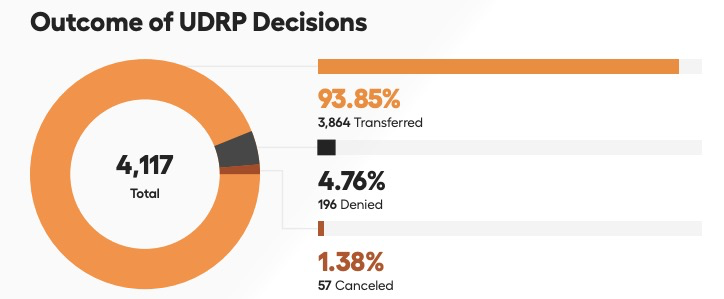
During the third quarter, the number of formal UDRP decisions reached 2,527, marking a substantial jump from the previous year. Perhaps more telling of the scale of these disputes is the total number of individual domain names involved in those cases. The report indicates that the number of disputed domain names rose nearly 12 percent year-over-year, totaling 4,117. This disparity between the number of decisions and the number of domain names underscores a common trend in the industry: "bulk" filings, where a single trademark owner initiates a single legal proceeding against a respondent who has registered multiple infringing URLs.
This growth represents an acceleration in activity compared to earlier in the year. In the second quarter, the industry saw a 12 percent increase in decisions, a figure that was already considered robust. The jump to 16 percent in the third quarter suggests that the momentum of brand enforcement is building. Isenberg notes that if this current trajectory continues through the final months of the year, the World Intellectual Property Organization (WIPO) is on pace to set an all-time record for the number of annual cases handled.
The UDRP was established by the Internet Corporation for Assigned Names and Numbers (ICANN) as a streamlined, cost-effective alternative to traditional litigation for resolving disputes over domain names. For a complainant to succeed, they must generally prove three things: that the domain name is identical or confusingly similar to a trademark in which they have rights; that the current registrant has no rights or legitimate interests in the name; and that the domain was registered and is being used in bad faith.
The Q3 data suggests that brand owners are increasingly successful in meeting this three-pronged burden of proof. The GigaLaw report reveals that approximately 95 percent of the domain names involved in decisions last quarter were either transferred to the complainant or canceled entirely. Specifically, 3,864 domain names were ordered to be transferred, while 57 were canceled. In contrast, only 5 percent of cases—amounting to 196 domain names—resulted in a denial, where the panelist ruled in favor of the current registrant.
This high success rate for complainants is a testament to the focused nature of the UDRP process, which is designed to target clear-cut cases of cybersquatting. However, the sheer volume of successful transfers also points to the persistent challenge that global brands face from bad-faith registrants who seek to capitalize on the reputation of others, whether through phishing, the sale of counterfeit goods, or "typosquatting."
The distribution of these cases among the various authorized dispute resolution providers shows a clear hierarchy in the industry. The World Intellectual Property Organization (WIPO), based in Geneva, remains the dominant force in the field, leading the way with 1,400 decisions in the third quarter. WIPO’s prominence is often attributed to its long history with the policy and its global reach. Following WIPO is the Forum (formerly the National Arbitration Forum), which handled 809 decisions. The Czech Arbitration Court (CAC) also maintained a significant presence with 238 decisions. Meanwhile, the Asia Domain Name Dispute Resolution Centre (ADNDRC) and the Canadian International Internet Dispute Resolution Centre (CIIDRC) each handled fewer than 100 cases, representing a smaller but specialized portion of the market.
While the vast majority of cases favor the trademark owner, the system includes safeguards to prevent abuse by large corporations. One such safeguard is a finding of Reverse Domain Name Hijacking (RDNH). This occurs when a panel determines that a complainant has brought a case in bad faith, essentially attempting to use the UDRP to "bully" a legitimate domain owner out of their property.
The findings of RDNH remained steady in the third quarter, matching the frequency seen in the second quarter. In total, 18 domain names were involved in RDNH findings, representing a mere 0.44 percent of all decided names. While rare, these findings are critical for maintaining the integrity of the UDRP system. WIPO accounted for 12 of these findings, the Forum for three, ADNDRC for two, and CIIDRC for one. Interestingly, the Czech Arbitration Court reported no findings of RDNH during this period. These statistics suggest that while the system is heavily utilized by brand owners, the panels remain vigilant against those who might overreach their trademark rights.
An analysis of the top-level domains (TLDs) involved in these disputes provides a window into where the most intense brand-protection battles are being fought. Unsurprisingly, .com remains the primary battlefield. It accounted for 2,786 of the domain names in the third quarter decisions, a reflection of its continued status as the most valuable and recognizable real estate on the web.
However, the report also highlights the activity within the "new" generic top-level domains (gTLDs) and country-code top-level domains (ccTLDs). The .shop extension followed .com with 265 disputed names. The prominence of .shop is particularly noteworthy, as it suggests a significant amount of enforcement activity related to e-commerce and retail fraud. Following .shop were .net with 128 names and .org with 126.
In the realm of ccTLDs, which are often used for specific geographic markets but have also gained broader technical or branding appeal, .co and .ai led the pack. The .co extension, the country code for Colombia, saw 55 disputed names, while .ai, the country code for Anguilla, saw 53. The rise of .ai in UDRP disputes is likely a direct correlation to the explosion of the artificial intelligence industry, which has turned the .ai extension into one of the most sought-after suffixes for tech startups and established firms alike. As the commercial value of .ai domains has skyrocketed, so too has the incentive for bad-faith registrations, leading to a predictable uptick in legal challenges.
The report also sheds light on the specific corporate entities that are most active in the UDRP arena. Protecting a global brand requires constant vigilance, and several major corporations stood out in the third quarter for their aggressive enforcement strategies.
Workday, the financial and human capital management software giant, filed the largest single case of the quarter. This massive filing covered 99 domain names, illustrating how companies often deal with large-scale infringements by a single entity or related group of entities in one fell swoop.
In terms of the total volume of domain names challenged across all filings, the health insurance company Cigna led the way, with 144 domain names involved in its various cases. This high volume suggests that Cigna is a frequent target for bad-faith registrations, perhaps due to the sensitive nature of the healthcare and insurance sectors, which are often targeted by phishing operations.
Meanwhile, the French retail giant Carrefour filed the highest number of individual cases, with 32 separate proceedings initiated during the quarter. Carrefour’s approach highlights a strategy of consistent, high-frequency policing of its trademark across the global internet, addressing infringements as they arise rather than waiting to bundle them into a single massive filing.
As the third quarter draws to a close, the data from GigaLaw suggests that the world of domain name disputes is becoming more active and more complex. The combination of a 16 percent rise in decisions and the potential for a record-breaking year at WIPO indicates that the digital landscape is more contested than ever. For brand owners, the UDRP remains a vital tool for maintaining the security and integrity of their online presence. For the broader internet community, these statistics provide a clear look at the ongoing struggle to balance trademark rights with the principles of domain name registration in an increasingly crowded digital marketplace.
 Web Hosting & Domain Management
Spaceship Reaches 10 Million Domains Under Management Following Period of Rapid Market Expansion
The digital infrastructure landscape has witnessed a significant shift as Spaceship, a...
 Web Hosting & Domain Management
Strategic Acquisitions in the European Domain Market: Nameshift Data Reveals Recent End-User Sales Trends
The secondary market for domain names remains a critical indicator of corporate...
 Web Hosting & Domain Management
Verisign Unveils "Verisign Informed" Security Service and Formally Applies for .pki Top-Level Domain
Verisign, the global leader in domain name registry services and internet infrastructure,...







