

Google has officially begun the deployment of its November system update for the Googlebook platform, introducing a comprehensive suite of optimizations designed to refine the user experience and address several lingering hardware and software inconsistencies. This latest release, which carries the build number CL3B.260622.286.R2, represents a significant milestone for the burgeoning ecosystem of high-performance laptops, particularly those powered by the Snapdragon X Elite architecture. By prioritizing memory management and hardware-software synergy, Google appears to be addressing the "growing pains" often associated with first-generation hardware platforms.
The update arrives at a critical juncture for Googlebook, as the platform seeks to solidify its position as a viable alternative for both creative professionals and general consumers. While the initial launch of these devices showcased impressive hardware capabilities, early adopters occasionally noted friction points regarding how the system balanced its ambitious on-device artificial intelligence features with traditional computing tasks. The November patch is a direct response to those observations, offering a more polished and reliable operating environment.
Revolutionary Gains in Memory Management and AI Efficiency
The most impactful enhancement found in the November update involves a fundamental restructuring of how Googlebook handles system resources dedicated to artificial intelligence. In modern computing, on-device AI has become a cornerstone of the user experience, powering everything from live translations to advanced image processing. However, these features often come at a high cost to system memory.
Through a combination of an updated Neural Processing Unit (NPU) driver and deep optimizations to the AICore memory management system, Google has successfully reclaimed a substantial amount of system RAM. According to technical details shared by Google’s Mishaal Rahman via Reddit, the update frees up between 3GB and 6GB of system RAM that was previously reserved or inefficiently utilized by background AI services.
For a standard Googlebook configuration equipped with 16GB of RAM, a 6GB "bonus" in available memory is transformative. In practical terms, this allows the system to maintain a significantly higher number of active browser tabs and background applications without resorting to disk swapping, which can slow down performance. This optimization ensures that the dedicated AI hardware—the NPU—operates with greater precision, ensuring that "smart" features are available when needed without acting as a constant drain on the resources required for everyday productivity.
Furthermore, the Google Chrome browser, which serves as the primary interface for many users, is expected to exhibit much more stable behavior under heavy workloads. The update introduces a more sophisticated mechanism for reclaiming memory when background AI services enter a state of contention with browser processes. Historically, if the system ran low on memory, it might aggressively terminate browser tabs to keep the core OS running. The new update mitigates this by intelligently prioritizing active processes, thereby reducing the frequency of unexpected tab reloads and system crashes. This refinement addresses one of the most common frustrations for power users who rely on dozens of open tabs for research and multitasking.
 Mobile Device Management (MDM) & Mobile OS
Google Integrates Gemini with Google Wallet to Provide AI-Driven Financial Insights and Budgeting Tools
In a significant expansion of its artificial intelligence ecosystem, Google has announced...
 Mobile Device Management (MDM) & Mobile OS
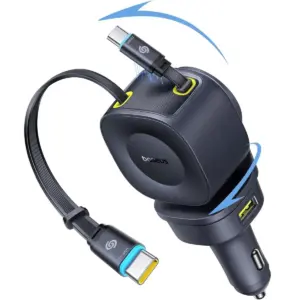
Power on the Move: Why High-Wattage Wired Charging is Becoming Essential for Modern Travelers
In the rapidly evolving landscape of mobile technology, the way we power...
 Mobile Device Management (MDM) & Mobile OS
Peacock Unveils Major Mobile App Redesign Featuring Vertical Video, AI Search, and Interactive Fan Hubs
In an era where streaming platforms are no longer just competing for...







