

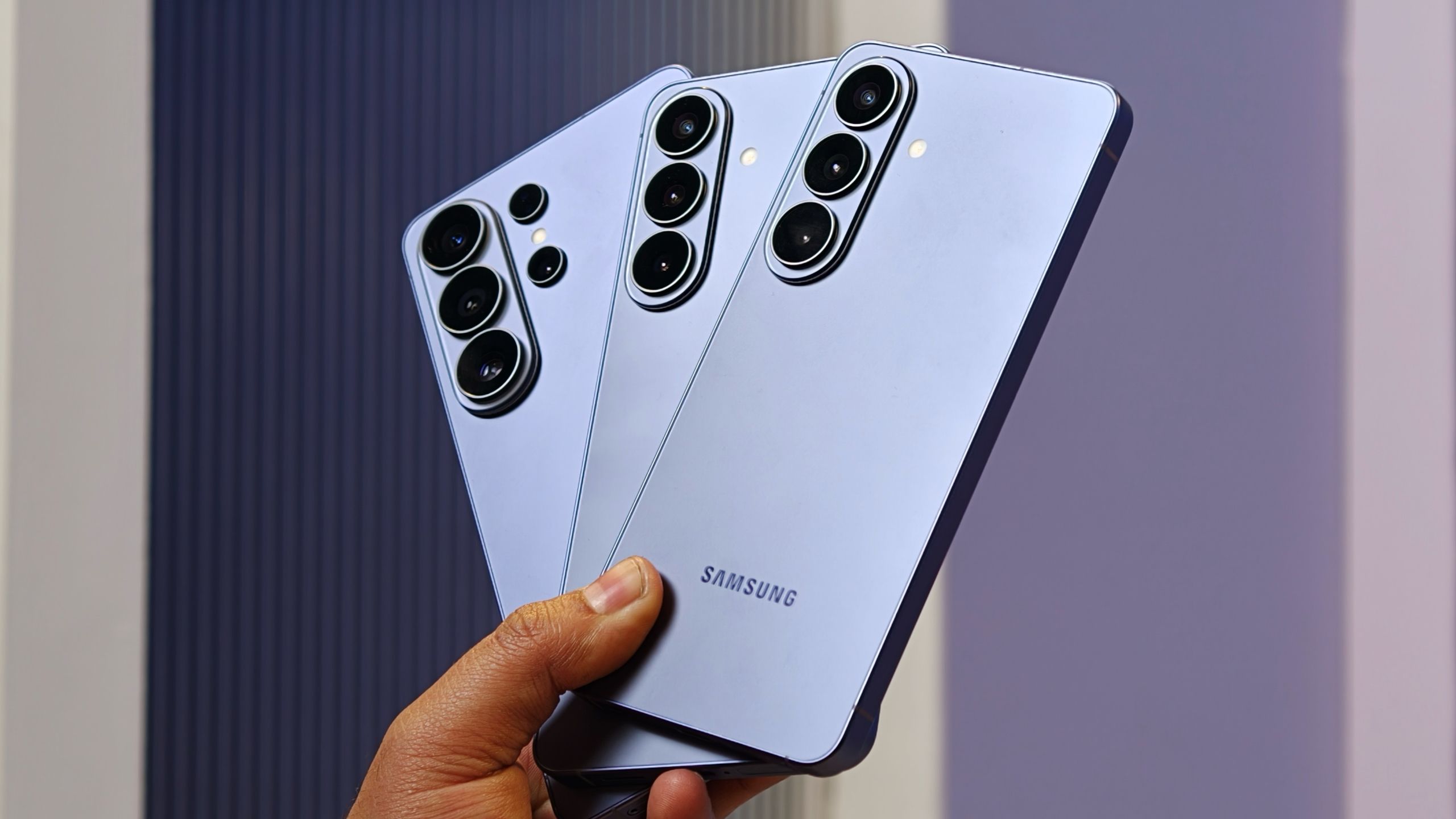
As the calendar turns toward the final months of the year, the technology industry has shifted its collective gaze toward the first quarter of the upcoming year, a period traditionally dominated by Samsung’s flagship announcements. The South Korean tech giant is expected to unveil its next-generation Galaxy S27 lineup in early 2025, and while anticipation is always high for the company’s premier handsets, new leaks suggest a significant restructuring of the portfolio. Among the most notable revelations is the emergence of a fourth model—the Galaxy S27 Pro—which appears poised to bridge the gap between the standard models and the top-tier Ultra. However, recent data suggests that this new "Pro" variant may face an unexpected compromise in processing power compared to its larger sibling.
According to a report first spotted by Notebookcheck, details regarding the internal specifications of the Galaxy S27 series have surfaced via the NBD import-export database. This database, which tracks the movement of components and prototypes across international borders, is often a reliable indicator of a manufacturer’s final hardware decisions. The listings explicitly mention four distinct devices: the Galaxy S27, the Galaxy S27 Plus, the Galaxy S27 Pro, and the Galaxy S27 Ultra. While the expansion of the lineup is news in itself, the specific chipsets assigned to each model have sparked a wave of discussion among industry analysts and enthusiasts alike.
For years, Samsung has maintained a tiered approach to its hardware, often varying the chipset based on the region or the specific model. The latest leak indicates that this trend will continue, albeit with a new twist. The base Galaxy S27 and the Galaxy S27 Plus are reportedly slated to utilize Samsung’s in-house Exynos 2700 chipset. This suggests that Samsung remains committed to its proprietary silicon for its high-volume models, likely leveraging its latest 2nm manufacturing process to close the performance gap that has historically existed between Exynos and Qualcomm’s offerings.
The real surprise, however, lies in the distribution of Qualcomm’s next-generation silicon. While the Galaxy S27 Ultra is expected to feature the most powerful version of Qualcomm’s upcoming hardware—the Snapdragon 8 Elite Extreme Gen 6—the Galaxy S27 Pro appears to be listed with the standard Snapdragon 8 Elite Gen 6. This distinction is subtle but significant, marking the first time Samsung might purposefully bifurcate the "Elite" tier of processors within a single flagship generation.
The Power Gap: Elite vs. Extreme
To understand the implications of this leak, one must look at Qualcomm’s recent roadmap for its flagship processors. When the company introduced the Snapdragon 8 Elite Gen 6 series, it signaled a shift toward even higher clock speeds and more aggressive performance profiles. The "Extreme" variant represents the pinnacle of mobile processing for the 2025 cycle, with reports suggesting it can achieve clock speeds of up to 5GHz. Such speeds would put the Galaxy S27 Ultra in a league of its own, potentially rivaling the raw single-core performance of desktop-class processors.
The decision to equip the Galaxy S27 Pro with the "regular" Snapdragon 8 Elite Gen 6—rather than the Extreme version—suggests a strategic cooling or positioning choice by Samsung. Both chips are expected to be built on a cutting-edge 2nm architecture, meaning the Pro model will still benefit from immense power efficiency and architectural improvements. However, by opting for the standard version, Samsung may be capping the peak performance of the Pro model to maintain a clear hierarchy between it and the Ultra.
 Mobile Device Management (MDM) & Mobile OS
Sony WH-1000XM4 Prices Plunge to Record Lows as Black Friday Sales Begin
The annual Black Friday shopping season has officially arrived, bringing with it...
 Mobile Device Management (MDM) & Mobile OS
Privacy Concerns Mount as Google Automatically Links Phone Numbers to All Signed-In Android Accounts
A quiet shift in how Google manages user identity on Android devices...
 Mobile Device Management (MDM) & Mobile OS
Samsung Reportedly Planning Massive Foldable Expansion for 2027 with Tri-Fold and Rollable Concepts
The landscape of the smartphone market has undergone a radical transformation over...







