

In the increasingly crowded landscape of digital streaming, the competition for subscriber attention has often been framed as a battle of volume. While platforms like Netflix have historically dominated the conversation regarding prolific series production and high-frequency documentary releases, the strategic focus of the industry is beginning to shift toward the enduring value of a prestige film library. Paramount+ has emerged as a formidable contender in this arena, leveraging the century-long legacy of Paramount Pictures to curate a collection that spans from foundational cinematic classics to the most significant blockbusters of the 21st century.
As viewers become more discerning about where they spend their "movie night" hours, the depth of a platform’s cinematic catalog has become a primary differentiator. This week, the spotlight falls on a selection of modern epics available on the service—films that represent the pinnacle of contemporary filmmaking. These selections range from high-octane sequels that redefine the "legacy" genre to foreign-language masterpieces that have fundamentally altered the global awards landscape. By balancing high-concept science fiction with heart-driven fantasy and socially conscious thrillers, Paramount+ is positioning itself not just as a repository for television spin-offs, but as a premier destination for serious cinephiles.
4 Top Gun: Maverick
A legendary return to the skies
The "legacy sequel" is a notoriously difficult tightrope to walk. For every successful revival, there are dozens of attempts that fail to capture the spirit of the original or, conversely, lean so heavily on nostalgia that they forget to tell a new story. Top Gun: Maverick stands as the gold standard for this subgenre. Arriving thirty-six years after the 1986 original, the film faced the monumental task of honoring a movie that defined an entire era of American pop culture while simultaneously appealing to a modern audience with vastly different aesthetic and technical expectations.

The result was a film that many critics and audiences argued surpassed the original. Director Joseph Kosinski, working alongside star and producer Tom Cruise, made the pivotal decision to prioritize practical effects over digital artifice. By placing actors in actual F/A-18 Super Hornets and utilizing specially developed IMAX camera rigs inside the cockpits, the production achieved a level of visceral realism that CGI simply cannot replicate. This commitment to "the real" resonated deeply with audiences, grounding the high-stakes aerial maneuvers in a tangible, physical reality.
Beyond the technical achievements, Maverick succeeded through its narrative discipline. The story does not merely use Tom Cruise’s Pete "Maverick" Mitchell as a hollow vessel for fan service; instead, it explores the character’s evolution, his reckoning with the passage of time, and his complicated relationship with the son of his late friend, Goose. The inclusion of Val Kilmer in a poignant, technologically assisted performance further solidified the film’s emotional core. With a global box office haul exceeding $1.5 billion, the film was credited by many—including Steven Spielberg—with reinvigorating the theatrical experience in the post-pandemic era. Its presence on Paramount+ provides a home for what is arguably the most significant action film of the last decade.
3 Interstellar
A journey across time and space
When Christopher Nolan’s name is attached to a project, the expectations are rarely anything short of a cultural event. Known for his obsession with the mechanics of time, the fragility of memory, and the grandeur of practical filmmaking, Nolan reached a new level of ambition with Interstellar. While the film initially polarized some critics upon its 2014 release, it has since grown in stature, becoming one of the most frequently discussed and rewatched science fiction films in modern history.
 Tech Tutorials & How-To Guides
The Hidden Expiry Date: Why Your Smart Home Hardware May Fail Sooner Than You Think
In the early days of the smart home revolution, early adopters were...
 Tech Tutorials & How-To Guides
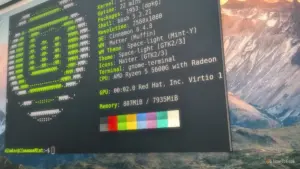
The Seamless Transition: Why Linux Mint Remains the Premier Gateway for Windows Refugees
For many veteran technology enthusiasts, the journey through the landscape of Unix-like...
 Tech Tutorials & How-To Guides
Bridging the Automation Gap: How Google Gemini is Transforming Smart Home Management Through Personal Intelligence
In the rapidly evolving landscape of the modern smart home, the promise...







