

Police forces and fire and rescue services throughout England and Wales are currently operating under a "significant and expanding" threat of cyberattacks, according to a stark new assessment from the national policing and fire inspectorate. The report, released by His Majesty’s Inspectorate of Constabulary and Fire & Rescue Services (HMICFRS), warns that a combination of aging technology, inadequate training, and a lack of strategic leadership has left essential emergency services dangerously exposed to digital disruption.
The findings highlight a troubling gap between the evolving sophistication of cybercriminals and the defensive capabilities of the UK’s first responders. While the inspectorate acknowledged that there have been marginal improvements in cybersecurity posture over the last six years, the pace of change has failed to keep up with the scale of the threat. For many services, cybersecurity remains a secondary concern rather than a core operational priority, a culture that the inspectorate warns could have catastrophic consequences for public safety and the integrity of sensitive data.
Michelle Skeer, His Majesty’s Inspector of Constabulary, emphasized that the danger is no longer a matter of theoretical speculation. "The cyber threat to police forces and fire and rescue services is significant and expanding rapidly," Skeer stated. "A major cyberattack is not a hypothetical scenario, and successful attacks have been disruptive, put the public at risk, and were expensive to fix." She urged leaders within these sectors to "urgently redouble their efforts" to address the systemic vulnerabilities that continue to plague their digital infrastructure.
The Burden of Legacy Infrastructure
At the heart of the crisis is an overwhelming dependence on legacy systems. According to the HMICFRS report, tech leaders within both police and fire services identified this reliance on outdated hardware and software as their single greatest strategic cybersecurity risk. These legacy systems, many of which were designed decades ago, often lack the security architecture necessary to defend against modern exploits. In many cases, these systems are so old that they are no longer supported by their original manufacturers, meaning they do not receive critical security patches to close known vulnerabilities.
The challenge of legacy tech is not merely one of hardware, but of integration. Many emergency services rely on complex, interconnected databases that house sensitive information regarding criminal investigations, victim records, and intelligence operations. When these databases run on obsolete platforms, they become the "weakest link" in the chain, providing an entry point for ransomware or state-sponsored actors to infiltrate the wider network. Upgrading these systems is often viewed as a prohibitively expensive and logistically daunting task, leading to a state of "technical debt" where services continue to patch over fundamental flaws rather than investing in modern, secure-by-design alternatives.
Third-Party Vulnerabilities and Data Integrity
Beyond internal systems, the report raised serious alarms regarding the security of third-party ICT suppliers. Police and fire services increasingly rely on external contractors to manage and store vast quantities of sensitive data. This includes intelligence on ongoing investigations, safeguarding information for vulnerable individuals, and detailed records of victims.
 Helpdesk & IT Service Management (ITSM)
OpenSSF and Tech Giants Call for Sustainable Funding to Secure Global Software Supply Chain
The OpenSSF (Open Source Security Foundation) Governing Board has issued an urgent...
 Helpdesk & IT Service Management (ITSM)
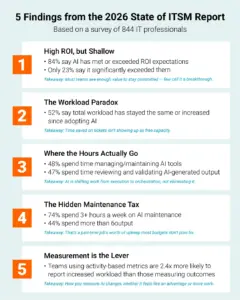
The Hidden Complexity of Efficiency: SolarWinds Report Reveals the Dual Nature of AI in the Modern Service Desk
The promise of artificial intelligence within Information Technology Service Management (ITSM) has...
 Helpdesk & IT Service Management (ITSM)
US Authorities Disrupt Major Chinese State-Sponsored Cyber Infrastructure Linked to Integrity Technology Group
In a significant blow to state-sponsored cyber espionage operations, the United States...







