

The inspectorate found that the oversight of these suppliers is often insufficient. If a third-party provider suffers a breach, the impact on the police service is immediate and severe. The report noted that the procurement and contract management processes for these IT suppliers are frequently lacking in robust cybersecurity requirements. Without stringent external validation and regular auditing of how these contractors handle data, the emergency services are essentially outsourcing their risk to entities that may not adhere to the same security standards required for national infrastructure.
The Human Factor: Training Gaps and Poor Security Hygiene
Technical flaws are only one part of the problem; the HMICFRS report also identified widespread human error as a primary driver of cyber risk. The "insider threat"—often unintentional rather than malicious—remains a persistent thorn in the side of organizational security. The report highlighted significant gaps in training, noting that many staff members lack a basic understanding of cyber hygiene.
One of the most glaring issues identified was the poor management of security controls during the lifecycle of an employee. The inspectorate found "unsatisfactory" procedures for staff joining, moving within, or leaving services. When employees transition between departments or leave the force entirely, their access rights to sensitive systems are often not updated or revoked in a timely manner. This creates a vast surface area for potential attacks, as dormant accounts with high-level permissions can be hijacked by external actors.
Furthermore, basic security measures that have become standard in the private sector are still not universally applied across the emergency services. Researchers found that poor password management remains rampant, and the implementation of multi-factor authentication (MFA)—a fundamental defense against unauthorized access—is inconsistent at best. Without MFA, a single compromised password can give an attacker full access to a service’s internal network, leading to data exfiltration or the deployment of ransomware.
A Crisis of Leadership and Resilience
Perhaps the most concerning finding in the report is the lack of commitment from senior leadership. Several high-ranking police and fire officials reportedly told inspectors that they did not consider cybersecurity to be a component of daily operational decision-making. Instead, it was viewed as a technical issue to be handled by IT departments rather than a strategic necessity for the entire organization.
This cultural disconnect has direct implications for how services prepare for and respond to incidents. The HMICFRS warned that arrangements for backing up and restoring ICT systems following an attack are currently "unsatisfactory." In the event of a total system failure caused by ransomware, many services would struggle to recover their data or maintain operational continuity.
 Helpdesk & IT Service Management (ITSM)
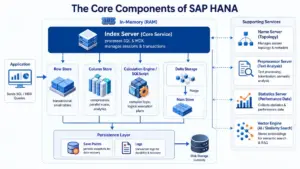
Decoding SAP HANA Architecture: How In-Memory Processing Redefines Enterprise Data Management
In the rapidly evolving landscape of enterprise technology, the ability to process...
 Helpdesk & IT Service Management (ITSM)
Nvidia Donates OpenShell to CNCF as Leadership Crisis Overshadows Strategic Open Source Pivot
The global technology landscape was recently jolted by the sudden and dramatic...
 Helpdesk & IT Service Management (ITSM)
NetApp Insight 2024: Navigating the Shift Toward AI Inference and Sovereign Data Infrastructure
As the autumn conference season gathers momentum, the technology industry’s focus has...







