
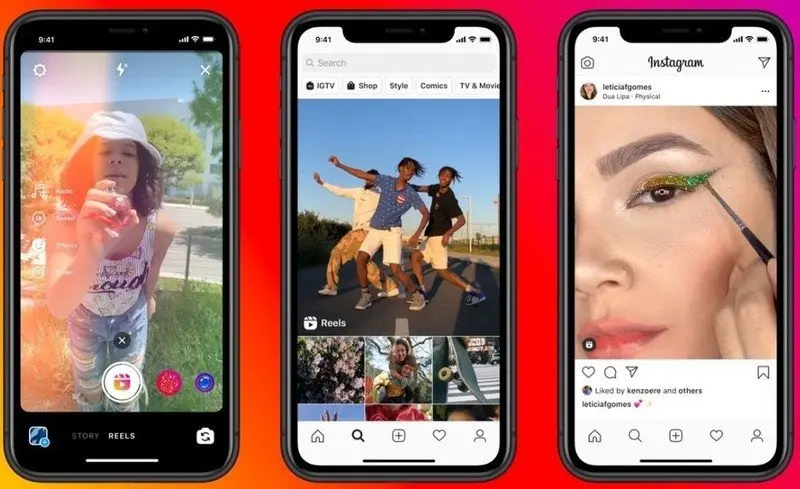
In a move that signals a fundamental shift in its product philosophy, Instagram has officially announced its intention to embrace widescreen, long-form video content. The announcement, which marks a significant departure from the platform’s historical emphasis on short-form vertical media, was made by the Head of Instagram, Adam Mosseri, and the platform’s Vice President of Product, Tessa Lyons. Through a joint video presentation, the executives introduced a new initiative titled "Features," which represents a concentrated investment in content that challenges the dominance of the short-form Reels format.
For years, Instagram has been defined by its verticality. From the original square-crop photos to the rise of Stories and the eventual explosion of Reels, the app has been designed primarily for the one-handed, vertical grip of a smartphone. However, as the digital landscape evolves and creators seek more robust ways to tell stories, Instagram is acknowledging that the constraints of short-form video may no longer be sufficient to satisfy the needs of its most influential users or the appetites of its global audience.
The Evolution of a Platform: From Resistance to Adoption
The introduction of "Features" is particularly notable given the historical stance of Adam Mosseri. During the announcement, Mosseri admitted that for a significant period, he was vocally opposed to the inclusion of long-form, horizontal content on Instagram. His hesitation was not rooted in a dislike for the format itself, but rather in a protective instinct regarding the platform’s core identity. Instagram’s primary value proposition has long been the "friend connection"—the ability to quickly see what people in your immediate social circle are doing.
Mosseri’s concern was that long-form content, which typically demands a more passive, lean-back viewing experience, might erode the active, social nature of the app. In a world where users spend twenty minutes watching a single high-production video, they are spending less time interacting with the photos and updates of their actual friends. Despite these long-standing reservations, Mosseri noted that "things have changed," suggesting that the competitive landscape and user behavior have reached a tipping point that necessitates a broader approach to video.
Tessa Lyons, speaking alongside Mosseri, expanded on this shift by highlighting the diversity of modern digital storytelling. She noted that creativity is a multifaceted concept that cannot be confined to a single format. While posts, carousels, and short-form Reels have their place, Lyons argued that creators are increasingly telling stories in ways that require more time and a different visual orientation. By introducing widescreen and long-form capabilities, Instagram aims to provide a home for these more complex narratives without forcing creators to migrate to rival platforms like YouTube.
Bridging the Gap Between Short and Long Form
One of the primary challenges facing Instagram as it integrates "Features" is maintaining a sense of "symbiosis" between different content types. Mosseri emphasized that the introduction of long-form widescreen video is not intended to replace the existing ecosystem but to complement it. The goal is to create a platform where a thirty-second Reel can serve as a discovery mechanism for a twenty-minute widescreen feature, and vice versa.
 Mobile Device Management (MDM) & Mobile OS
YouTube Explores Expansion into Audiobooks to Bolster Premium Subscription Value
The digital landscape is witnessing a significant shift as platform giants increasingly...
 Mobile Device Management (MDM) & Mobile OS
Google Reportedly Developing Next-Generation TV Streamer with Hands-Free Gemini and Presence-Sensing Technology
In the rapidly evolving landscape of home entertainment, Google appears to be...
 Mobile Device Management (MDM) & Mobile OS
Xiaomi 18 Fold Review: A Masterclass in Hardware Engineering Shackled by Software Borders
The trajectory of the foldable smartphone market has, for several years, been...







