
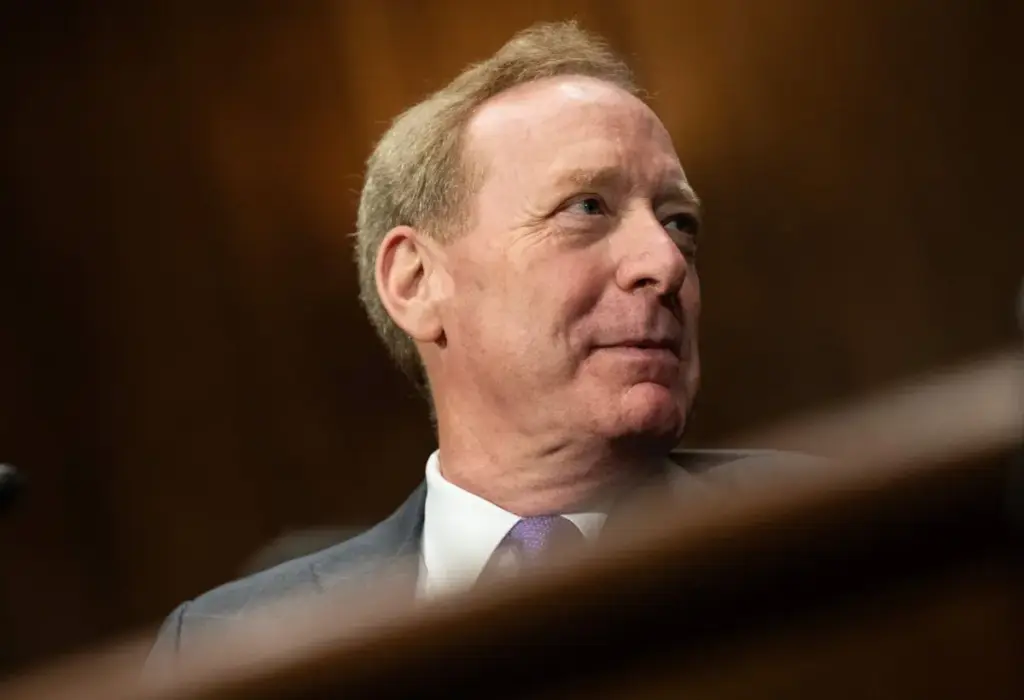
In a series of high-profile statements that signal a significant shift in how the technology industry views its own oversight, Microsoft’s top leadership has issued a call for a robust and comprehensive regulatory framework for artificial intelligence. Brad Smith, the vice chair and president of Microsoft, told the BBC that the current state of AI oversight is severely lacking, suggesting that the technology is significantly under-regulated compared to even the most mundane household items. In a candid assessment of the risks posed by the rapid advancement of generative models, Smith argued that the time has come for governments to impose greater legal obligations on organizations, particularly when their security is compromised by AI-driven threats or when the AI systems themselves cause harm.
During an appearance on the BBC’s Big Boss Interview podcast, Smith utilized a striking comparison to illustrate what he perceives as a dangerous gap in public policy. He pointed out that everyday consumer goods, which pose far less existential risk to society than advanced computation, are subject to a level of scrutiny that AI developers currently bypass. Smith noted that a standard washing machine is subject to more safety rules than the most sophisticated AI models being deployed today. He extended this metaphor to the food industry, observing that every carton of milk found in a grocery store is subject to rigorous safety rules, standardized inspections, and clear labeling requirements. The implication was clear: if society demands such high standards for physical goods, it is illogical to allow digital systems with the potential to reshape economies and security landscapes to operate in a relative vacuum of accountability.
According to Smith, AI must be understood as both a "tool and a weapon." This dual-use nature necessitates a proactive approach to safety that goes beyond voluntary corporate pledges. Among the specific measures he proposed was the implementation of "kill switches" for AI systems. These mechanisms would be designed to allow operators or regulators to shut down a system immediately if it begins to behave in an unpredictable or dangerous manner. Furthermore, Smith called for a formal legal requirement for AI companies to create detailed incident reports. Much like the aviation industry, where every near-miss or technical failure is documented to improve the safety of the entire sector, Smith believes AI firms should be legally mandated to disclose breaches and inform any victims of AI-related failures or security lapses.
A central theme of Smith’s argument was the necessity of independent oversight. He suggested that new AI technology should be evaluated by government bodies that operate independently of the companies developing the software. In a move that highlights the shifting dynamics of global tech diplomacy, Smith identified the United Kingdom as the country best positioned to lead this international effort. He specifically referenced the work of the UK’s AI Security Institute (AISI), an organization established to evaluate the risks of frontier AI models. Smith expressed a high degree of confidence in the UK’s technical and regulatory capabilities, stating that the government in London is currently in the best position to advance global AI safety standards and establish enforceable rules.
 Helpdesk & IT Service Management (ITSM)
Overe Appoints Former Sophos CSO Simon Reed as Strategic Advisor to Accelerate MSP Security Growth
In a significant move aimed at strengthening its leadership and deepening its...
 Helpdesk & IT Service Management (ITSM)
Omnissa Appoints Industry Veteran Amit Singh as CEO to Lead Expansion into Agentic AI and Secure Digital Workspaces
Omnissa, a prominent global provider of digital work platforms, has announced a...
 Helpdesk & IT Service Management (ITSM)
Softcat Announces Strategic Acquisition of GDT to Establish Premier Transatlantic IT Solutions Platform
In a move that signals a significant shift in its international growth...







