

In the sweeping six-decade history of commercial information technology, certain milestones stand out as the ultimate drivers of corporate wealth and industrial transformation. For decades, the benchmark for high-margin, high-impact hardware was the IBM mainframe. In the 1970s, the monolithic systems technology of the System/370 defined the era, followed in the 1980s by the thermal conduction module packaging of the System/3081. These were the engines of the global economy, commanding massive premiums and delivering unprecedented profits.
However, a new contender has emerged that may well eclipse the legendary profitability of the mainframe. High Bandwidth Memory (HBM), specifically stacked DRAM, is currently positioning itself as perhaps the most lucrative product ever conceived in the IT sector. While historical comparisons depend on how one allocates costs and revenues across vastly different eras of computing, the current trajectory of HBM packaging suggests it has surpassed the golden age of Big Blue’s hardware dominance.
The valuation of advanced packaging has never been higher, and its importance has never been more critical. As the generative AI revolution continues to reshape the global economy, the growth of the HBM market—and the subsequent financial performance of its primary architects, Micron Technology, Samsung, and SK Hynix—is skyrocketing at a pace that far outstrips the historical growth of the mainframe. This phenomenon is more than just a financial trend; it is the fundamental infrastructure underpinning the meteoric rise of Nvidia and AMD. Without the high-bandwidth stacked DRAM produced by these three firms, the GenAI revolution would have been a technical impossibility.
A Financial Performance for the Ages
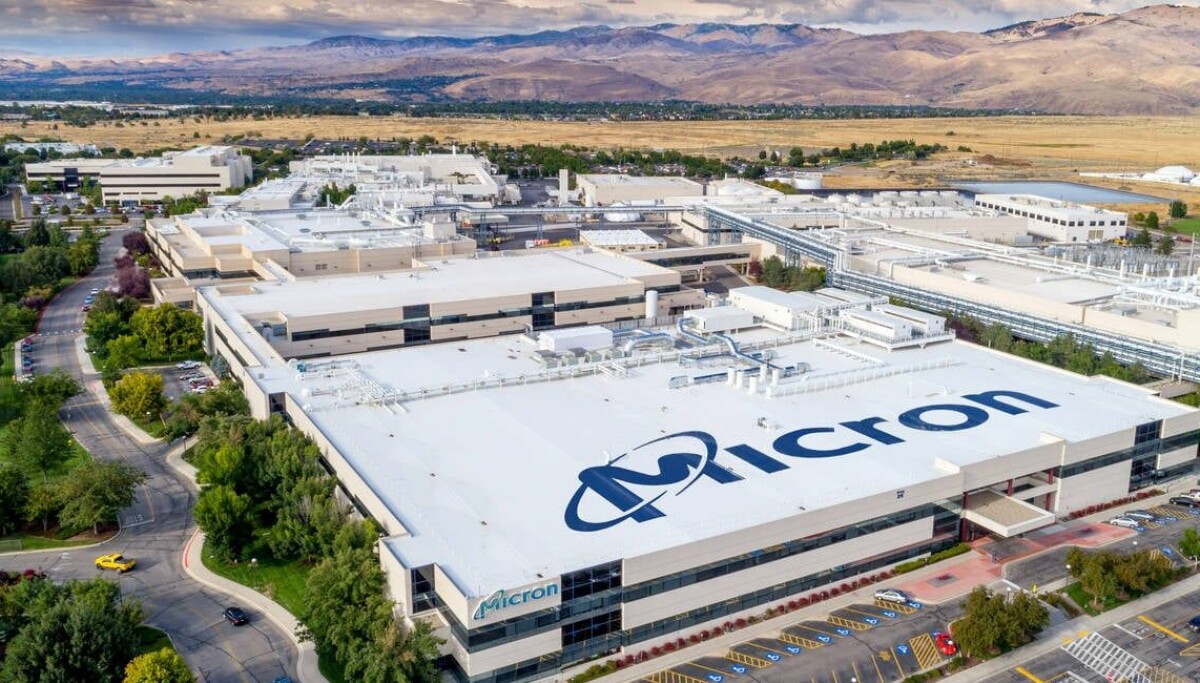
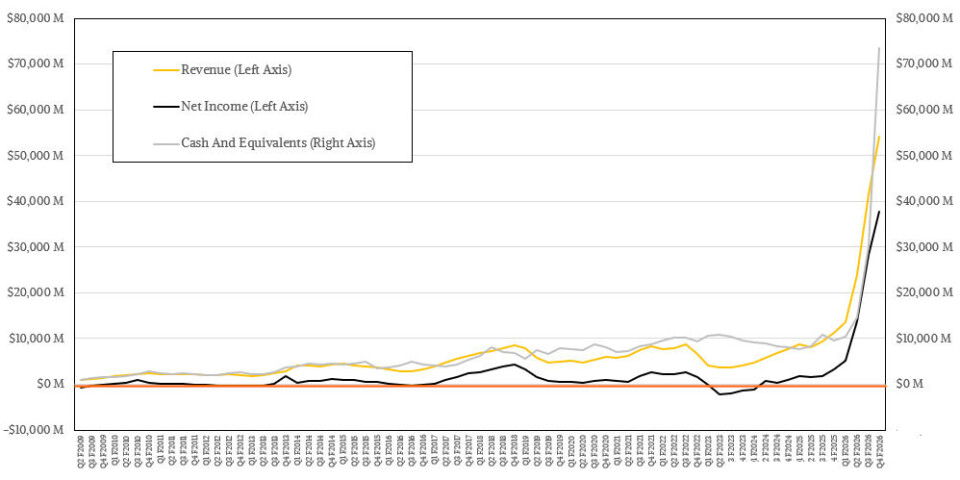
The scale of this boom is best illustrated by the most recent financial results from Micron Technology. For its fiscal 2026, which concluded on September 3, the company reported numbers that can only be described as staggering. Micron’s quarterly revenues surged to $54.23 billion, representing a 4.8-fold increase year-on-year. The profitability metrics were even more aggressive: operating income rose nearly 12-fold compared to the previous year, reaching $43.75 billion, while net income followed a similar 12-fold trajectory to hit $37.7 billion.
Perhaps most impressively, Micron is currently bringing 69.5 percent of its total revenue directly to the bottom line. Despite this massive influx of capital, the company is maintaining a disciplined approach to expansion. With $73.45 billion in cash on hand—a 7.6-fold increase from the prior year—Micron has the liquidity to build nearly four new fabrication plants (fabs) immediately. Yet, it limited its capital expenditures to $10.77 billion during the period.
This restraint highlights a fundamental reality of semiconductor manufacturing: complexity cannot be bypassed by sheer capital. Building a modern foundry is a serial process that defies parallelization; as the industry saying goes, you cannot have nine women produce a baby in one month. Beyond the physical limitations of construction, Micron and its peers are exercising a level of strategic discipline reminiscent of OPEC’s management of oil supplies.
The End of the Boom-Bust Cycle?
Historically, the memory business has been defined by volatile boom-bust cycles. Manufacturers would traditionally overproduce during periods of high demand, leading to an eventual oversupply that crashed prices and wiped out margins. In the current era, however, the major DRAM and flash vendors appear determined to avoid this pitfall. With demand for AI hardware continuing to outpace supply, Micron, Samsung, and SK Hynix are prioritizing margin preservation and price stability over market share grabs.
 Enterprise Tech & Infrastructure
Optimizing Amazon S3: How Enterprises Navigate the Hidden Complexities of Cloud Storage Costs
The primary catalyst for overspending on Amazon Simple Storage Service (S3) is...
 Enterprise Tech & Infrastructure
The Architecture of Performance: Balancing Redundancy and Speed with RAID 10
In the complex landscape of enterprise data storage, the selection of a...
 Enterprise Tech & Infrastructure
AMD Acquires World Labs for $8.2 Billion to Rival Nvidia in the Frontier of World Models
In a massive strategic move designed to reshape its standing in the...







