

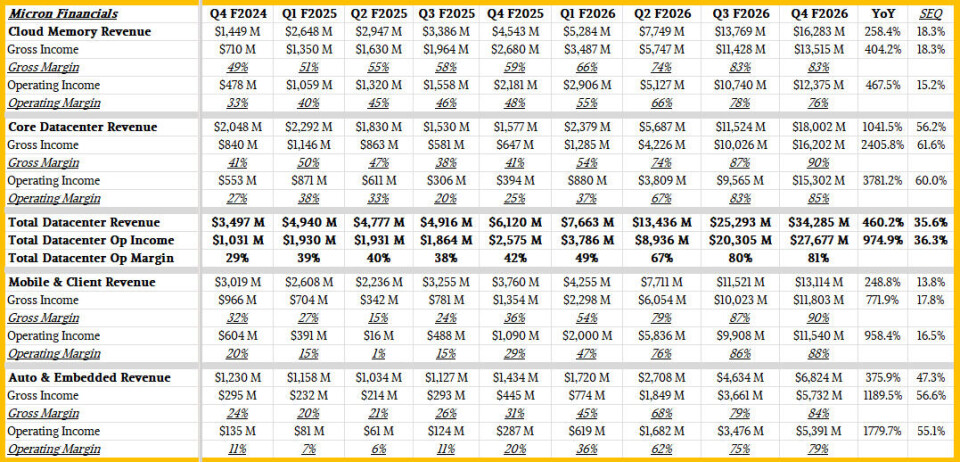
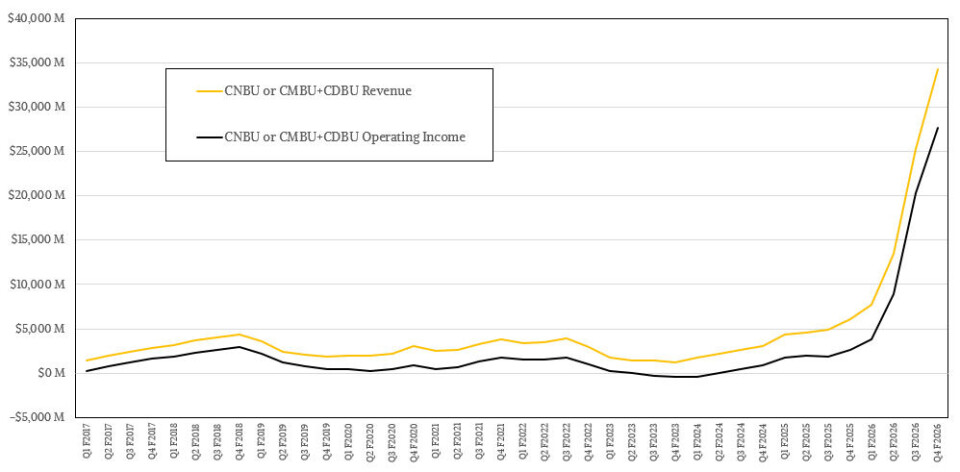
When combining the Cloud Memory unit with the Core Datacenter business—which handles standard DRAM and flash for enterprise use—the total datacenter revenue reached $34.29 billion. This represents a 5.6-fold increase year-on-year. The operating income from these datacenter products accounted for 81 percent of their total revenue, illustrating that the modern server farm has become the most profitable environment in Micron’s history.
Looking Toward HBM4 and the Future of Custom Silicon
The roadmap for the next several years suggests that this trend will only intensify. Micron CEO Sanjay Mehrotra has confirmed that the company has already secured agreements for the majority of its HBM supply through the 2027 calendar year. These deals include significant year-over-year price increases intended to bring the profit profile of HBM even closer to that of conventional DRAM, which currently benefits from more mature manufacturing yields.
The industry is now looking toward the HBM4 and HBM4E cycles. Micron is working closely with Nvidia on the first custom-HBM4E implementation, known as NVHBM. This technology will be integrated into the next generation of Nvidia GPUs and NVLink Fusion platforms, further tightening the bond between the memory providers and the chip designers.
However, the path forward is not without technical hurdles. As HBM stacks grow taller—moving from eight to twelve and eventually sixteen layers—and speeds increase, the manufacturing complexity rises exponentially. Higher stacks are more prone to defects, meaning the "yield" (the percentage of functional units) tends to decrease. This inherent difficulty in manufacturing acts as a natural limit on supply, which in turn supports the high pricing levels. Micron anticipates that DRAM bit growth will slow slightly in 2027 and 2028 as the industry grapples with these technical challenges, while flash capacity will likely expand more rapidly.
Conclusion: A Market Worth More Than Gold
The current state of the memory market is perhaps best summarized by the sheer value of the product being shipped. A twelve-high HBM stack weighs approximately a quarter of a gram. Depending on the contract, one of these stacks can cost between $500 and $600. To put that in perspective, it takes about 125 of these stacks to equal one troy ounce.
At these rates, the cost of HBM4 reaches between $62,500 and $75,000 per troy ounce. With gold currently trading at approximately $4,176 per troy ounce, a single HBM4 stack is worth between 15 and 18 times its weight in gold.
This "strange new world" of semiconductor economics is driven by a desperate need for bandwidth in the age of artificial intelligence. Micron’s customers have already provided $32 billion in prepayments just to secure their place in line, contributing to the company’s massive cash reserves. With a revenue backlog of $150 billion in fixed-price contracts, Micron has effectively locked in its prosperity for the remainder of the decade. While the mainframe era was defined by the size of the machines, the GenAI era is being defined by the incredible value packed into the microscopic layers of stacked DRAM. For now, Micron is not just participating in the AI revolution; it is reaping the rewards of providing the essential, high-priced fuel that makes it possible.
 Enterprise Tech & Infrastructure
Protecting the Enterprise Perimeter: The Evolving Security Challenges of DAS and NAS Storage
In the modern enterprise landscape, data is often described as the new...
 Enterprise Tech & Infrastructure
The Long Road to Open Silicon: How OpenTitan and the Rise of Secure Roots of Trust are Reshaping the Semiconductor Industry
The 2018 Hot Chips conference served as a pivotal moment for the...
 Enterprise Tech & Infrastructure
The Strategic Role of RAID 10 in Modern Enterprise Storage Architecture
In the high-stakes world of enterprise data management, the choice of a...







