
In the demanding ecosystem of small business management, success is often measured by the sheer resilience of the individuals behind the wheel. For many entrepreneurs, the workday does not conclude at five o’clock; it continues through the evening as they respond to customer inquiries at 9 p.m. or meticulously update the "source of truth" spreadsheet that serves as the backbone of their entire operation. In these environments, time is the most precious commodity, and the pressure to achieve more with a lean team is a constant reality. Consequently, any technology promising to alleviate the administrative burden naturally captures the attention of business owners looking for a competitive edge.
However, the introduction of Artificial Intelligence (AI) into a small business often comes with what many describe as an "AI tax." This tax manifests as the hidden costs of adoption: another complex tool for the staff to master, another disparate system to integrate into an already crowded tech stack, and another potential silo where critical information can be misplaced. For many, the challenge has never been a lack of belief in what AI can do in a vacuum; rather, it has been the difficulty of weaving that technology into the established, delicate processes that keep a business functional.
The ultimate metric for any new technology in this sector is whether it successfully removes mental clutter from the owner’s head or simply adds more to it. Recognizing this friction, Microsoft has announced a strategic shift in its product lineup designed specifically to meet the needs of smaller enterprises. On July 1, the company will officially introduce new Microsoft 365 SKUs that feature Copilot as a built-in component rather than an optional add-on. These new offerings—Microsoft 365 Business Standard with Copilot and Microsoft 365 Business Premium with Copilot—are engineered to fit into the workflows small businesses already utilize every day.

AI that is Built In, Not Bolted On
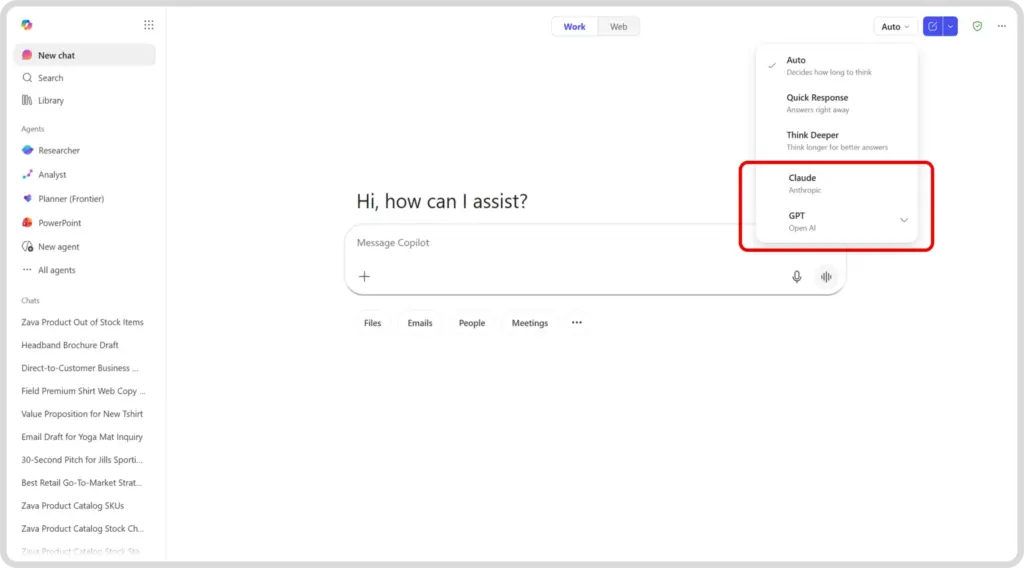
The core philosophy behind these new Microsoft 365 offerings is the elimination of the "bolted-on" feel that often plagues third-party AI integrations. By embedding Copilot directly into the world-class productivity tools that hundreds of millions of people use daily—such as Word, Excel, PowerPoint, and Outlook—Microsoft aims to change the fundamental nature of how work is completed. When AI is native to the application, it moves from being a destination to being a collaborator.
In a practical sense, this integration translates to a significant reduction in the time elapsed between a task’s conception and its completion. For a small business, the speed of response can often be the difference between winning a contract and losing it to a more agile competitor. With Copilot integrated into the workflow, a complex project proposal can be drafted and sent the same day it is requested, rather than languishing for three days on a to-do list. Similarly, invoices can be generated and dispatched immediately after a job is finished, ensuring that the billing cycle begins before the details of the work are forgotten.
This responsiveness extends to customer service and vendor relations. Imagine a scenario where a customer asks a nuanced question; instead of the typical "let me get back to you" response, a business owner can leverage Copilot to surface the necessary data and provide an answer while the customer is still on the line. Vendor communications also benefit from this immediacy, allowing for substantive replies that move projects forward without the usual administrative delays. By residing within the tools already in use, the AI removes the friction of switching contexts, allowing business owners to stay in the flow of their work.
 Productivity Software & Office Suites
Microsoft Unveils ‘Autopilots’ and Scout: A New Frontier for Autonomous AI Agents in the Enterprise
The nature of professional productivity is undergoing a fundamental shift, moving away...
 Productivity Software & Office Suites
Microsoft Announces Microsoft 365 G7 and Agent 365 to Accelerate AI Adoption and Governance Across U.S. Government Agencies
In an era where the public sector faces the dual challenge of...
 Productivity Software & Office Suites
Microsoft Reimagines Copilot as a Central Hub for AI-Driven Work and Autonomous Agents
In a significant shift for the future of digital productivity, Microsoft has...







