
In the demanding ecosystem of small business management, success is often measured by the sheer resilience of the individuals behind the wheel. For many entrepreneurs, the workday does not conclude at five o’clock; it continues through the evening as they respond to customer inquiries at 9 p.m. or meticulously update the "source of truth" spreadsheet that serves as the backbone of their entire operation. In these environments, time is the most precious commodity, and the pressure to achieve more with a lean team is a constant reality. Consequently, any technology promising to alleviate the administrative burden naturally captures the attention of business owners looking for a competitive edge.
However, the introduction of Artificial Intelligence (AI) into a small business often comes with what many describe as an "AI tax." This tax manifests as the hidden costs of adoption: another complex tool for the staff to master, another disparate system to integrate into an already crowded tech stack, and another potential silo where critical information can be misplaced. For many, the challenge has never been a lack of belief in what AI can do in a vacuum; rather, it has been the difficulty of weaving that technology into the established, delicate processes that keep a business functional.
The ultimate metric for any new technology in this sector is whether it successfully removes mental clutter from the owner’s head or simply adds more to it. Recognizing this friction, Microsoft has announced a strategic shift in its product lineup designed specifically to meet the needs of smaller enterprises. On July 1, the company will officially introduce new Microsoft 365 SKUs that feature Copilot as a built-in component rather than an optional add-on. These new offerings—Microsoft 365 Business Standard with Copilot and Microsoft 365 Business Premium with Copilot—are engineered to fit into the workflows small businesses already utilize every day.

AI that is Built In, Not Bolted On
The core philosophy behind these new Microsoft 365 offerings is the elimination of the "bolted-on" feel that often plagues third-party AI integrations. By embedding Copilot directly into the world-class productivity tools that hundreds of millions of people use daily—such as Word, Excel, PowerPoint, and Outlook—Microsoft aims to change the fundamental nature of how work is completed. When AI is native to the application, it moves from being a destination to being a collaborator.
In a practical sense, this integration translates to a significant reduction in the time elapsed between a task’s conception and its completion. For a small business, the speed of response can often be the difference between winning a contract and losing it to a more agile competitor. With Copilot integrated into the workflow, a complex project proposal can be drafted and sent the same day it is requested, rather than languishing for three days on a to-do list. Similarly, invoices can be generated and dispatched immediately after a job is finished, ensuring that the billing cycle begins before the details of the work are forgotten.
This responsiveness extends to customer service and vendor relations. Imagine a scenario where a customer asks a nuanced question; instead of the typical "let me get back to you" response, a business owner can leverage Copilot to surface the necessary data and provide an answer while the customer is still on the line. Vendor communications also benefit from this immediacy, allowing for substantive replies that move projects forward without the usual administrative delays. By residing within the tools already in use, the AI removes the friction of switching contexts, allowing business owners to stay in the flow of their work.
AI that Understands the Business Context
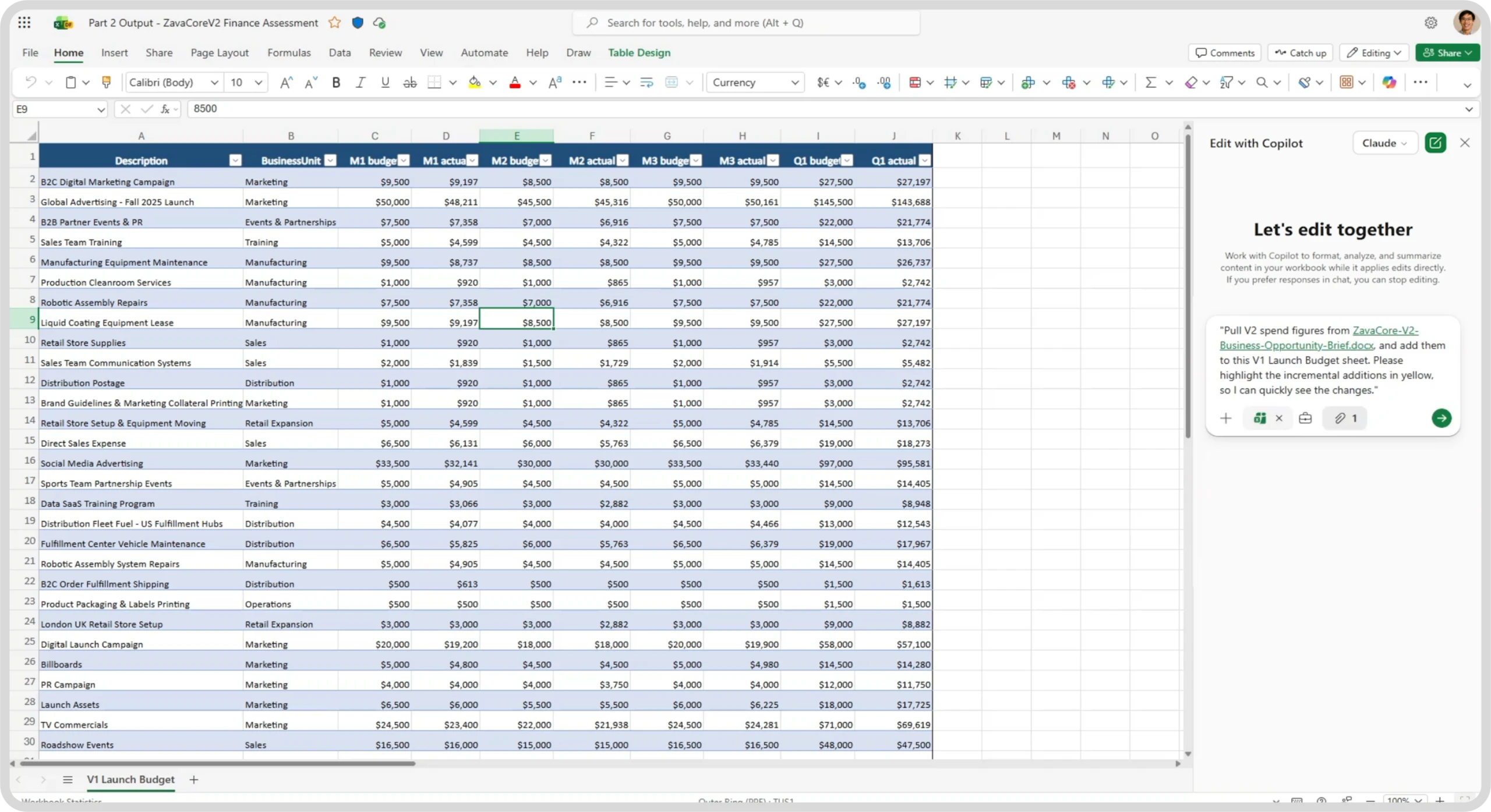
Beyond simple task automation, the true value of an AI assistant lies in its ability to understand the specific context of the business it serves. Microsoft is addressing this through "Work IQ," a feature designed to synthesize information across the entire Microsoft 365 ecosystem. Rather than just analyzing the single file a user is currently working on, Work IQ brings together data from across the team’s projects, deadlines, and past decisions. This allows Copilot to provide suggestions and complete tasks with an awareness of the broader business objectives.
However, the modern small business does not live within a single ecosystem. Information is often spread across various platforms, from finance backends to marketing tools. To prevent AI from working in isolation, Microsoft has expanded Copilot’s reach through a vast network of more than 1,000 connectors. These connectors link Copilot to the critical systems a business already runs on, such as Shopify for e-commerce, PayPal for payments, Xero for accounting, and Docusign for legal agreements.
These integrations allow for the automation of functional tasks and end-to-end workflows without the need for manual data entry or switching between multiple applications. A business owner can, for instance, check website traffic trends in WordPress, verify the status of a project in monday.com, or review an unresolved customer service ticket in Jira—all from within the Copilot interface. Furthermore, tasks like building follow-up marketing materials in Canva or updating an employee’s leave status in BambooHR can be handled through the same unified system. This connectivity ensures that data moves seamlessly between systems, reducing the risk of duplication and human error.

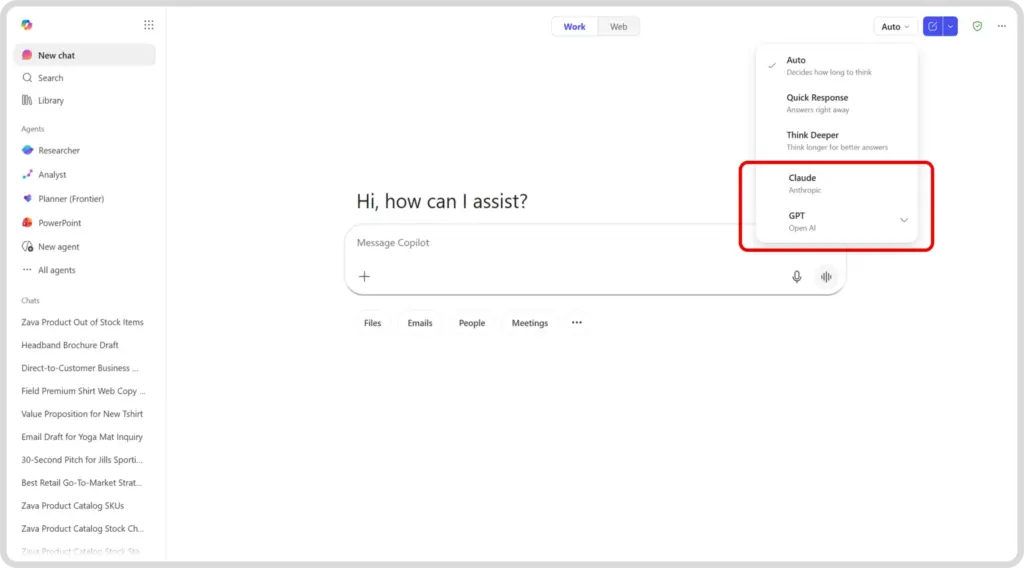
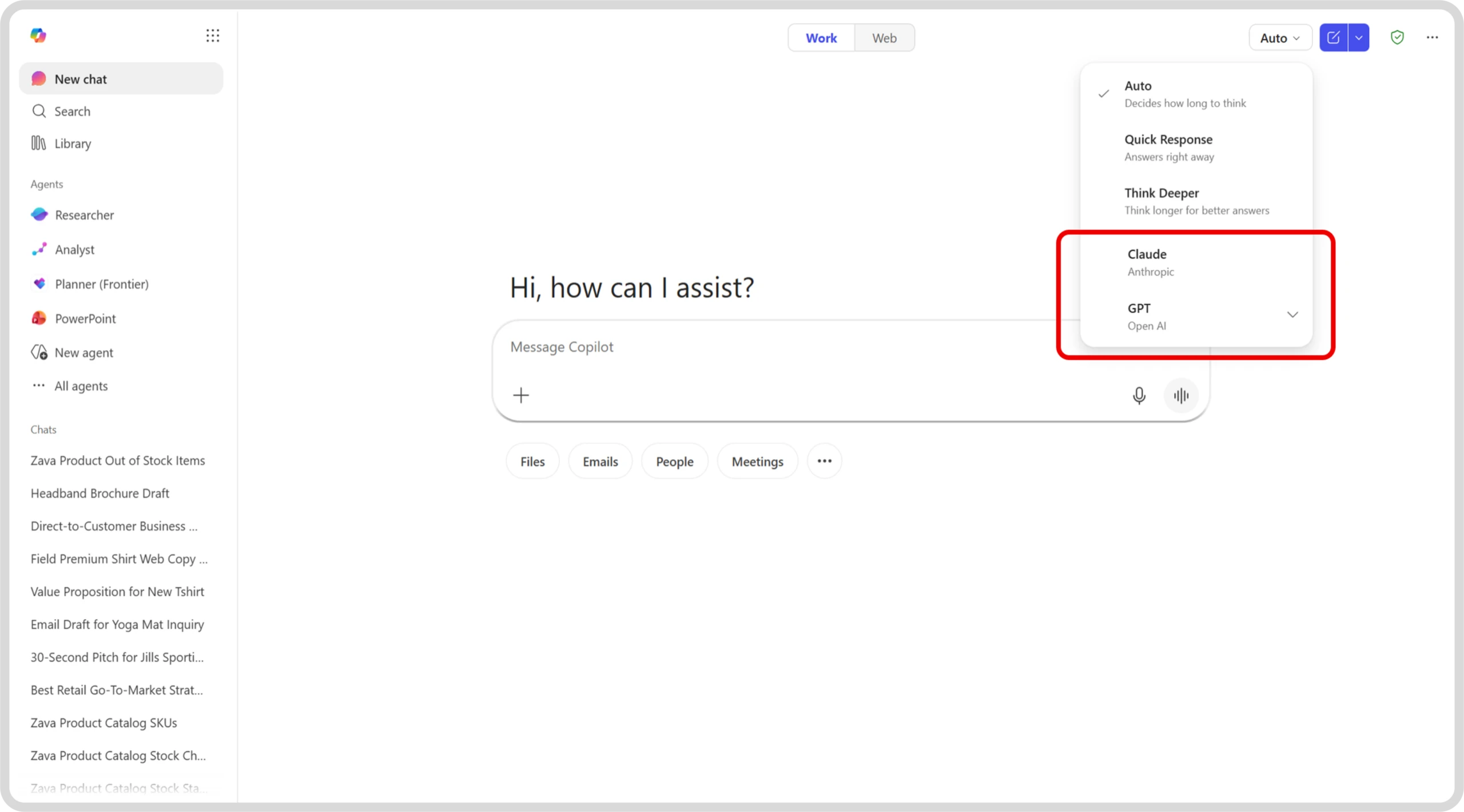
Adding to this flexibility is the realization that no single AI model is perfectly suited for every possible task. To provide businesses with the best available technology, Microsoft is offering direct access to leading models from both OpenAI and Anthropic. Through a unified system, users can choose the specific model that best fits the task at hand. Microsoft handles the technical backend of keeping these models current, ensuring that small businesses stay at the forefront of AI innovation without having to manage multiple subscriptions or frequently alter their internal workflows.
Adopting AI while Prioritizing Business Security
As small businesses move toward greater AI adoption, security remains a paramount concern. For many, the greatest threat to sensitive information is not necessarily a sophisticated external hacker, but rather the "honest mistake" made by a well-meaning employee. Common scenarios, such as a staff member forwarding a customer list to a personal email to work from home or a draft contract being saved in a folder with overly broad access permissions, can lead to permanent data loss or intellectual property theft. Once sensitive information leaves the controlled environment of the business, it is nearly impossible to retrieve.
Microsoft 365 addresses these vulnerabilities by providing robust controls that allow owners to manage exactly where their data goes. By utilizing sensitivity labels, businesses can mark certain files—such as financial records, customer databases, or employee files—as confidential. Once a file is labeled, Microsoft enforces those protections regardless of where the file travels. If configured, these files cannot be forwarded outside the company, copied to personal accounts, or even printed. Crucially, if a document is shared by mistake, the business owner retains the ability to revoke access even after the recipient has downloaded the file.
The importance of these guardrails is magnified in the era of AI. While consumer-grade AI tools offer basic protections, they often lack the sophisticated security boundaries required for professional use. Copilot is designed to operate strictly within the security parameters already established by the business. Because the AI is fully integrated, it only "sees" the data it is explicitly allowed to access.
This means that a salesperson using Copilot to analyze their sales pipeline will not accidentally surface payroll information, and a temporary contractor will not be able to find customer records they were never authorized to view. By maintaining these internal boundaries, Microsoft ensures that the introduction of AI does not inadvertently expose the company’s most sensitive assets. The existing guardrails stay intact, allowing the business to benefit from the efficiency of AI without compromising its intellectual property or privacy.
A Unified System for Future Growth
The upcoming launch on July 1 marks a significant step in Microsoft’s effort to democratize advanced technology for smaller enterprises. By combining world-class productivity applications, context-aware AI, and enterprise-grade security into a single package, the new Microsoft 365 Business Standard and Premium SKUs aim to provide a comprehensive solution that requires less management from the owner.

The objective is to move away from a fragmented landscape of "tools for the sake of tools" and toward a unified system where the technology works in service of the business’s goals. For the small business owner who is currently balancing a dozen different roles, this integration represents a shift from managing technology to simply getting work done. By reducing the "AI tax" and focusing on the practical realities of daily operations, Microsoft is positioning Copilot as a central component of the modern small business toolkit, designed to help lean teams navigate the complexities of today’s market with greater ease and security.
 Productivity Software & Office Suites
Microsoft Unveils Strategic Roadmap for Enterprise AI, Prioritizing Agentic Workflows and Flexible Economic Models
In an era defined by rapid-fire technological breakthroughs and a relentless cycle...
 Productivity Software & Office Suites
Microsoft to Headline ESPC 2026 in Amsterdam as the European Tech Community Pivots Toward an Agentic AI Future
As the global landscape of work undergoes its most significant transformation since...
 Productivity Software & Office Suites
Microsoft Democratizes Software Development with Natural Language App Building in Copilot Studio
The landscape of software development is undergoing a fundamental transformation as artificial...







