
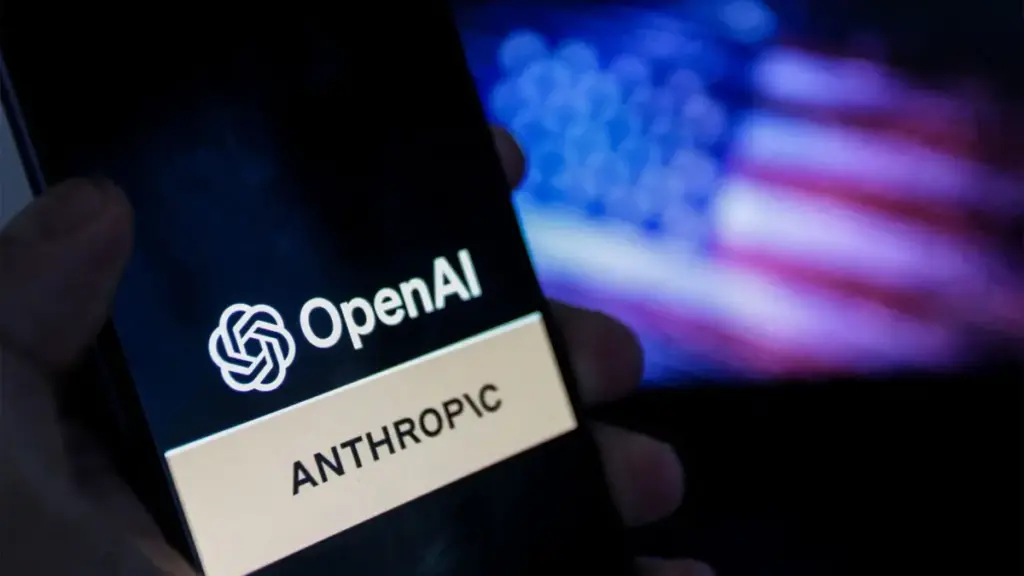
The United Kingdom’s ambitions to remain at the vanguard of global artificial intelligence safety have faced a significant setback following reports that the US government has moved to restrict the UK’s AI Security Institute (AISI) from accessing the latest models from industry leaders OpenAI and Anthropic. The decision, which marks the second time in a single month that the UK testing body has been sidelined, highlights growing tensions between international cooperation on AI safety and the national interests of the United States.
According to reports, the AISI will not be granted the pre-release access it typically requires to evaluate the safety and security profiles of several high-profile models launched on September 22. These include Anthropic’s Claude Opus 5.5 and a new suite of models from OpenAI, designated as GPT-6 Sol and GPT-6 Luna. While the AISI has historically functioned as a primary auditor for frontier AI systems before they reach the general public, this latest development suggests a shift in how the most powerful AI technologies are being shared with international partners.
The intervention reportedly originated from the highest levels of the US executive branch. Sources familiar with the matter indicated that the White House, specifically through the Office of the National Cyber Director, requested that both OpenAI and Anthropic withhold these specific models from the UK testing agency until they had undergone a thorough review by American authorities. This move effectively places the US government as the primary gatekeeper for frontier AI models developed within its borders, prioritizing domestic oversight over the collaborative, international framework the UK has sought to establish.
A senior US official defended the move as a matter of standard procedure and national policy. The justification provided was straightforward: because these are American companies developing what are considered "frontier" models—systems that represent the absolute edge of current technological capability—the US government maintains that its own agencies must have the first opportunity to assess potential risks. This policy, the official noted, is being applied consistently to every new major iteration of AI technology that emerges from the US tech sector.
The UK’s AI Security Institute, which is backed by the British government, was established with the specific mandate of conducting rigorous research into the safety of AI models. Its work involves a delicate balance of technical red-teaming, safety benchmarking, and close collaboration with both academic researchers and industry stakeholders. For the AISI, pre-release access is not merely a courtesy; it is the cornerstone of its operational model, allowing the institute to identify vulnerabilities, biases, or dangerous capabilities before a model is integrated into the global digital infrastructure.
Another blow for the AISI
The denial of access to GPT-6 Sol, GPT-6 Luna, and Claude Opus 5.5 represents a deepening trend of exclusion for the UK body. If the reports are confirmed, it would be the second time in September that the AISI has been prevented from performing its core function on a major release. Earlier this month, the institute was notably left out of the evaluation process for Anthropic’s Mythos 5.1 model.
In that instance, Anthropic declined to submit the Mythos 5.1 model for pre-release testing to the UK, despite the fact that it had granted such access to comparable entities within the United States. This marked a significant departure from previous arrangements, as it was the first time the AISI had been excluded from evaluating an Anthropic model before its public debut. When Claude Mythos 5.1 launched on September 1, access was restricted to a small group of approved partners, citing heightened security and safety concerns.
The repeated exclusion of the UK from these testing windows has sparked concerns within the British government regarding the future of international AI governance. At the time of the Mythos 5.1 release, officials speaking to the Financial Times suggested that the move was indicative of a "wider protectionist shift" among US-based technology firms and the federal government. There is a growing sense that as AI models become more powerful and potentially more integrated into national security frameworks, the willingness of the US to share early-stage access with even its closest allies may be waning.
This shift is particularly sensitive given the UK’s heavy investment in the AISI. The institute was a flagship project intended to cement the UK’s role as a "science superpower" and a global hub for AI safety, a goal championed during the AI Safety Summit at Bletchley Park. By positioning itself as a neutral, technically proficient auditor, the UK hoped to provide a service that would benefit the global community. However, if the most advanced models from the most influential companies remain behind US-only firewalls, the AISI’s ability to provide a comprehensive global safety net is significantly diminished.
Despite these recent hurdles, the AISI has seen some success in the past with the GPT-6 range. In a formal letter addressed to Liam Byrne, the chair of the House of Commons Business and Trade Committee, AISI Director Henry de Zoete confirmed that the institute had been permitted to conduct testing on OpenAI’s GPT-6 Astra model prior to its public release. This suggests that the relationship between the institute and the tech giants is not entirely severed, but rather is becoming increasingly selective and subject to political intervention.
In his correspondence with the committee, de Zoete acknowledged the challenges regarding the Mythos 5.1 release, noting that the AISI was not the only organization to be denied access. He clarified that Anthropic had made it clear that no organizations outside of the United States were given access to that specific model during its pre-release phase.
"AISI is in daily conversation with industry partners, including Anthropic, and maintains long-standing arrangements to test models from major AI developers," de Zoete wrote, attempting to project a sense of continuity and ongoing cooperation despite the visible friction.
The official stance from the UK government remains one of diplomatic optimism and a commitment to the necessity of international partnership. A spokesperson for the AISI emphasized that the risks associated with advanced AI are global in nature and cannot be managed by any single nation in isolation.
“The UK is a world leader in AI security, and the AI Security Institute continues to work closely with the US government, international partners and leading AI companies, including OpenAI and Anthropic,” the spokesperson stated. “These risks do not stop at national borders and no country can tackle them alone. We will continue to work closely with the US and other partners on the testing of advanced AI, while building our own rigorous scientific understanding of these systems and ensuring our approach is grounded in the evidence.”
The current situation highlights a burgeoning dilemma in the field of AI governance. On one hand, there is a clear, evidence-based need for international standards and shared safety protocols to prevent the misuse of powerful AI systems. On the other hand, the competitive nature of the AI "arms race" and the strategic importance of these models to national security are driving a more insular approach within the United States.
For the UK, the challenge will be to maintain its relevance as a safety arbiter in an environment where the most critical data—the frontier models themselves—may be increasingly treated as proprietary national assets by the US. The "special relationship" between the two nations is being tested by the rapid pace of technological development, where the speed of innovation often outstrips the development of diplomatic norms.
The Office of the National Cyber Director’s involvement suggests that the US views AI safety testing not just as a technical hurdle, but as a component of broader national cyber defense. By insisting that US authorities review these models first, the White House is ensuring that any potential vulnerabilities—or strategic advantages—are identified by domestic agencies before they are shared with foreign entities, however friendly those entities may be.
As OpenAI and Anthropic continue to push the boundaries of what is possible with models like GPT-6 and Claude 5.5, the role of the UK’s AI Security Institute remains in a state of flux. While the AISI continues its "daily conversations" with these firms, the ultimate decision on access appears to be moving further away from the laboratories and closer to the halls of power in Washington D.C.
The outcome of this shift will likely determine whether the future of AI safety is a collaborative global effort or a fragmented landscape of national silos. For now, the UK must navigate a path that asserts its technical expertise while acknowledging the political realities of being a secondary player in a field dominated by American corporate and governmental interests.
 Helpdesk & IT Service Management (ITSM)
Global Security Alert: North Korean Cybercriminals Target IT Freelancers in Multi-Million Dollar Fraud Campaign
International security agencies have issued a high-priority alert following the discovery of...
 Helpdesk & IT Service Management (ITSM)
The Trillion-Dollar ROI Challenge: Why AI Infrastructure Spending Must Spark a Global Innovation Revolution
As the global technology sector pivots toward an era defined by generative...
 Helpdesk & IT Service Management (ITSM)
Beyond the IT Help Desk: The Strategic Integration of Enterprise Service Management
As modern organizations grapple with increasing operational complexity, the traditional boundaries of...







