
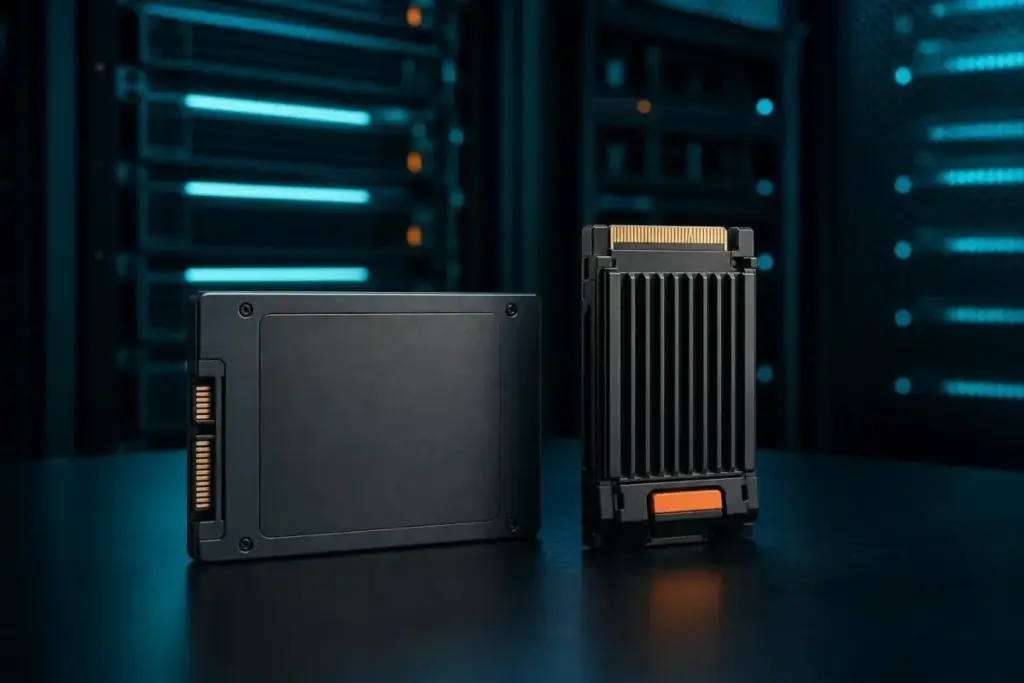
Form factors also play a role in this ecosystem. The M.2 format is a common sight in modern laptops and servers, but it is important to remember that M.2 is a physical shape, not a performance specification. An M.2 drive can be either an ultra-fast NVMe device or a slower SATA device, depending on the internal architecture. Conversely, the traditional 2.5-inch form factor remains the standard for systems requiring SATA compatibility or for high-capacity enterprise drives that require more physical space for heat dissipation and additional NAND chips.
Measuring Longevity and Realistic Expectations
For enterprise buyers, the most critical metric on a datasheet is often endurance, usually expressed as Total Bytes Written (TBW). This figure represents the amount of data that can be written to the drive over its lifetime before the NAND cells are expected to fail. However, TBW is not a static number; it is highly dependent on the nature of the workload.
Data provided by Micron for its 6550 ION SSD series illustrates this variability. A drive might be rated for 112,000TB of endurance when subjected to a 128KB random-write pattern, but that same drive’s endurance might plummet to 28,000TB when dealing with a 4KB random-write pattern. This discrepancy occurs because smaller write sizes often lead to higher "write amplification," where the controller must move more data internally to accommodate the small changes. SK Hynix recommends that organizations look beyond the headline TBW figures and request endurance data that matches their specific block size and workload profile before finalizing a purchase.
The Persistent Role of the Hard Disk Drive
Despite the overwhelming speed advantages of SSDs, the Hard Disk Drive (HDD) has not yet been rendered obsolete. The primary trade-off remains a balance of cost and capacity. Pure Storage notes that while SSDs can be up to 14 times faster than HDDs, they generally carry a higher price tag per gigabyte. For massive datasets that are infrequently accessed—often referred to as "cold storage"—the raw capacity and lower cost of HDDs still provide a compelling economic argument.
Many modern data centers employ a hybrid approach, using SSDs for latency-sensitive applications and high-transaction databases, while reserving HDDs or hybrid storage tiers for bulk data. This allows organizations to optimize their budgets, ensuring that they are only paying the "flash premium" for data that actually benefits from the increased speed and reduced latency.
The ultimate takeaway for the modern buyer is that the question of "Flash vs. SSD" is a distraction from the technical realities that actually impact performance. Flash is the foundation, but the SSD is the architecture. When evaluating storage solutions, the focus must remain on the specific NAND type, the efficiency of the controller, the interface generation, and the endurance ratings as they apply to real-world workloads. Relying on best-case scenario specs can be misleading; the only true measure of a drive’s utility is how it performs under the specific read/write pressures of the environment it is intended to serve.
 Enterprise Tech & Infrastructure
Nvidia Unveils Silicon-Level Guardrails as Industry Grapples with Surging AI Agent Breaches
The artificial intelligence industry, once defined by a breakneck race toward ever-greater...
 Enterprise Tech & Infrastructure
Understanding the Architecture of Modern Storage: Decoding the Relationship Between Flash Technology and Solid-State Drives
In the rapidly evolving landscape of data storage, the terminology used to...
 Enterprise Tech & Infrastructure
The Architecture of Performance: Balancing Redundancy and Speed with RAID 10
In the complex landscape of enterprise data storage, the selection of a...







