

That said, the stabilization of the total portfolio was offset by a continued slide in new registration numbers. This trend is not unique to Tucows; the global domain industry has seen a cooling of new "creates" as the post-pandemic surge in digital entrepreneurship wanes and as social media platforms and "link-in-bio" services provide alternatives to traditional website ownership for some users. For Tucows, the challenge remains how to reignite growth in a market that is increasingly focused on consolidation and high-value niche assets rather than raw volume.

Renewed Investment in Platform Infrastructure
Perhaps the most significant strategic takeaway from the Q3 report is Tucows’ admission regarding its domain name platform. The company acknowledged that it has not invested heavily in its core domain infrastructure for several years, opting instead to direct capital toward other growth initiatives.
This period of underinvestment appears to be coming to an end. Tucows announced its intention to inject fresh capital into improvements for its domain platform. In an era where competitors are offering increasingly sophisticated API integrations, enhanced security features, and more streamlined user experiences, Tucows recognizes that it must modernize to remain competitive in the wholesale and retail registrar space.
This reinvestment is likely aimed at improving the efficiency of its various brands, including OpenSRS, which serves thousands of resellers globally, and Hover, its consumer-facing retail registrar. By upgrading the underlying technology, Tucows hopes to not only improve its margins through operational efficiencies but also to offer a more compelling value proposition to its remaining large-scale clients, potentially preventing future "in-housing" scenarios.
The Path Forward
As Tucows moves toward the end of the fiscal year, the company finds itself at a crossroads. The domain segment, once a predictable engine of growth, is navigating a period of transition defined by the volatility of the aftermarket and the evolving needs of its largest partners. The decision to lower guidance is a pragmatic response to these external pressures, but the stabilization of its domain portfolio offers a glimmer of hope that the worst of the contraction may be in the past.
The planned capital injection into its domain platform suggests that Tucows is not content to let its legacy business simply manage a slow decline. Instead, the company is looking to fortify its position as a primary gatekeeper of internet identity. While the "outsized" returns of the expiry market may have moderated for now, the fundamental value of a well-managed domain portfolio remains a cornerstone of the Tucows business model.
Investors will be watching closely to see if the stabilization in domains under management can be maintained into the fourth quarter and if the promised platform improvements can begin to reverse the trend of slipping new registrations. For now, Tucows remains a key player in the digital ecosystem, navigating the ebbs and flows of a maturing industry with a renewed focus on its foundational assets.
 Web Hosting & Domain Management
Man tries to reverse hijack lotto domain name
The dispute was initiated by Rikshiram Aghria, an Indian national who sought...
 Web Hosting & Domain Management
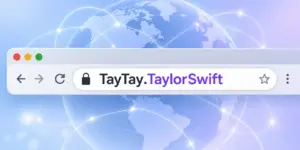
Taylor Swift Files Application for Exclusive Top-Level Domain Name in Global Internet Expansion
In a move that further solidifies her status as a pioneer in...
 Web Hosting & Domain Management
Shri Dharmasthala Temple Successfully Recovers Stolen Digital Identity Through International Arbitration
In a landmark decision for the protection of digital assets belonging to...







