
In the rapidly evolving world of consumer technology, it is often difficult for enthusiasts and early adopters to recognize the walls of the "tech bubble" in which they reside. For those who have spent the last decade—or in some cases, several decades—tinkering with automated lighting, smart thermostats, and networked security cameras, the complexities of the smart home have become a second language. From the early days of the X10 industry standard to the more recent innovations in wireless protocols, the "geek" community has long been comfortable with the friction inherent in building a connected living space.
However, the recent unveiling of the Apple Home Collection—a curated suite of smart home accessories developed in collaboration with industry leaders like LG and Schneider Electric—has been met with a degree of skepticism from this same community. Critics have pointed to the higher price points and the lack of revolutionary new product categories, questioning why a consumer would pay a premium for a doorbell or a light switch that seemingly offers the same functionality as existing, cheaper alternatives. This perspective, while understandable from a purely technical standpoint, overlooks the single greatest barrier to mass-market adoption: the user experience.
The Apple Home Collection is not merely a rebranding of existing technology; it represents a fundamental shift in how smart devices are integrated into the home. By prioritizing an "AirPods-like" setup process, Apple is attempting to bridge the gap between the hobbyist and the "normie," potentially catalyzing the next major wave of smart home growth.
HomeKit was a start, but not enough
To understand why the Apple Home Collection is significant, one must first look at the history of the industry. In its infancy, smart home technology was the exclusive domain of those willing to engage in a significant amount of manual labor. Achieving basic automation often required soldering irons, custom programming, and a deep understanding of electrical circuits. It was a niche hobby for the technically inclined, far removed from the plug-and-play expectations of the general public.
The first major evolution came with the introduction of smartphone-controlled, fully wireless devices. This lowered the barrier to entry, but it introduced a new kind of friction: fragmentation. Each manufacturer required its own proprietary app for setup and control. A homeowner with a smart lock from one brand, a thermostat from another, and bulbs from a third found themselves navigating a digital maze of disparate interfaces.
Apple’s introduction of HomeKit was intended to be the definitive solution to this problem. The vision was elegant and ambitious: a single, unified app—the Home app—that could act as a central nervous system for every connected device in a house. The HomeKit label was designed to serve as a seal of approval, guaranteeing that a product would work seamlessly within Apple’s ecosystem and could be controlled via Siri.
Despite these intentions, the reality of HomeKit often fell short of the promise. While it improved the daily management of devices, the initial configuration remained a daunting task for many. Some "HomeKit-compatible" devices still required users to download a third-party manufacturer app to perform firmware updates or initial Wi-Fi handshakes before they would even appear in the Home app. For the average consumer, the process of troubleshooting network credentials or scanning hidden QR codes felt less like a luxury experience and more like acting as an unpaid network engineer. Furthermore, Apple’s strict security requirements meant that many manufacturers opted out of the program, leading to a market where Amazon Alexa and Google Home ecosystems enjoyed greater commercial success due to their broader hardware support and lower prices.
Matter and Thread helped
The industry recognized this stagnation, leading to the development of the Matter and Thread standards. Matter was designed as a universal language, allowing devices from different brands to communicate with one another regardless of whether the user preferred Apple, Amazon, or Google. Thread, meanwhile, provided a robust, low-power mesh networking protocol that improved the reliability and speed of these connections.
The arrival of these standards was a monumental step forward. For manufacturers, it meant they no longer had to choose which ecosystem to support; they could build one device that worked for everyone. For consumers, it simplified the buying process, as they no longer had to worry about whether a specific lightbulb would "talk" to their specific smart speaker.
Matter also introduced a more standardized setup process, which did indeed make the technology more accessible than the fragmented systems of the past. However, even with Matter, the "out-of-the-box" experience still lacked the polish required for mass-market saturation. There was still a requirement for the user to be proactive—to follow a series of steps, ensure they were on the correct 2.4GHz frequency, and navigate menus. While the technical foundation had been laid, the "magic" that Apple users have come to expect from the company’s other product lines remained elusive in the smart home space.
Apple Home Collection
This brings us to the Apple Home Collection. The primary critique from the tech community—that these devices are essentially "standard" hardware with a higher price tag—misses the psychological impact of the new setup architecture. Apple has realized that for the "normie" consumer, the hurdle isn’t the price of the device; it’s the fear of the setup.
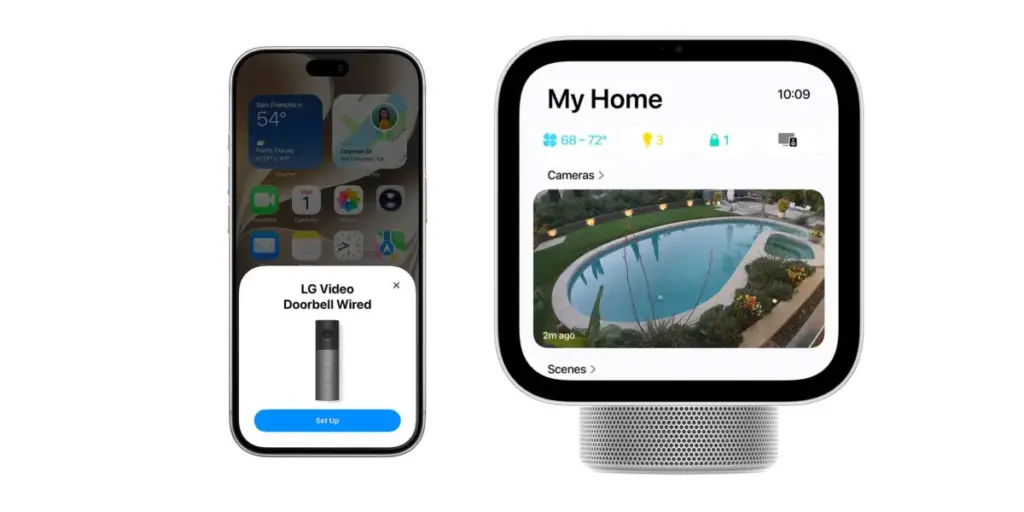
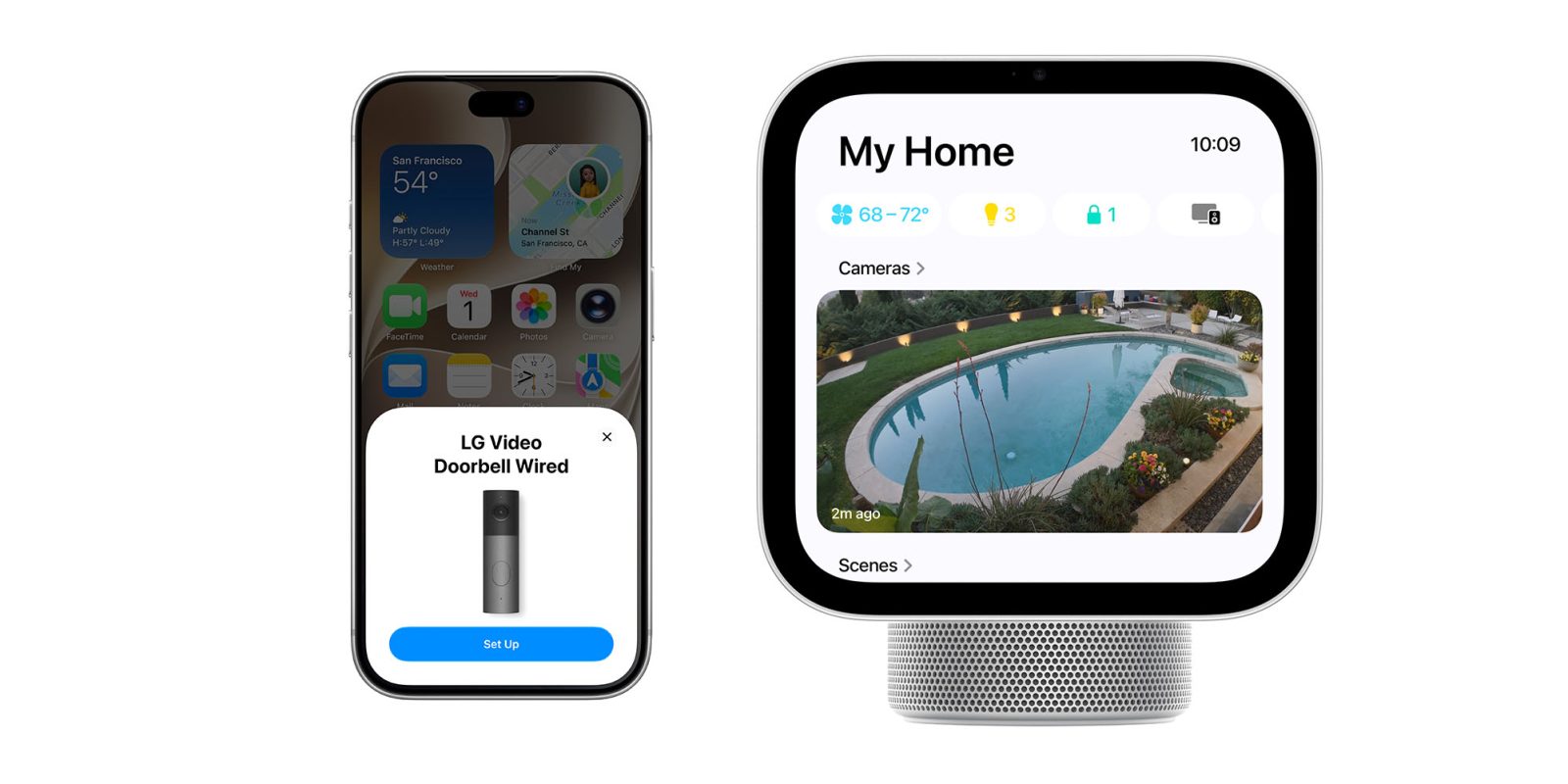
The Apple Home Collection changes the paradigm by making the configuration of a smart doorbell or a light switch as intuitive as pairing a new set of AirPods. This proximity-based pairing removes the traditional pain points of smart home installation. Instead of navigating through multiple screens and manual inputs, a user simply brings their iPhone near the new device, and a setup card appears instantly.
The impact of this cannot be overstated. Ajay Kumar, writing for CNET, described a demonstration of this technology that highlights exactly why this is a game-changer. He observed an Apple representative pairing and registering a new smart home device on both an iPhone and the new "HomeView" interface—Apple’s dedicated smart home display—all while carrying on a casual conversation. The process was so seamless that it didn’t even require the representative’s full attention.

"I didn’t have time to dig into the process before being shepherded to the next demo," Kumar noted, "but what I saw was one of the most compelling things I’ve seen in the smart home world: an easy, intuitive setup."
This is the "AirPods moment" for the smart home. Before AirPods, Bluetooth headphones existed, but they were often cumbersome to pair and switch between devices. Apple didn’t invent the Bluetooth headphone; they perfected the experience of using them. With the Apple Home Collection, they are attempting to do the same for the house. By collaborating with LG and Schneider, Apple is ensuring that the hardware is backed by established manufacturing expertise, while the software experience is purely Apple.
For the enthusiast who enjoys the process of configuring a complex network, the Apple Home Collection may seem like an unnecessary expense. But for the vast majority of people—those who find the idea of a smart home appealing but are intimidated by the perceived complexity—this is the missing link. These are consumers who want the benefits of a connected home—the security of seeing who is at the door from their TV, the convenience of automated lighting, and the energy savings of a smart thermostat—but who have no interest in becoming amateur IT professionals.
We are likely entering a phase where the smart home moves from being a "project" to being a standard feature of a modern lifestyle. If a consumer can set up an entire home security system in the time it takes to make a cup of coffee, without ever opening a manual or a third-party app, the value proposition changes entirely. The "Apple Tax" in this context is not just for the brand; it is for the removal of frustration.
As this collection rolls out, the industry will be watching closely to see if simplicity can indeed trump price. If history is any indication, the mass market has always been willing to pay a premium for technology that "just works." The Apple Home Collection may finally be the catalyst that brings the smart home out of the geek bubble and into the mainstream.
 Smart Home & IoT Solutions
Apple Partners with LG for Strategic Smart Home Expansion Featuring New Cameras and Sensors
In a significant move to revitalize its presence in the domestic technology...
 Smart Home & IoT Solutions
Controller for HomeKit Introduces Natural Language AI to Simplify Complex Smart Home Automations
The promise of the modern smart home has always been one of...
 Smart Home & IoT Solutions
Apple Home Ecosystem Evolves as iOS 26 Cycle Sets the Stage for Major Siri Overhaul
The smart home landscape is currently standing at a significant crossroads, positioned...







