
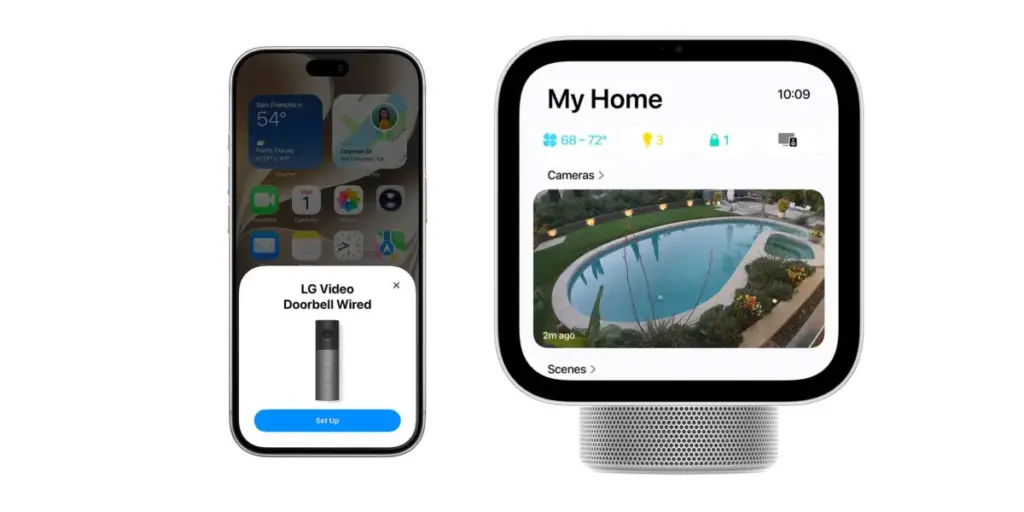
The impact of this cannot be overstated. Ajay Kumar, writing for CNET, described a demonstration of this technology that highlights exactly why this is a game-changer. He observed an Apple representative pairing and registering a new smart home device on both an iPhone and the new "HomeView" interface—Apple’s dedicated smart home display—all while carrying on a casual conversation. The process was so seamless that it didn’t even require the representative’s full attention.

"I didn’t have time to dig into the process before being shepherded to the next demo," Kumar noted, "but what I saw was one of the most compelling things I’ve seen in the smart home world: an easy, intuitive setup."
This is the "AirPods moment" for the smart home. Before AirPods, Bluetooth headphones existed, but they were often cumbersome to pair and switch between devices. Apple didn’t invent the Bluetooth headphone; they perfected the experience of using them. With the Apple Home Collection, they are attempting to do the same for the house. By collaborating with LG and Schneider, Apple is ensuring that the hardware is backed by established manufacturing expertise, while the software experience is purely Apple.
For the enthusiast who enjoys the process of configuring a complex network, the Apple Home Collection may seem like an unnecessary expense. But for the vast majority of people—those who find the idea of a smart home appealing but are intimidated by the perceived complexity—this is the missing link. These are consumers who want the benefits of a connected home—the security of seeing who is at the door from their TV, the convenience of automated lighting, and the energy savings of a smart thermostat—but who have no interest in becoming amateur IT professionals.
We are likely entering a phase where the smart home moves from being a "project" to being a standard feature of a modern lifestyle. If a consumer can set up an entire home security system in the time it takes to make a cup of coffee, without ever opening a manual or a third-party app, the value proposition changes entirely. The "Apple Tax" in this context is not just for the brand; it is for the removal of frustration.
As this collection rolls out, the industry will be watching closely to see if simplicity can indeed trump price. If history is any indication, the mass market has always been willing to pay a premium for technology that "just works." The Apple Home Collection may finally be the catalyst that brings the smart home out of the geek bubble and into the mainstream.
 Smart Home & IoT Solutions
Apple Reportedly Developing Privacy-Centric Home Security Service and AI-Powered Monitoring Hardware for 2027
For years, Apple’s presence in the smart home market has been characterized...
 Smart Home & IoT Solutions
IRobot announces eight smaller and better Roomba bots after bankruptcy
The resurgence comes following a period of intense financial turbulence. iRobot, which...
 Smart Home & IoT Solutions
Why the Apple Home Collection Represents a Watershed Moment for Mainstream Smart Home Adoption
In the fast-paced world of consumer electronics, it is often difficult for...







