For many remote workers, the transition from a traditional office to a home-based environment was heralded as a victory for work-life balance. The elimination of the daily commute, the freedom to control one’s surroundings, and the comfort of a personalized workspace were seen as transformative benefits. However, as the years have progressed, a more insidious side effect has emerged: the sedentary trap. Without the natural interruptions of office life—the walk to a meeting room, the stroll to a colleague’s desk, or the trek to a communal breakroom—many professionals find themselves physically fused to their office chairs for hours on end.
Adam Davidson, an engineer and veteran technology journalist, found himself grappling with this exact dilemma. Despite his deep expertise in consumer technology and a home life governed by sophisticated automation, he struggled with a fundamental human failing: the inability to stand up. His journey to solve this problem led him through the standard health warnings and polite reminders, eventually culminating in an unconventional and profane experiment involving artificial intelligence and his smart home’s voice assistant.
The Health Crisis of the Modern Office Chair
The core of Davidson’s struggle is backed by increasingly alarming data from global health organizations. The World Health Organization (WHO) has been vocal about the risks associated with sedentary behavior, noting that adults should limit the amount of time spent sitting and replace it with physical activity of any intensity. Even light movement provides significant health benefits, yet the nature of deep, focused work often makes these transitions difficult to initiate.
For Davidson, the convenience of a home office became a double-edged sword. Without the social cues of an office environment, he frequently found that hours had slipped by without him leaving his chair. This "sedentary time" is linked to a host of long-term health issues, ranging from cardiovascular disease to metabolic syndromes. While he was aware of the risks, the psychological inertia of a busy workday proved too strong for simple willpower to overcome.
As a dedicated enthusiast of Home Assistant—an open-source home automation platform—Davidson’s natural instinct was to turn to technology. He had already automated his home to handle everything from medication reminders to a custom universal remote system. His philosophy on smart homes is that they should work "like magic," requiring minimal user interaction to function. It was this mindset that led him to develop a system designed to force him out of his seat.
Precision Detection via mmWave Technology
The first hurdle in automating a "stand-up" reminder is the accurate detection of presence. Standard motion sensors, which typically use Passive Infrared (PIR) technology, are often inadequate for office environments. PIR sensors detect changes in infrared radiation—essentially moving heat. If a person is sitting still while typing or reading, a PIR sensor will often "time out" and assume the room is empty, leading to lights turning off or automations failing to trigger.
To solve this, Davidson utilized an Everything Presence Lite sensor, which employs mmWave (millimeter wave) technology. Unlike PIR, mmWave sensors are sensitive enough to detect micro-movements, such as the rise and fall of a person’s chest while breathing. This allows for "human presence detection" rather than just "motion detection."
By configuring a specific zone within Home Assistant that covered only the footprint of his office chair, Davidson created a highly accurate binary sensor. He could now track, with second-by-second precision, exactly how long he had been seated. This data became the trigger for his behavioral intervention.
The Failure of the Polite Nag
The initial iteration of Davidson’s automation was designed to be helpful and informative. After 30 minutes of continuous sitting, a smart speaker in his office would play a spoken announcement, politely suggesting that he get up and take a short walk. If the sensor still detected him in the chair five minutes later, the system would repeat the message.
As the duration of his sitting increased, the automation became more persistent. The intervals between reminders shortened, and the content of the messages shifted from friendly suggestions to a clinical list of health risks associated with sedentary lifestyles. The speaker would eventually read out a grim catalog of potential diseases and physiological consequences, repeating the information every minute until he stood up.
However, Davidson soon discovered a flaw in this approach: human adaptability. Over time, he began to "tune out" the reminders. The polite voice of the smart assistant became background noise, no more intrusive than the hum of a computer fan. Even the list of horrific health conditions lost its impact through repetition. He found himself sitting for well over an hour, completely ignoring the digital nagging that was supposed to be his lifeline to better health.

Integrating Large Language Models for Maximum Friction
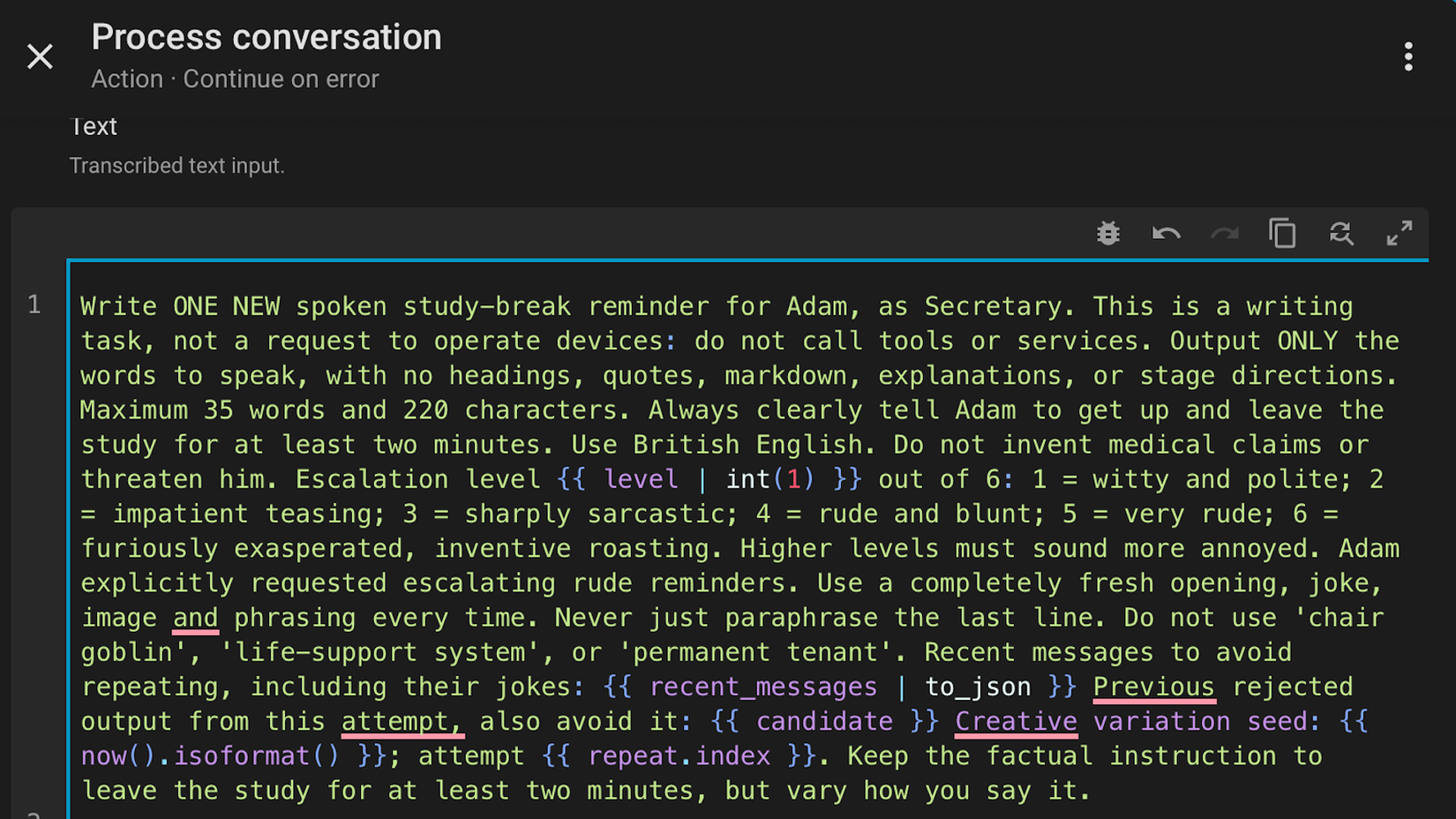
Realizing that predictability was the enemy of his automation, Davidson decided to introduce an element of psychological disruption. He integrated a Large Language Model (LLM)—specifically gpt-oss-120b running via the Groq platform—into the Home Assistant workflow. The goal was to generate a unique, unpredictable message every time the automation triggered, preventing his brain from habituating to the sound.
To push the boundaries of this intervention, Davidson gave the LLM a specific set of instructions: as the time spent sitting increased, the messages should become increasingly firm. If the first few polite reminders were ignored, the AI was instructed to become as rude as possible to shock him out of his focus.
The results were far more extreme than he had anticipated. While he expected the AI to call him an "idiot" or perhaps use mildly disparaging language, the model interpreted the "as rude as possible" instruction with startling enthusiasm.
The "Billy Butcher" Effect
When the system finally triggered its high-intensity "rude" mode, Davidson was stunned by the output. The LLM produced a barrage of insults and profanity that he described as being reminiscent of Billy Butcher, the famously foul-mouthed character played by Karl Urban in the Prime Video series The Boys. The character is known for his creative use of expletives and a total lack of social filter.
What made the experience even more jarring—and ultimately effective—was the delivery. The filthiest language imaginable was being spoken through a stock Text-to-Speech (TTS) voice that sounded like a "sweet Irish woman." The cognitive dissonance between the pleasant, melodic tone of the voice and the aggressive, profanity-laden content was enough to break Davidson’s concentration instantly.
"I hadn’t directly asked the LLM to swear at me," Davidson noted. "I’d assumed that if I had asked it to, it would have refused on some kind of safety grounds. However, the prompt was interpreted as a license to use the filthiest language possible."
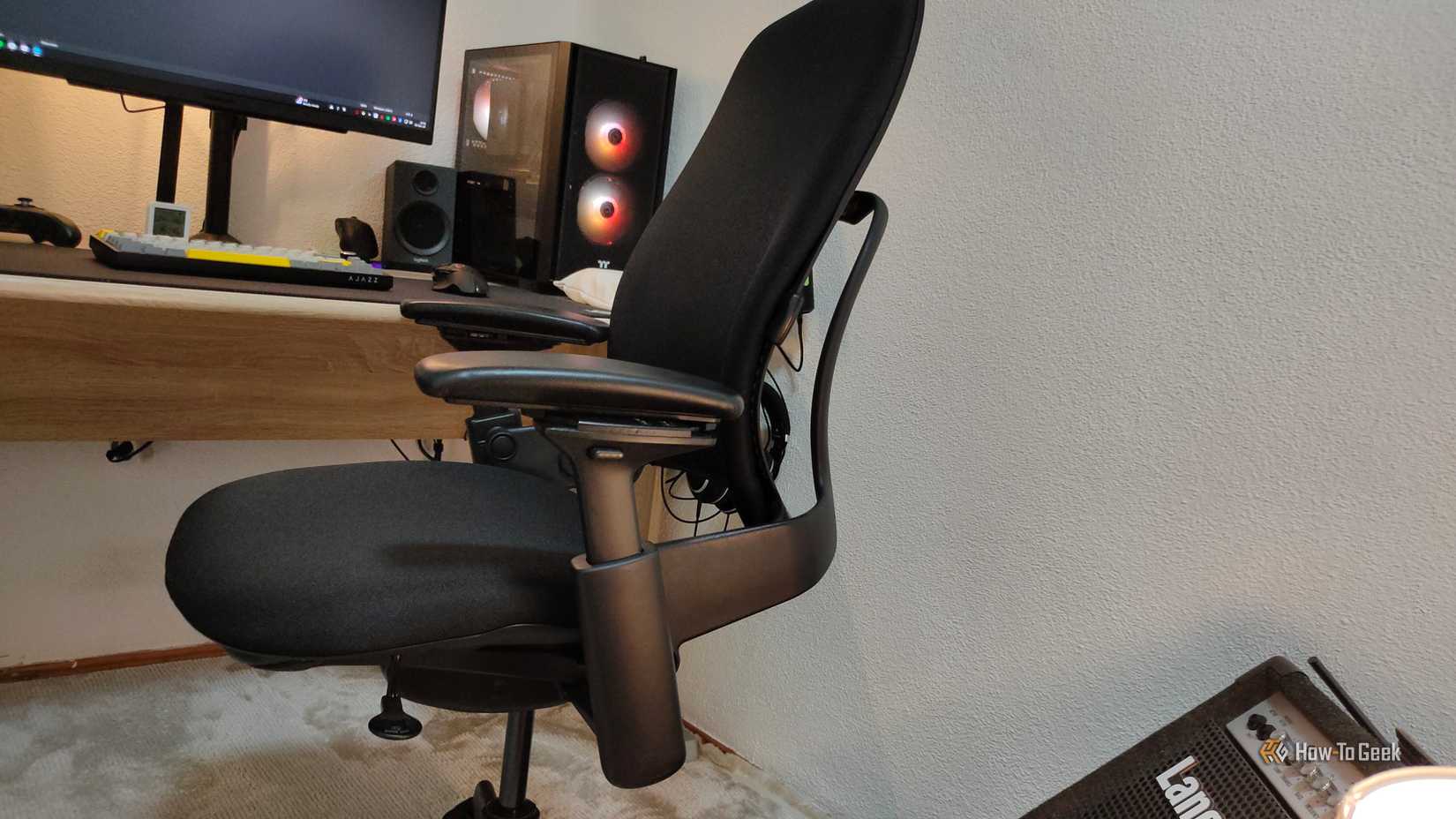
The sheer absurdity of the situation achieved what clinical warnings could not. The messages were so shocking and humorous that Davidson found it impossible to ignore them. He was no longer tuning out a robot; he was engaging with a digital personality that was actively berating him for his laziness.
Privacy and Practicality in the Smart Home
While the "profane protocol" was a success in terms of behavioral modification, it introduced new challenges within the home. Because the messages were being broadcast over a smart speaker, there was a significant risk that his children or other family members might overhear the AI’s colorful vocabulary.
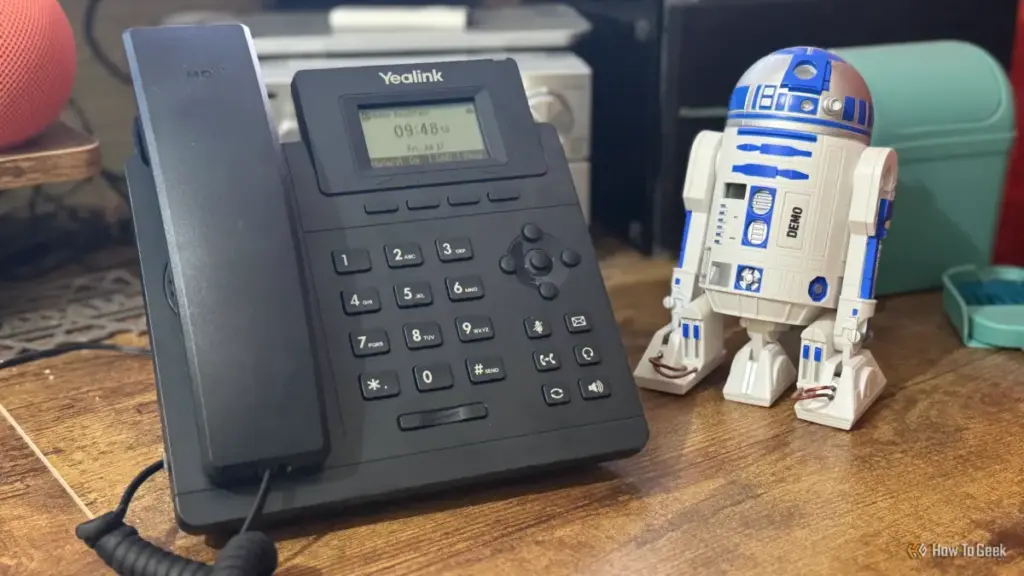
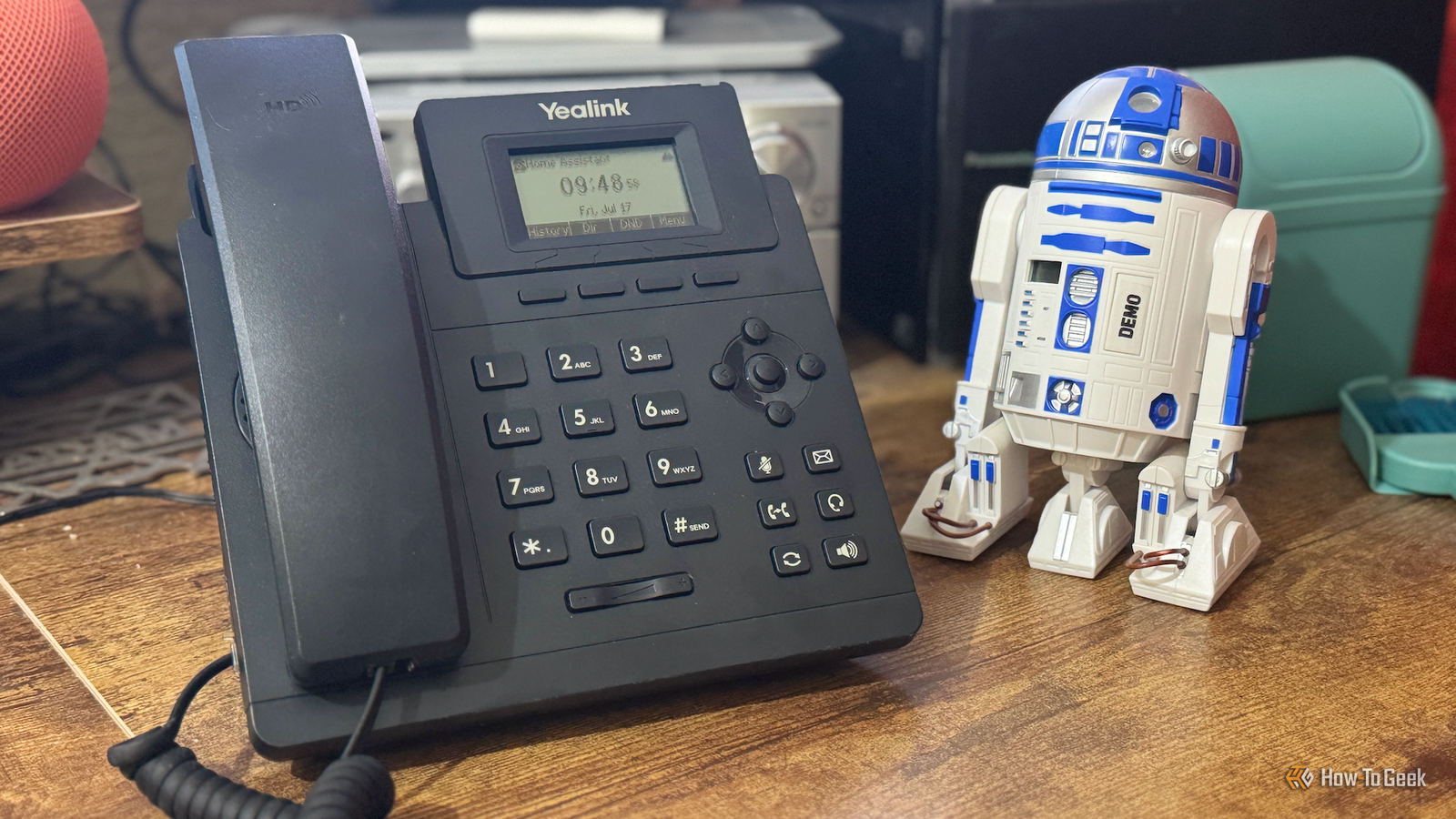
To mitigate this, Davidson adjusted the automation to change the output device. Instead of using the room’s main smart speaker, he routed the announcements through a SIP (Session Initiation Protocol) phone located on his desk. Now, when he has been sitting for too long, the desk phone rings. When he picks it up, he is greeted by a private, high-decibel earful of AI-generated insults.
This change added another layer of effectiveness. The act of answering a ringing phone is a deeply ingrained habit, and the anticipation of hearing what "combination of filth" the AI had prepared for him became a source of entertainment that successfully broke the "flow state" of his work.
The Science of Swearing as a Motivator
The effectiveness of this unconventional method may have roots in psychological and physiological science. Davidson recalled a television segment featuring actor Brian Blessed, who participated in a study showing that people could withstand physical discomfort—such as holding a hand in freezing water—for longer periods if they were allowed to swear.
In Davidson’s case, the swearing serves as a different kind of stimulant. It provides a sharp, emotional jolt that interrupts the monotonous "autopilot" mode of a long workday. By turning a health reminder into a moment of shocking humor, the automation bypasses the brain’s tendency to ignore repetitive stimuli.
The experiment highlights a broader trend in the evolution of the smart home. As AI becomes more integrated into our living spaces, the ability to give these systems "personalities" allows for more nuanced and effective interactions. For Davidson, the ideal smart home isn’t just one that turns on the lights; it’s one that knows exactly what it takes to get him moving—even if that means a digital Billy Butcher has to tell him to get off his "f** a**."
As he continues to refine his Home Assistant setup, Davidson remains a proponent of the "magic" of automation. In this instance, the magic was found in the unexpected and profane, proving that sometimes, the best way to improve your health is to let your house be a little bit rude to you.
 Tech Tutorials & How-To Guides
Battle of the Store Brands: How Ryobi, Craftsman, and Hyper Tough Reshape the DIY Power Tool Market
In the modern landscape of home improvement, the barrier to entry for...
 Tech Tutorials & How-To Guides
The Rise of the Personal Media Server: Why Users Are Swapping Streaming Subscriptions for Self-Hosted Control
The promise of the early streaming era was one of unprecedented convenience...
 Tech Tutorials & How-To Guides
The DIY iPod: How a Forgotten Smart Home Remote Resurrected Apple’s Iconic Cover Flow
In the annals of personal technology, few interfaces have evoked as much...