

Despite these clear advantages, the path to open silicon has been far more difficult than the path to open software. Rizzo notes that the idea of open-source silicon emerged roughly at the same time as Linux, but it struggled to gain comparable momentum for years. The challenges are rooted in the highly specialized nature of the semiconductor industry. Unlike software development, where a full-stack engineer might handle various aspects of a project, silicon engineering is siloed into very specific roles.
In the chip world, there are backend production specialists, layout experts, analog engineers, digital designers, and design verification (DV) professionals. This extreme specialization meant that the "leverage it how you will" ethos of open source didn’t naturally take root. Additionally, the sheer number of people capable of designing silicon is a tiny fraction of the global software developer population. Inconsistent interfaces and a lack of standardized design flows further hampered early efforts.
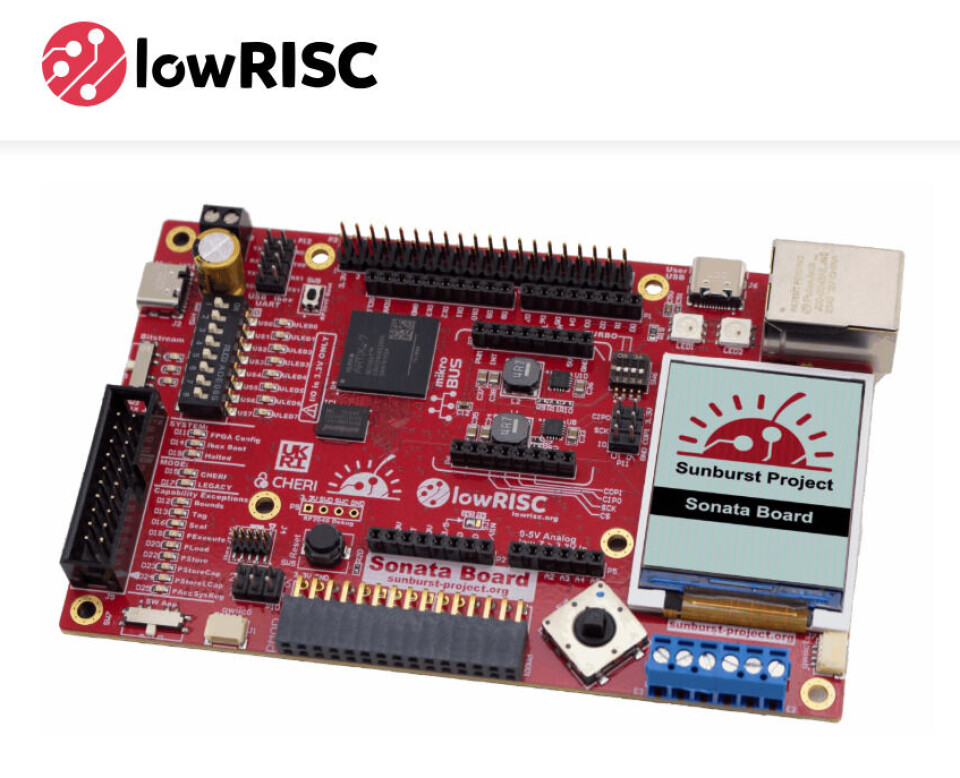
However, the tide has begun to turn, driven by a fundamental shift in how the semiconductor industry operates. According to lowRISC, the widespread adoption of the IP (Intellectual Property) business model has been a primary catalyst. Today’s chip designs are modular, with the vast majority of vendors integrating third-party IP from providers like Arm or Synopsys and relying on foundries like TSMC for manufacturing. This culture of IP reuse has already brought about the cost reductions and quality improvements typically associated with open source. From here, it is a relatively small logical step for silicon vendors to begin substituting proprietary IP with open-source alternatives.
The maturation of the RISC-V architecture has also been a game-changer. Since its introduction in 2010, the open RISC-V instruction set architecture (ISA) has seen broad adoption in embedded systems and is now making a serious push into the data center. Rizzo argues that RISC-V "gave permission" to the industry to think about open source in a hardware context. Once the industry accepted an open-source ISA, the natural next question was: why not an open-source implementation?
This shift in mindset has led to a flurry of activity and real-world implementations. In 2019, lowRISC released the Ibex CPU, which has since been integrated into various System-on-Chip (SoC) designs. More recently, in 2024, Nuvoton brought a discrete RoT security chip to market based on OpenTitan, with Google announcing plans to utilize the chip in Chromebooks running ChromeOS.
The momentum continued into 2025 with the first release of Caliptra, a root-of-trust architecture that incorporates OpenTitan elements. Developed through the CHIPS Alliance and the Open Compute Project, Caliptra counts Microsoft, Google, AMD, and Nvidia among its contributors. It is specifically designed for data-center-level SoCs, proving that open-source security is no longer confined to small embedded devices but is ready for the most demanding computing environments.
 Enterprise Tech & Infrastructure
The Shift to Software-Defined Excellence: Understanding the Rise and Impact of Hyperconverged Storage
The landscape of enterprise data management is undergoing a fundamental transformation as...
 Enterprise Tech & Infrastructure
AMD Acquires World Labs for $8.2 Billion to Rival Nvidia in the Frontier of World Models
In a massive strategic move designed to reshape its standing in the...
 Enterprise Tech & Infrastructure
Understanding the Architecture of Modern Storage: Decoding the Relationship Between Flash Technology and Solid-State Drives
In the rapidly evolving landscape of data storage, the terminology used to...







