
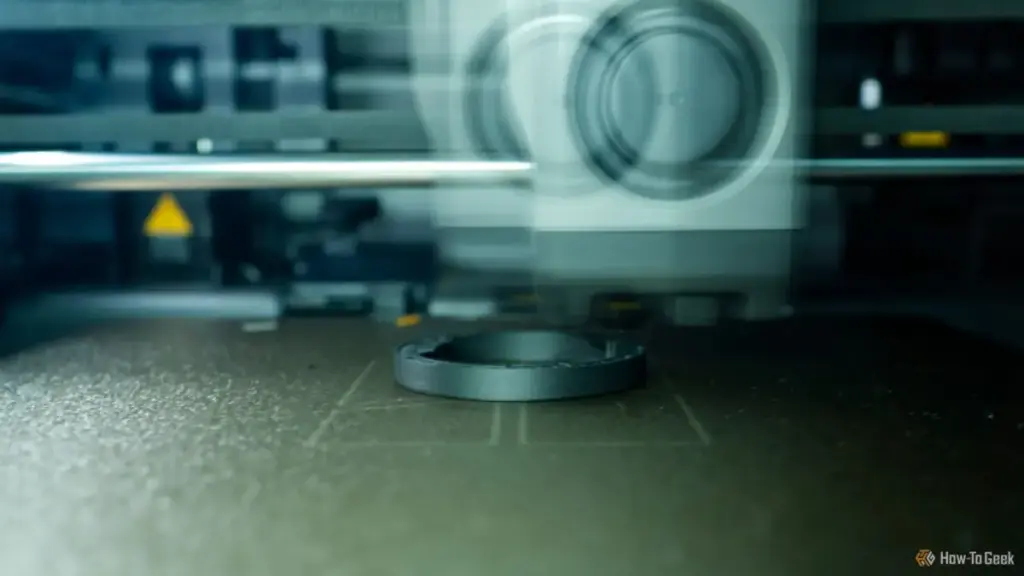
To enhance the visual appeal of the semi-transparent dumplings, the user decided to fill the 2% infill void with glitter. The goal was to create a sparkling, tactile toy. However, the experiment went awry the moment the print resumed. Most modern high-speed printers, such as the Bambu Lab P1S used in this instance, rely on powerful cooling systems to maintain print quality. These include a "part-cooling fan" on the print head and an "auxiliary fan" or "chamber fan" designed to circulate air throughout the enclosure.
As the user noted, the necessity of pausing the auxiliary fan just to pour the glitter in should have been a red flag. The moment the "resume" button was pressed, the printer’s firmware automatically re-engaged its cooling profile. The resulting gust of air acted like a leaf blower inside the confined space of the printer. Glitter—a material notorious for its ability to cling to surfaces and permeate even the smallest gaps—was instantly atomized, coating the internal electronics, the lubricated motion rails, and the delicate carbon rods of the machine.
The aftermath of a "glitter bomb" in a 3D printer is more than just a cosmetic nuisance. While glitter is often marketed in biodegradable forms today, its physical properties remain a nightmare for precision machinery. The particles are small enough to enter the bearings of the cooling fans, potentially causing premature failure. More critically, glitter can mix with the grease or oil on the printer’s linear rails and lead screws. This creates a gritty paste that increases friction, leads to "layer shifting," and can eventually score the metal surfaces, requiring a complete teardown and replacement of the motion system.

The Reddit user further reported that the experiment was a failure on all fronts: the glitter prevented the top layers of the TPU from adhering properly, leaving the dumplings unsealed and "leaking" glitter from the bottom.
Sand is even worse
The desire to add weight cheaply often leads hobbyists to consider sand as an alternative to metal weights. On the surface, sand seems like an ideal filler; it is incredibly dense, flows into complex internal cavities, and is virtually free. However, the mechanical risks associated with sand are even more severe than those of glitter.
Sand is highly abrasive. If a cooling fan catches even a small amount of sand and blows it toward the printer’s gantry, the damage can be instantaneous. Unlike glitter, which is often made of soft plastics or thin foils, sand is composed of silica and other hard minerals. If these grains find their way into the tracks of a 3D printer’s belts or the teeth of its drive gears, they can act like sandpaper, rapidly wearing down the components. Furthermore, sand is prone to "dusting," creating a fine powder that can settle on the motherboard or power supply, potentially leading to short circuits or overheating by insulating heat-sensitive components.
 Tech Tutorials & How-To Guides
Beyond the Cloud: Why a Shift to Offline Password Management Is Becoming a Necessity for the Security-Conscious
In the modern digital landscape, the password manager has transitioned from a...
 Tech Tutorials & How-To Guides
The Seamless Transition: Why Linux Mint Remains the Premier Gateway for Windows Refugees
For many veteran technology enthusiasts, the journey through the landscape of Unix-like...
 Tech Tutorials & How-To Guides
The Great Big-Box Battle: Evaluating the Power Tool Ecosystems of Ryobi, Craftsman, and Hyper Tough
For the modern homeowner or the burgeoning DIY enthusiast, the walk down...







