
For those deeply embedded in the world of consumer technology, it is often difficult to step outside the "tech bubble." Within this niche, enthusiasts have spent the better part of two decades—and in some cases, dating back to the X10 industry standards of the 1970s—tinkering with home automation. To the seasoned "geek," a weekend spent troubleshooting a Zigbee gateway or configuring a local Home Assistant server is a hobby. But for the vast majority of the population, the smart home has remained a promise perpetually unfulfilled, hindered by a labyrinth of incompatible standards, frustrating setup processes, and the haunting requirement of being an "unpaid network engineer" just to get a lightbulb to turn on via a smartphone.
The recent unveiling of the Apple Home Collection, a curated suite of smart home accessories developed in partnership with industry stalwarts LG and Schneider Electric, has been met with a wave of skepticism from the tech elite. Critics point to the premium pricing and the fact that these devices—cameras, doorbells, and sensors—do not appear to offer revolutionary new features that aren’t already available in cheaper alternatives from competitors. However, this perspective overlooks a fundamental reality of consumer behavior: for the mass market, the most valuable "feature" a product can offer is the total elimination of friction.
The Long, Frustrating Road to Integration
To understand why the Apple Home Collection represents a potential watershed moment for the industry, one must look back at the evolution of home automation. In its infancy, the "smart home" was the exclusive domain of hobbyists willing to engage in actual soldering and complex custom programming. As the technology matured, it moved into a wireless era, but accessibility remained elusive.
The first major wave of consumer-facing smart devices brought with it the "app silos." Every manufacturer required its own proprietary application for setup and control. If a user owned products from five different brands, they were forced to manage five different apps, five different account registrations, and five different ways of handling firmware updates. It was a fragmented landscape that offered convenience in theory but delivered complexity in practice.
Apple’s initial attempt to solve this fragmentation was HomeKit. Launched with the promise of bringing order to the chaos, HomeKit aimed to centralize control within a single interface: the Home app. The HomeKit label on a box was intended to be a seal of approval, guaranteeing that the device would play nicely with Siri and the broader iOS ecosystem.
However, the reality of HomeKit often fell short of the vision. Despite Apple’s efforts, many "compatible" devices still required users to download a third-party app for the initial "onboarding" or to access advanced settings. Furthermore, Apple’s strict security and hardware requirements meant that many manufacturers simply skipped the platform entirely, opting instead for the more lenient ecosystems of Amazon Alexa and Google Home. Consequently, while Alexa and Google achieved massive commercial success through sheer volume and low price points, the Apple-centric smart home remained a more expensive and often equally finicky pursuit.
The Limits of Matter and Thread
The industry eventually recognized that fragmentation was stifling growth. This led to the development of Matter and Thread—ambitious new standards designed to ensure that devices from different brands could communicate seamlessly across platforms. Matter, in particular, was hailed as the "universal language" of the smart home, theoretically allowing a user to buy any device and know it would work with Apple, Google, or Amazon.
While Matter and Thread have undoubtedly improved the landscape, they have not yet achieved the "it just works" level of simplicity that the average consumer demands. Setting up a Matter device still involves scanning QR codes, ensuring the device is in the correct pairing mode, and occasionally dealing with network timeouts. While significantly better than the old ways, it is still a process that requires a degree of intentionality and tech-savviness. It is a refinement of the existing model, rather than a reinvention of the experience.
The "AirPods Moment" for the Smart Home
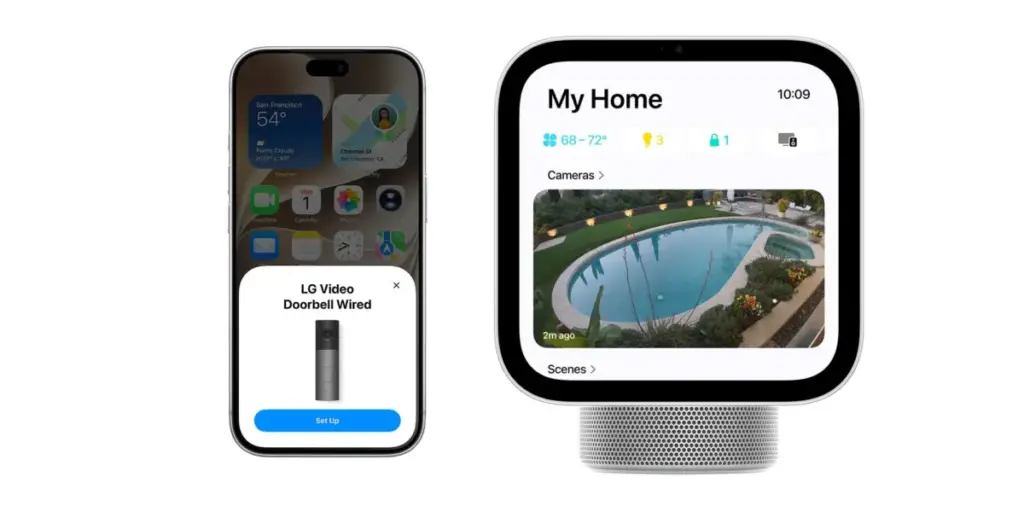
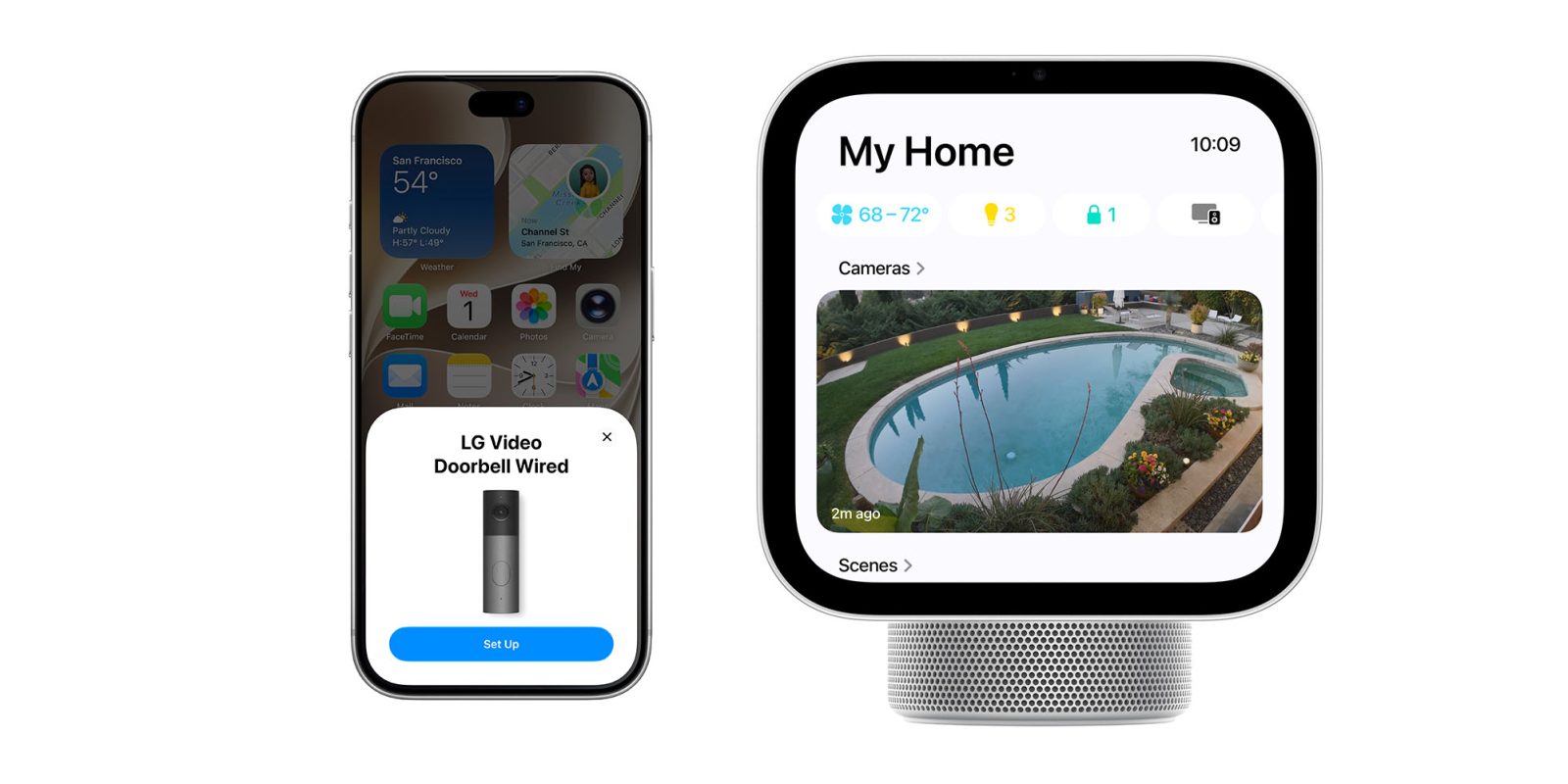
This brings us to the Apple Home Collection. The core innovation here isn’t a new type of camera lens or a more sensitive motion sensor; it is the fundamental redesign of the onboarding experience. For the first time, Apple is bringing the seamless, proximity-based pairing logic of the AirPods to the stationary hardware of the home.
When Apple released the original AirPods, they didn’t just sell a pair of wireless headphones; they sold the end of the Bluetooth pairing nightmare. By simply opening the case near an iPhone, the device was instantly recognized and configured across all of the user’s Apple devices. The Apple Home Collection applies this same philosophy to home infrastructure.
Early hands-on reports suggest that the difference in user experience is transformative. Ajay Kumar of CNET recently observed a demonstration of the new system, noting how an Apple representative was able to pair and register a new smart home device instantly, without even pausing her conversation. The process involves simply bringing an iPhone close to the new hardware. There are no manual "pairing modes," no searching for hidden buttons with a paperclip, and no navigating through nested menus in a third-party app.
As Kumar noted, the setup was so intuitive that it felt more like a background task than a technical hurdle. For a "normie"—a consumer who likes the idea of a smart home but is intimidated by the prospect of technical troubleshooting—this is the most compelling argument for adoption that has ever been made. It moves the smart home from the category of "project" to the category of "appliance."
Why Price is Secondary to Peace of Mind
The primary criticism of the Apple Home Collection remains its cost. When compared to budget-friendly options available on Amazon, the Apple-branded LG and Schneider devices carry a significant premium. In the eyes of a tech enthusiast, paying double for a doorbell that performs the same basic functions seems irrational.

However, this ignores the "convenience tax" that has long defined Apple’s most successful product lines. Consumers have proven time and again that they are willing to pay more for a product that guarantees a lack of frustration. In the context of a smart home, "frustration" isn’t just a minor annoyance; it is the reason people give up on the technology entirely. A smart light that requires a hub reboot once a week is a light that eventually gets replaced by a "dumb" one.
By controlling the hardware-software integration more tightly through the Apple Home Collection, Apple is offering a version of the smart home that is insulated from the typical points of failure. For the busy parent or the non-technical homeowner, the extra $50 or $100 spent on a device is a small price to pay for the assurance that they will never have to act as their own IT support.
The Path Toward Mass Adoption
The smart home industry has spent years trying to convince the public that they need automation. We have seen marketing campaigns focused on the novelty of changing light colors or the security of seeing a porch pirate in 4K. But the industry has spent far less time addressing the fear of the technology—the fear that it will be too hard to set up, too hard to maintain, and too easy to break.
The Apple Home Collection is a direct assault on that fear. It acknowledges that for most people, the barrier to entry isn’t a lack of interest, but a lack of patience for technical friction. If Apple can successfully convince the broader public that adding a smart lock or a security camera is as easy as pairing a pair of headphones, the market for these devices will expand exponentially.
We are likely entering a new phase of the smart home era. The first phase was defined by the pioneers and the DIYers. The second phase was defined by the "hub wars" and the struggle for interoperability. This third phase, catalyzed by the Apple Home Collection, may well be defined by invisibility. The technology is finally reaching a point where it can recede into the background, functioning as a reliable utility rather than a demanding hobby.
While the "geeks" may continue to scoff at the price tags and the lack of complex customization options, the "normies" are likely to vote with their wallets. For the first time, the dream of a truly effortless smart home feels like it is within reach for everyone, not just those who know how to navigate a router’s admin panel. If the Apple Home Collection succeeds, it won’t be because it did something new, but because it finally made the existing technology easy enough for the rest of the world to use.
 Smart Home & IoT Solutions
The Apple Home Collection: Why Seamless Integration Could Finally Drive Mass Market Smart Home Adoption
In the rapidly evolving world of consumer technology, it is often difficult...
 Smart Home & IoT Solutions
Apple Partners with LG for Strategic Smart Home Expansion Featuring New Cameras and Sensors
In a significant move to revitalize its presence in the domestic technology...
 Smart Home & IoT Solutions
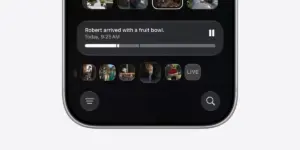
Apple Intelligence in the Home: New AI Security Features Require Top-Tier iCloud+ Subscription
As the development cycle for Apple’s upcoming software ecosystem continues, the release...







