For those who consider themselves part of the global community of technology enthusiasts, it is remarkably easy to forget that we exist within a specialized bubble. In this environment, terms like "mesh networking," "low-latency protocols," and "IP-based connectivity" are common parlance. Many within this circle have been tinkering with smart home technology for over a decade, and some veterans can even trace their involvement back several decades to the early days of X10 industry standards. To the enthusiast, the minor frustrations of a device failing to pair or a firmware update requiring a manual reboot are simply part of the hobby—a tax paid for the privilege of living in the future.
However, the recent unveiling of the Apple Home Collection—a curated suite of smart home accessories developed in collaboration with industry giants like LG and Schneider Electric—has sparked a wave of skepticism within this tech-centric bubble. Critics and power users have been quick to point out that the collection does not necessarily introduce revolutionary new product categories. Instead, it offers smart doorbells, cameras, and electrical components that appear, at least on paper, to be significantly more expensive than existing alternatives that offer similar specifications.
The prevailing question among the "geek" community is simple: Why would anyone pay a premium for these devices when the market is already saturated with HomeKit-compatible options at a fraction of the cost? The answer, it seems, lies in a fundamental misunderstanding of the "normie" experience. While the enthusiast sees a price tag and a spec sheet, the average consumer sees a daunting wall of complexity. With the Apple Home Collection, Apple is betting that the mass market is finally ready to adopt smart home technology, provided the "friction" of the experience is reduced to near zero.
HomeKit was a start, but not enough
To understand why the Apple Home Collection represents a potential turning point, one must look back at the evolution of the smart home. In the earliest iterations of home automation, the barrier to entry was extraordinarily high. It was a world of soldering irons, custom-coded scripts, and complex wiring. It was less of a consumer product category and more of a specialized branch of electrical engineering.
The first major shift occurred with the advent of the smartphone and the rise of fully wireless, Wi-Fi-enabled devices. Suddenly, the hardware was accessible, but the software landscape was a fragmented mess. Every new lightbulb, thermostat, or security camera required its own proprietary companion app. A "smart home" in 2012 often meant a folder on an iPhone filled with a dozen different apps, none of which talked to each other.
Apple’s solution to this fragmentation was HomeKit. Launched with the promise of a unified ecosystem, HomeKit aimed to bring all these disparate devices under one roof—the Home app. The vision was compelling: a single interface for control, a standardized security protocol, and the ability to use Siri for voice commands. The "Works with Apple HomeKit" badge was intended to be a guarantee of both compatibility and privacy.
The reality, however, often fell short of that vision. Even within the HomeKit ecosystem, the initial setup process remained a significant hurdle for the non-technical user. Many devices still required a third-party app for the initial "handshake" before they could be bridged into the Apple Home app. For the average person, troubleshooting a device that refused to join a 2.4GHz network or navigating a bridge-to-router connection felt less like a luxury upgrade and more like an unpaid internship as a network engineer. Furthermore, the selection of HomeKit-compatible hardware remained limited compared to the vast ecosystems supported by Amazon Alexa and Google Home, largely due to Apple’s stringent hardware security requirements in the early years.
Matter and Thread helped
The industry recognized these pain points, leading to the development and eventual launch of the Matter and Thread standards. Matter was designed as a universal "language" for smart home devices, allowing products from different manufacturers to work seamlessly across Apple, Google, and Amazon platforms. Thread, meanwhile, provided a robust, low-power mesh networking protocol that reduced the reliance on central hubs and improved device responsiveness.
These standards were undoubtedly a massive leap forward. They simplified the development process for manufacturers and offered consumers more choice. Matter, in particular, introduced a more standardized setup process involving simple QR code scanning. For the tech-savvy, this was a revelation. It made the process of adding a new device significantly more reliable and reduced the frequency of the dreaded "No Response" status in the Home app.
Yet, even with Matter and Thread, the smart home remained a "considered purchase." It still required the user to understand what a "border router" was, or at least to have the patience to troubleshoot when a QR code failed to scan on the first try. The mass market—the people who want their home to "just work" without having to think about the underlying protocols—remained largely on the sidelines, observing the smart home as a novelty rather than a necessity.
Apple Home Collection
This brings us to the Apple Home Collection. The skepticism from the tech community stems from the fact that, functionally, a smart doorbell from this collection does the same thing as a doorbell from a budget-friendly competitor. However, what the "geeks" are missing is that the Apple Home Collection isn’t selling specs; it is selling the elimination of anxiety.

For a non-technical user, the setup process for these new devices is fundamentally different from anything that has come before. Apple has applied the same philosophy to the smart home that it applied to wireless audio with the introduction of AirPods. Before AirPods, Bluetooth pairing was a multi-step process involving menus, discovery modes, and occasional failures. With AirPods, you simply open the case near your iPhone, and a setup card appears.
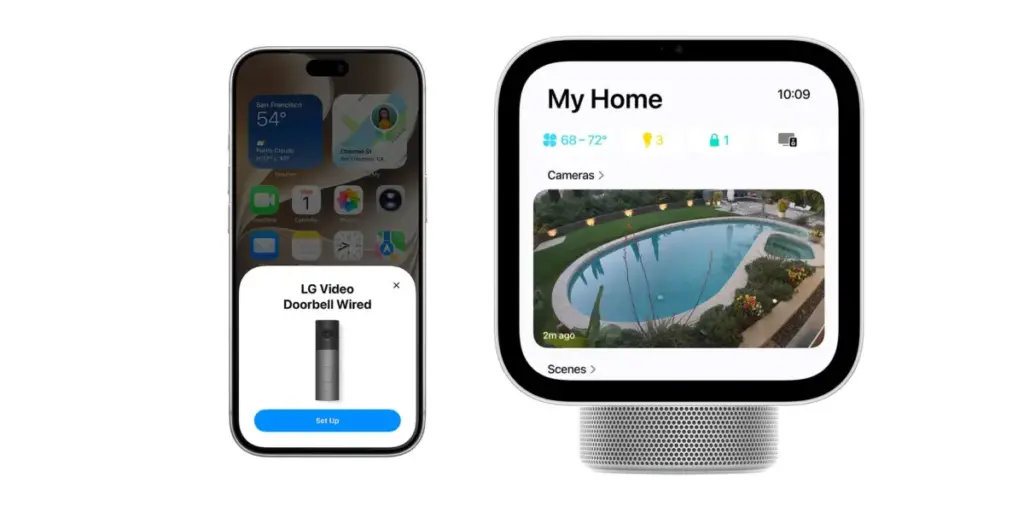
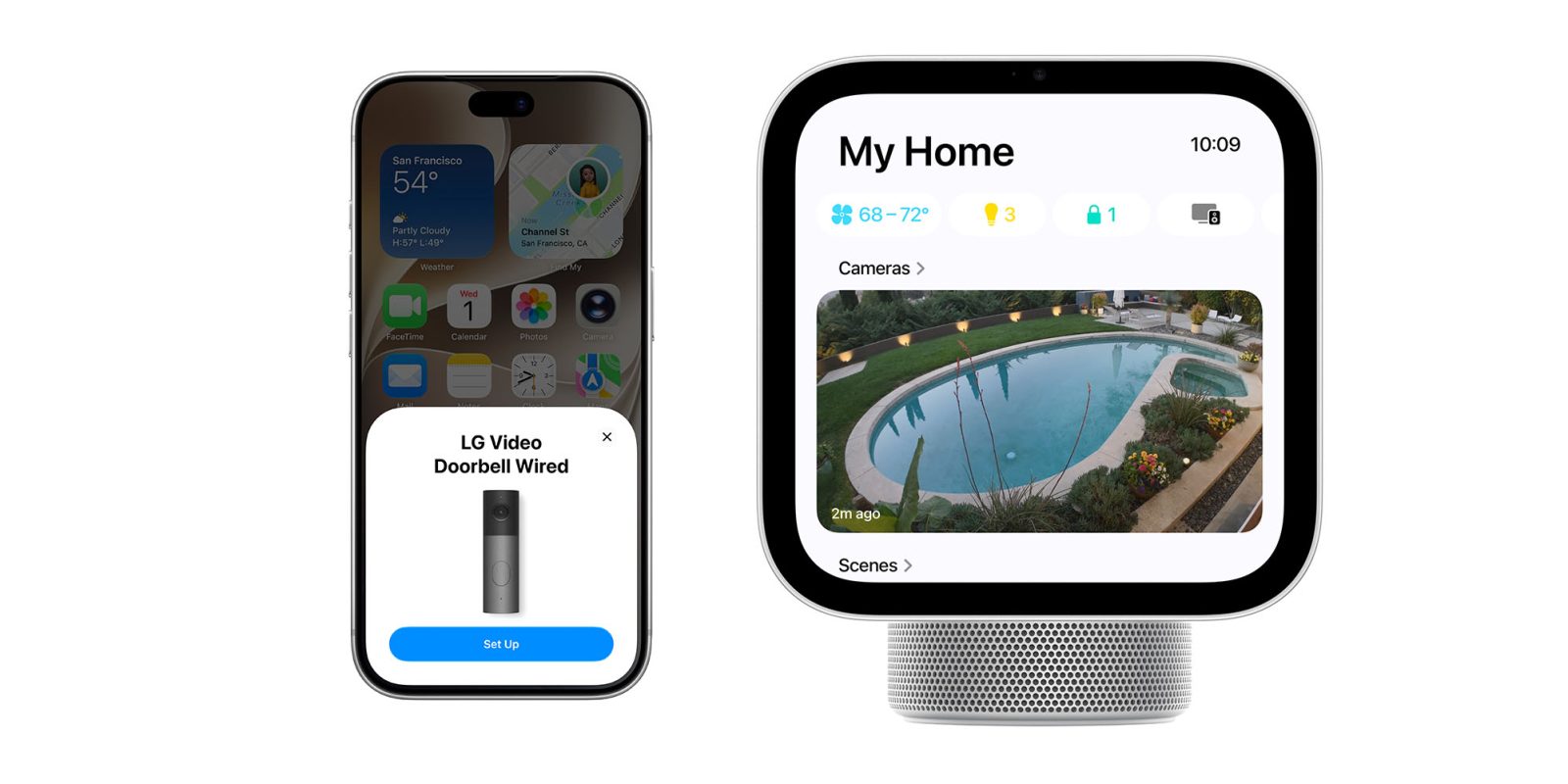
The Apple Home Collection brings this "magical" proximity-based pairing to the home. During recent demonstrations, observers noted that configuring a new device from this collection appeared as simple as pairing a new set of HomePods. Ajay Kumar of CNET highlighted this ease of use, describing a scene where an Apple representative paired and registered a new smart home device while carrying on a casual conversation, never once needing to dive into complex sub-menus or troubleshoot a connection.
The "HomeView" interface and the seamless integration into the Apple Home app mean that the user is never handed off to a third-party manufacturer’s software. Everything from the initial "handshake" to the long-term management of the device happens within the native Apple environment. This removes the psychological barrier of "What if I can’t get it to work?"—a fear that has kept many potential customers from investing in home automation.
We should not underestimate the impact of this transition. While the tech-savvy are willing to spend an afternoon configuring a HomeBridge server or troubleshooting a Zigbee mesh, the average consumer is not. For the "normie" who has been intrigued by the idea of a smart home but intimidated by the perceived complexity, the Apple Home Collection represents a safe entry point. They are paying a premium not for a better camera lens or a louder speaker, but for the certainty that they can set it up themselves in thirty seconds without frustration.
This shift suggests that the smart home industry is moving out of its "hobbyist" phase and into a true mass-market era. Much like the transition from command-line interfaces to graphical user interfaces, the underlying technology is becoming invisible. When the technology disappears and only the benefit remains, adoption tends to skyrocket.
For years, the smart home has been a collection of gadgets. With the Apple Home Collection, Apple is attempting to turn it into a cohesive, user-friendly utility. While the price points may keep the budget-conscious enthusiasts at bay, the promise of an "AirPods-like" experience for the front door, the living room, and the kitchen may be exactly what is needed to bring the smart home to the rest of the world. The tech bubble may not see the value in paying more for simplicity, but for the millions of people outside that bubble, simplicity is the most valuable feature of all.
 Smart Home & IoT Solutions
Apple Revolutionizes Smart Home Ecosystem with iOS 27: 4K HomeKit Secure Video and AI-Driven Notifications Lead the Charge
As Apple prepares for its highly anticipated "Welcome Home" special event on...
 Smart Home & IoT Solutions
IRobot announces eight smaller and better Roomba bots after bankruptcy
The resurgence comes following a period of intense financial turbulence. iRobot, which...
 Smart Home & IoT Solutions
Apple Prepares for "Welcome Home" Event with Major iOS 27 Home App Overhaul and 4K Video Support
As Apple prepares to host its highly anticipated "Welcome Home" special event...